

For most beginners spending under $300 in 2026, the best telescope you can buy is the Celestron AstroMaster 102AZ at $252.52: 102mm of refractor aperture, no mirror to collimate or worry about, and a simple alt-azimuth mount that works on the first night. If finding things is your fear, the StarSense Explorer LT 80AZ puts Celestron's phone-guided star finding on an honest 80mm refractor. And if your budget can stretch a few dollars past the line, the Sky-Watcher Heritage 130P is the telescope this whole price tier is measured against.
Two scopes that used to headline this guide are gone. The StarSense Explorer LT 114AZ and the PowerSeeker 127EQ are both Bird-Jones designs, a spherical mirror with a Barlow hidden in the focuser, and our scoring engine now accounts for that. The details are in What to Avoid, because they matter for every cheap reflector you will ever be tempted by.
Quick Picks
| Telescope | Best For | Overall Score | Price |
|---|---|---|---|
| Celestron AstroMaster 102AZ | Best overall | 72 | $252.52 |
| Celestron StarSense Explorer LT 80AZ | Best app-guided | 67 | $199.99 |
| Celestron AstroMaster 130EQ | Best equatorial | 68 | $289.97 |
| Celestron AstroMaster 70AZ | Best planetary refractor | 67 | $151.90 |
| Celestron Travel Scope 70 | Best compact | 69 | $89.99 |
| Vaonis Hestia | Best smartphone-powered | 65 | $265 |
How We Chose These
Every telescope on WhichScope is scored across 7 dimensions. For this guide, we filtered to active, in-stock products under $300, then weighted overall score and beginner-friendliness over raw value, because $200 saved on a telescope you never use is not a saving, and added one explicit stretch pick that currently sits just over the line. All picks below are from established brands with real Amazon review history.
Since this guide was first written the engine gained an optical-execution factor: a spherical mirror is fine at f/8 or slower and progressively worse as it gets faster, and a Bird-Jones (a fast spherical mirror with a corrector in the focuser) is penalized outright. Two former picks dropped from the mid-70s to the low 60s on that change alone. Generic no-name 70mm refractors at $30 still surface near the top by value score and still belong in the "what to avoid" category.
Prices and scores come directly from our database. Prices reflect current Amazon listings and update daily.
Our Top Picks
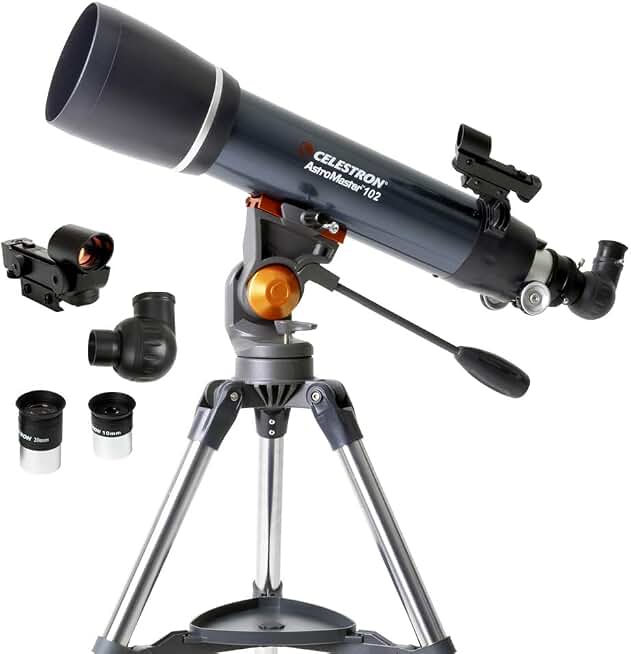
1. Celestron AstroMaster 102AZ: Best Overall Under $300
Celestron
Celestron AstroMaster 102AZA capable 102mm refractor that gets you outside and observing on your first night out
The AstroMaster 102AZ is the most capable telescope you can buy under $300 without a caveat attached. A 102mm (4-inch) achromatic refractor at 660mm focal length (f/6.5), it gathers more than twice the light of a 70mm scope and resolves visibly more detail on Jupiter's belts, Saturn's rings, and the Moon. Refractors have no mirror to collimate and no corrector to worry about; what you see on night one is what you see on night five hundred.
The alt-azimuth mount has slow-motion controls on both axes and a full-height steel tripod. At 5.84kg the whole setup is carryable in one trip. The included 20mm and 10mm eyepieces give 33x and 66x according to Celestron's spec sheet, both genuinely useful, and the built-in red-dot finder is easy to align. 351 Amazon reviews averaging 4.3 stars.
Who it is for: First-time buyers who want the most optical capability under $300, anyone who wants zero maintenance, Moon-and-planet observers who also want a crack at the brighter clusters and nebulae.
The tradeoff: No tracking and no finding aid beyond the red dot; you learn the sky or use a phone app. Achromatic optics show some violet fringing on the Moon's limb and on Venus at high power, which is normal for every refractor at this price. The f/6.5 field is wide enough for clusters but a 130mm Dobsonian will still beat it on faint targets.
102mm of refractor aperture, nothing to collimate, under $300.
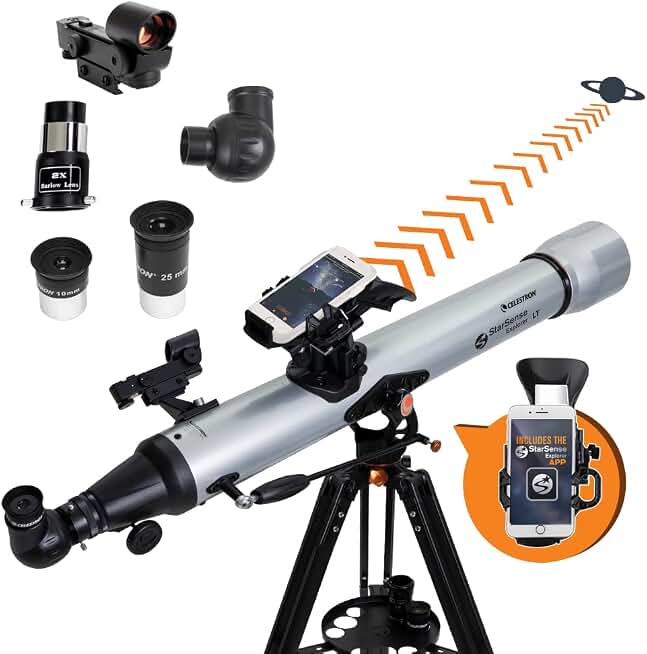
2. Celestron StarSense Explorer LT 80AZ: Best App-Guided
Celestron
Celestron StarSense Explorer LT 80AZCelestron's StarSense Explorer LT 80AZ: smartphone-guided starfinding that actually works, in a capable 80mm refractor.
The LT 80AZ is the honest way to get Celestron's StarSense Explorer system under $300. Dock your phone, and the app uses the camera to solve the sky and draw arrows to any target; you push the telescope until the arrows say stop. It is not GoTo, you do the moving, but it removes the single frustration that ends most beginners' interest: "I cannot find anything." The reason we recommend the 80AZ rather than the better-known LT 114AZ is that the 114AZ's optics are a Bird-Jones (see What to Avoid), while the 80AZ is a straightforward 80mm f/11.3 achromat with nothing hidden in the focuser.
That long 900mm focal length makes it a Moon-and-planets scope first: Saturn's rings, Jupiter's belts and moons, lunar craters, double stars. The alt-azimuth mount has a slow-motion altitude rod, the tripod is full height, and the whole thing weighs 4.17kg. 566 Amazon reviews averaging 4.3 stars.
Who it is for: Beginners who know they will give up without help finding targets, gift buyers, parents of teens with a recent smartphone.
The tradeoff: 80mm is modest aperture and the slow focal ratio gives a narrow field, so large nebulae and clusters will not frame well and faint deep-sky targets are out of reach. The app needs a recent phone with a working camera. You are paying for the dock and software; the AstroMaster 102AZ gives you more optics for similar money if you are willing to learn the sky.
Phone-guided star finding on an honest 80mm refractor.
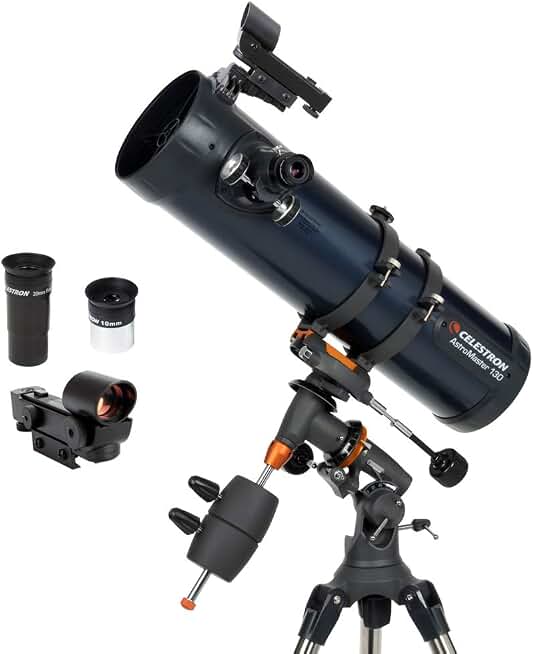
3. Celestron AstroMaster 130EQ: Best Equatorial Under $300
Celestron
Celestron AstroMaster 130EQ130mm of light-gathering power on an equatorial mount, built for beginners who are serious about learning the sky.
If you specifically want an equatorial mount under $300, the AstroMaster 130EQ is the least compromised mainstream option, and the compromise is real: its f/5 primary mirror is spherical. Start with what is right about it. It is a true Newtonian. The 650mm focal length lives in a 552mm tube, so there is no corrector lens in the focuser, and its 130mm of aperture is real light-gathering that shows the Orion Nebula, the brighter galaxies as smudges, and Saturn's rings cleanly. The CG-3 equatorial mount introduces you to polar alignment and single-axis tracking, and a motor drive can be added later.
The caveat: Celestron's spec sheet lists a spherical primary mirror, and at f/5 a spherical mirror is fast enough that stars at the edge of the field never quite snap to points and high-power planetary views are softer than a parabolic 130mm would give. Our engine scores that at 0.75 of the aperture's nominal value. It is a usable telescope with 3,402 Amazon reviews averaging 4.3 stars, which is more than we can say for the PowerSeeker that used to hold this slot, but the parabolic Heritage 130P below is the better 130mm if you do not need the equatorial mount.
Who it is for: Beginners who want equatorial-mount experience on a budget, anyone planning to add a motor drive and try lunar and planetary imaging.
The tradeoff: The spherical f/5 mirror limits sharpness at high power. The CG-3 is light for a 130mm tube and wobbles at 150x or more. Polar alignment has a learning curve that an alt-azimuth or Dobsonian mount simply does not have.
A real 130mm Newtonian on an EQ mount, with the mirror caveat spelled out.
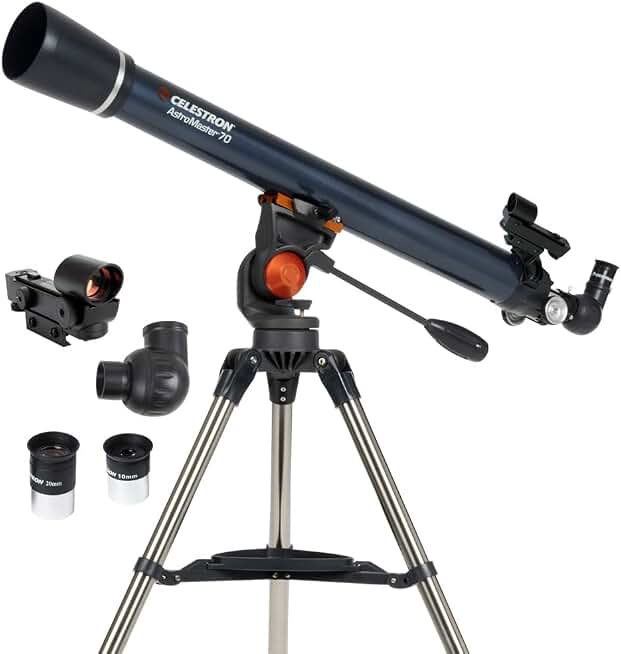
4. Celestron AstroMaster 70AZ: Best Planetary Refractor
Celestron
Celestron AstroMaster 70AZA no-fuss 70mm refractor that gets beginners outside and observing on their first night out.
The AstroMaster 70AZ is what most people picture when they think "telescope": a 70mm refractor on a sturdy alt-azimuth mount with a long tube. At 900mm focal length and f/12.9, this scope is optimized for the Moon and planets; image scale is high, fields of view are narrow, and the long focal ratio keeps chromatic aberration well controlled. 70mm is enough to clearly resolve Saturn's rings, Jupiter's main cloud bands, and lunar craters down to a few kilometers across.
Celestron's AstroMaster line is the brand's entry-level series, but the build quality is meaningfully better than $50 generic refractors at the same aperture. The mount is full-aluminum with smooth motion in both axes. The included accessories are workable: 20mm and 10mm Kellners, a red-dot finder, and an erecting prism so the views are right-side up for daytime use too. 3,771 Amazon reviews averaging 4.4 stars.
Who it is for: Beginners who specifically want a refractor, the Moon-and-planets crowd, anyone who wants something they can set up in five minutes.
The tradeoff: 70mm aperture limits faint deep-sky performance; nebulae and galaxies will be dim or invisible. The long focal ratio gives narrow fields of view, so large clusters and wide nebula regions will not frame well. For a few dollars more the 102AZ above does everything this does, better.
The classic 70mm refractor, built solidly, priced right.
5. Celestron Travel Scope 70: Best Grab-and-Go
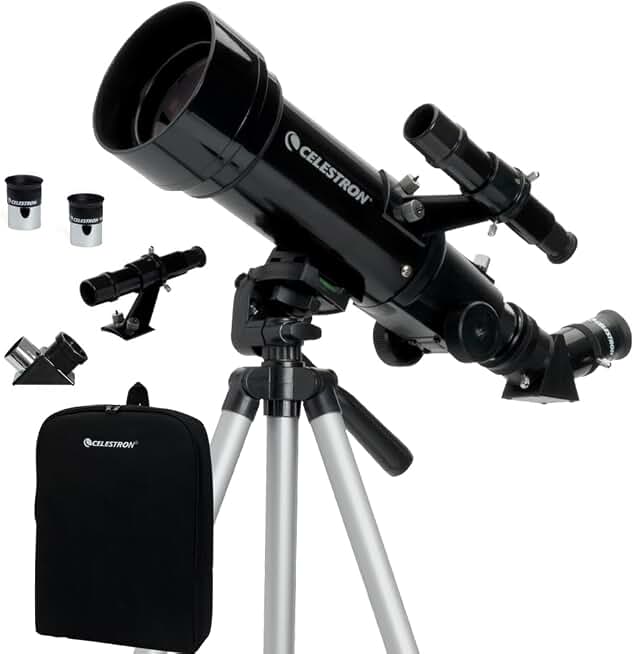
A capable 70mm grab-and-go refractor that earns its place in any beginner's kit without breaking the bank.
The Travel Scope 70 is the most-reviewed telescope in our database for a reason: it is the most accessible way to find out if astronomy is for you. 70mm aperture, 400mm focal length, f/5.7, the whole package weighs under two kilograms and fits in the included backpack. You can carry it on a flight, throw it in the car for camping trips, set it up in the backyard in three minutes. Detailed in our best telescopes for beginners guide and the under $200 picks too.
The short focal ratio gives wide, easy-to-aim views. The Moon fills the eyepiece beautifully, Jupiter and Saturn show their famous features (small but clear), star clusters look great. It is not going to wow you on faint nebulae or galaxies, but for the price of one dinner out, you get a real first telescope.
Who it is for: Travelers, hikers, anyone with limited storage, gift buyers under $100, complete first-timers who do not yet know if they want to commit to the hobby.
The tradeoff: 70mm is genuinely small; faint deep-sky targets will be invisible or barely visible. The lightweight tripod is functional but flexes if bumped. If you catch the astronomy bug, you will want more aperture within a few months.
The grab-and-go beginner telescope, the most-reviewed scope we track.
6. Vaonis Hestia: Best Smartphone-Powered Option
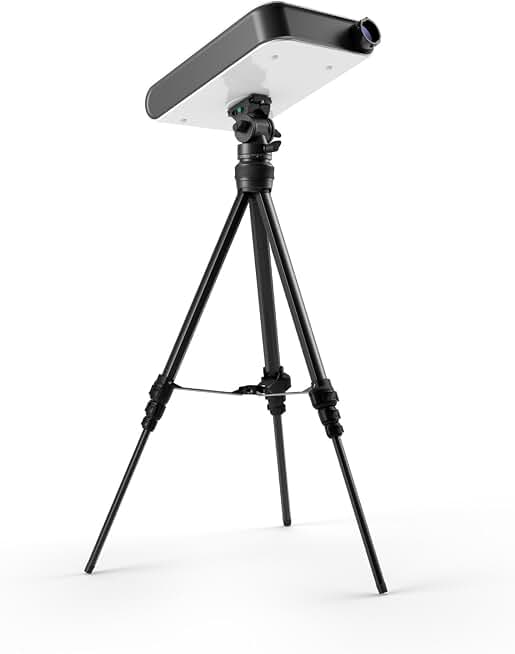
Vaonis
Vaonis HestiaYour smartphone becomes the eyepiece in this battery-free, grab-and-go optical companion for casual sky exploration.
The Hestia is the most unusual telescope in this guide. It is not a traditional eyepiece scope at all: you dock your smartphone onto the back of the optical tube, and the phone's camera becomes the imaging sensor. The Vaonis app handles tracking via your phone's positioning, stacks frames in real time, and produces astrophotos of the Moon, planets, and bright deep-sky objects directly on your phone screen. At $265 it is the cheapest entry point into Vaonis's smart telescope ecosystem.
50mm aperture is small, even by smart telescope standards. The Hestia will not deliver the deep-sky output of a Seestar S50, but it does deliver something the others cannot: a battery-free, no-tracking, no-power-required scope that you can carry anywhere your phone goes. It also doubles as a solar telescope with the included filter, which none of the other picks here offer.
Who it is for: Travelers, people who want astrophotography without any traditional astrophotography setup, daytime astronomers who want solar viewing too, smartphone-first users.
The tradeoff: The optics are 50mm of achromatic refractor, so faint deep-sky targets need long exposures and patience. App-driven tracking is less stable than mechanical tracking; even small phone movements interrupt the stack. 22 Amazon reviews averaging 3.0 stars; significantly less established than the mature smart telescopes.
Your smartphone becomes the eyepiece, under $300.
The Stretch Pick: Sky-Watcher Heritage 130P
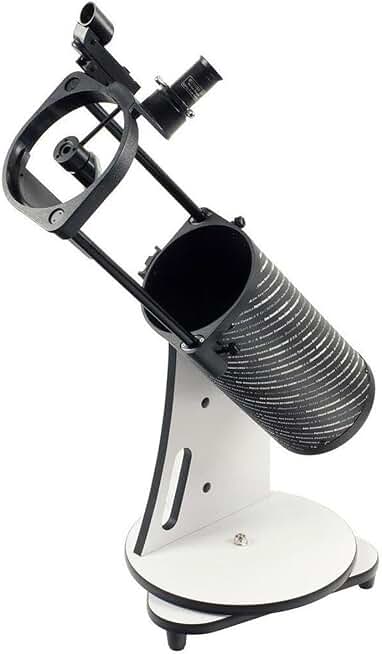
Sky-Watcher
Sky-Watcher Heritage 130PBig aperture, tabletop convenience: the Heritage 130P punches well above its price and size class.
The Heritage 130P currently sells for $269, which is a few dollars over the line for this guide and was under it when this guide was first written in June. We are including it anyway, because if you can find those dollars it is the best telescope on this page and it is not close. A 130mm parabolic mirror (Sky-Watcher says so on the spec sheet, and it matters) at f/5 on a collapsible tabletop Dobsonian: this is the scope r/telescopes has pointed beginners at for a decade, and the one every review of the PowerSeeker 127EQ ends by recommending instead.
The Dobsonian design is the simplest possible mount: push the telescope to point at something, look through the eyepiece. The collapsible truss lets the tube shrink for storage and extend to full length for observing. It delivers brighter, more detailed views of nebulae, galaxies, and star clusters than anything else near this price, and sharp planets too, because the mirror is the right shape. At 8.69kg it needs a sturdy table or a milk crate. 69 Amazon reviews averaging 4.5 stars, a small sample but consistently high. The included 25mm and 10mm eyepieces give 26x and 65x.
Who it is for: Anyone who can wait a few weeks and save the difference. Beginners who prioritize what they will actually see over automation.
The tradeoff: No tracking, no electronics; you star-hop with the red-dot finder or a phone app. Newtonians need occasional collimation, which sounds harder than it is. You need a table; it is not floor-mountable.
130mm parabolic Dobsonian. The scope this price tier is measured against.
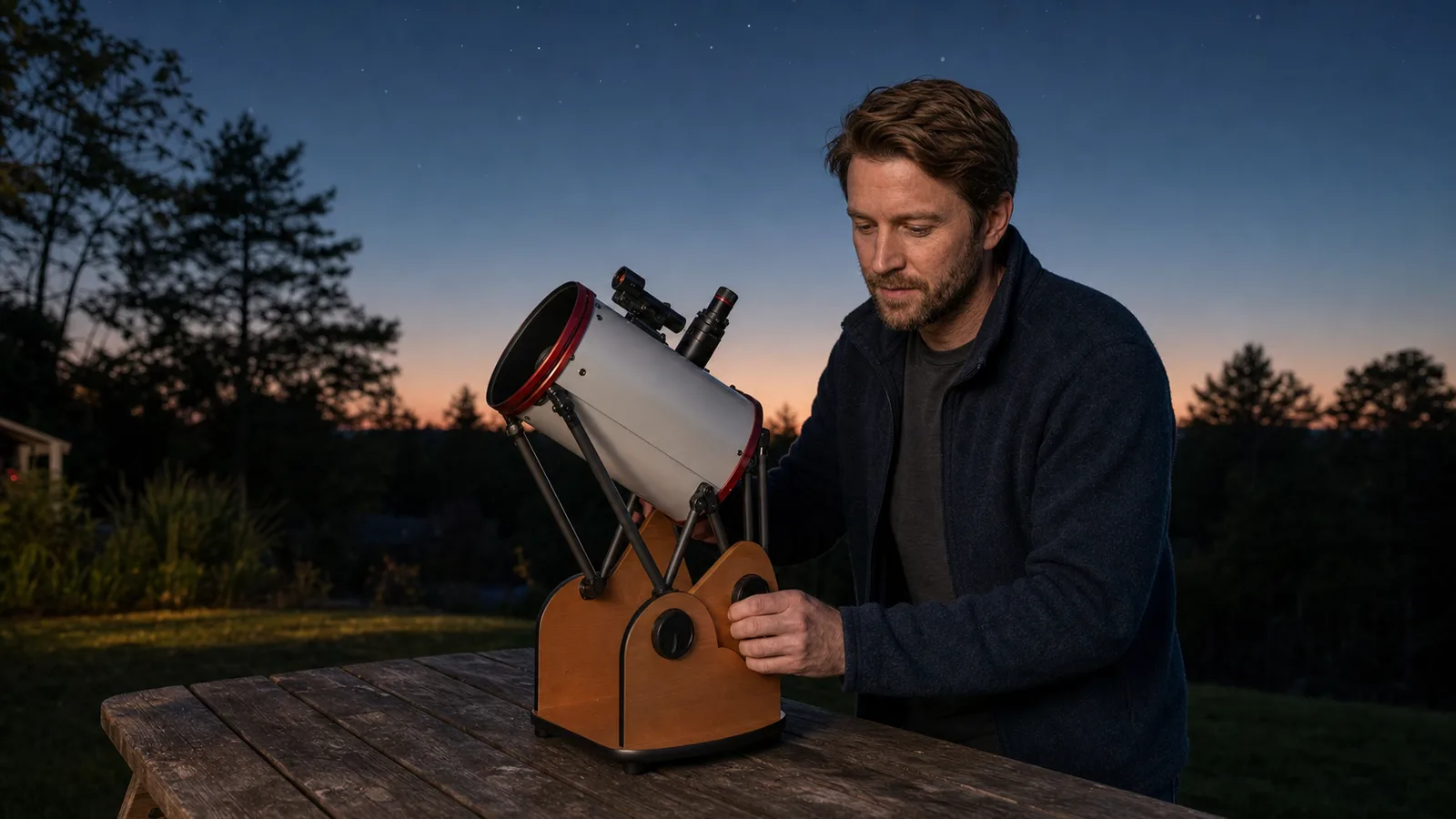
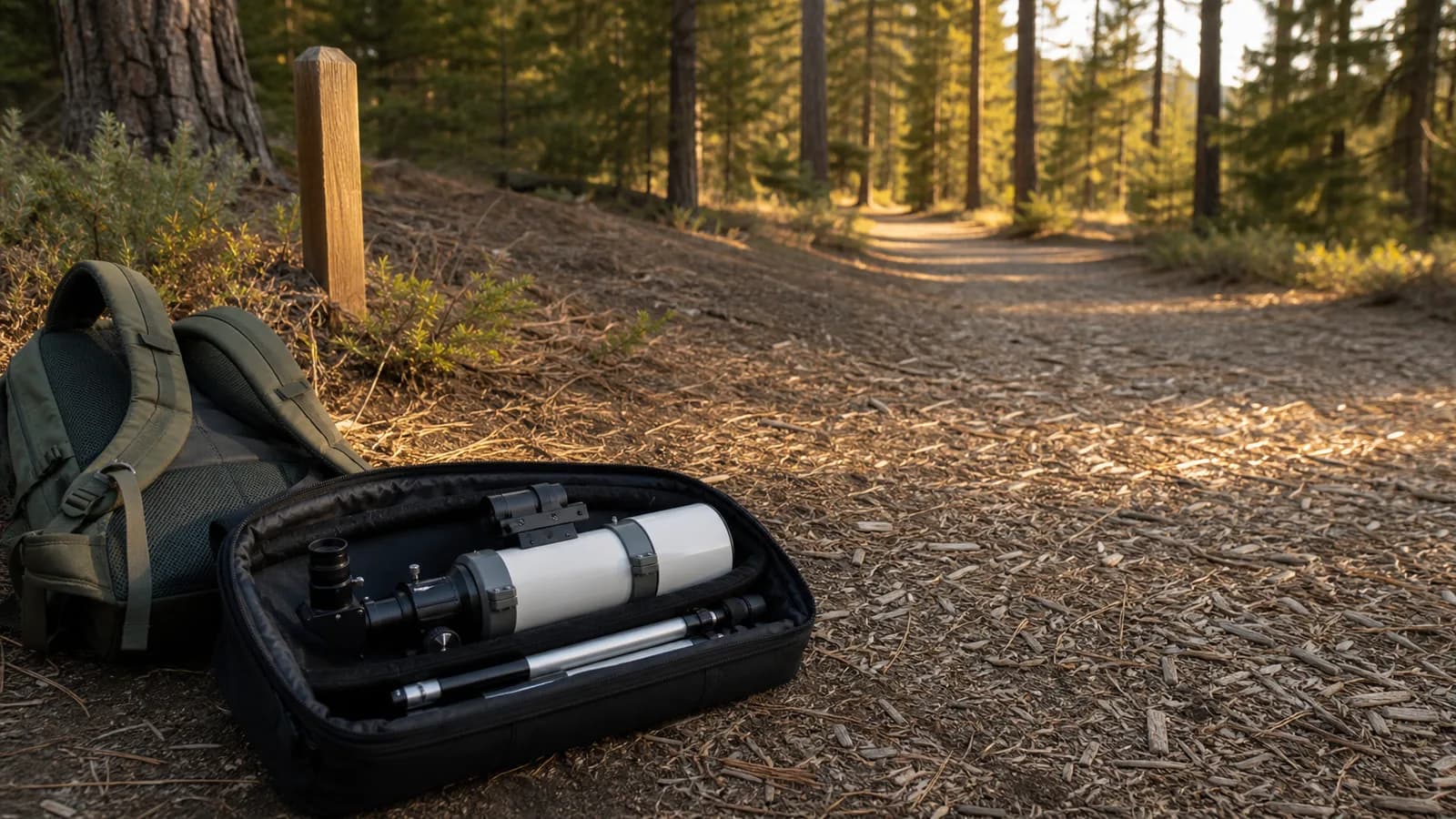
What $300 Gets You vs $200 vs $1,000
Spending decisions on telescopes follow a roughly predictable curve. Here is what each price tier actually buys.
Under $200 (see our best telescopes under $200 guide)
You get a real but minimal first telescope: a 70mm or 80mm refractor on a manual mount with basic accessories. The optics work. The mount is light. You will see the Moon, planets, brighter star clusters, and double stars. Faint deep-sky targets are out of reach. This price point is for testing whether astronomy is for you. The budget reflectors that live here are the trap; see What to Avoid.
$200 to $300 (this guide)
You add either real aperture (a 102mm refractor, a 130mm Newtonian) or app-guided finding (StarSense Explorer). The mount is meaningfully sturdier. Accessories are usable rather than minimal. Stretch a little past $300 and a parabolic 130mm Dobsonian opens up faint deep-sky targets from dark skies. This is the sweet spot for a long-term first telescope.
$300 to $1,000 (see our best telescopes under $1,000 guide)
You add GoTo automation (Sky-Watcher Virtuoso GTi 150P), a parabolic 130mm with app guidance (StarSense Explorer DX 130AZ), larger Dobsonians (Heritage 150P), or smart telescopes with imaging. The combination of more aperture, automated finding, and capable mounts removes the most common beginner frustrations entirely.
The decision between $200 and $300 is usually refractor simplicity (102AZ) versus app-guided finding (LT 80AZ) versus stretching for the Heritage 130P. The decision between $300 and $1,000 is whether you want GoTo, dedicated astrophotography capability, or significantly more aperture.
What to Avoid
Bird-Jones reflectors, whatever the brand on the box. In a standard Newtonian the tube is in the same ballpark as the focal length, not half of it. When a "1000mm" reflector ships in a tube 40-60cm long, the missing length comes from a Barlow lens inside the focuser, in front of a spherical mirror too fast to work without one; Celestron's own knowledgebase confirms the built-in Barlow for its AstroMaster 114 line. Celestron's own spec sheets describe the PowerSeeker 127EQ, AstroMaster 114EQ, StarSense Explorer LT 114AZ and 114LCM as "Spherical Primary Mirror" with tubes of 395mm to 610mm for a 1000mm focal length. Reviewers who have taken one apart report that the corrector moves with the focuser, so the correction is never quite right, and that collimating requires removing it first; and the community's verdict is unanimous enough that r/telescopes maintains a subreddit warning people off the PowerSeeker. We recommended two of these scopes in the first version of this guide. Our engine now scores them 57 to 68 and we no longer do.
Generic no-name 70mm refractors at $30 to $60. Amazon is flooded with "Telescope for Adults & Kids" listings that look superficially identical to the AstroMaster 70AZ at a fraction of the price. The optics are usually adequate (they are mass-produced to a common spec), but the mounts are thin plastic that flexes at the slightest touch. At 50x or higher, vibration makes the image unwatchable.
Anything advertising "500x magnification" or "Powered by NASA." Magnification claims on telescope boxes are marketing theater. The real maximum useful magnification is roughly 2x the aperture in millimeters: 140x for a 70mm scope, 260x for a 130mm. Boxes claiming 450x or 1000x are using the cheapest eyepieces and worst Barlow lenses, and the resulting image is unusable blur.
