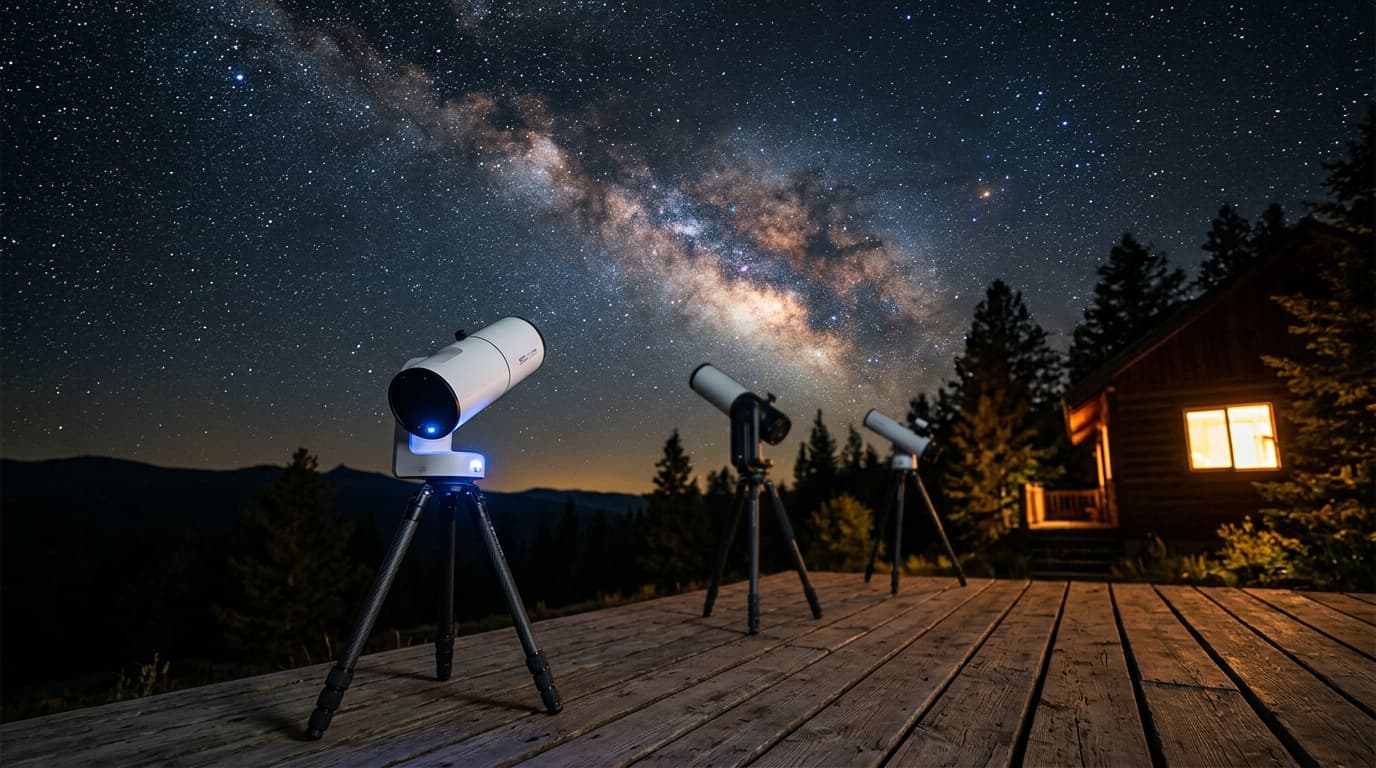

The ZWO Seestar S50 is the best smart telescope for most people in 2026. It scores 93 overall on WhichScope, delivers genuinely impressive deep-sky images for $499, and sets up in under two minutes. But "smart telescope" now covers everything from $275 phone-powered scopes to $4,599 premium observatories, so the right pick depends entirely on what you want to spend and what you expect to see.
We tested and scored 15 smart telescopes across optical performance, ease of use, portability, and value. Here are the ones worth buying.
Quick Picks
| Telescope | Best For | Score | Price |
|---|---|---|---|
| ZWO Seestar S50 | Best overall | 93 | $499 |
| ZWO Seestar S30 | Best budget | 90 | $399 |
| DWARFLAB DWARF 3 | Best for travel | 83 | $519 |
| Unistellar Odyssey | Best premium | 85 | $2,599 |
| Celestron Origin Mark II | Best for astrophotography | 84 | $4,299 |
How We Chose These
We scored every smart telescope in our database across seven dimensions, including astrophotography capability, beginner-friendliness, portability, and value. Smart telescopes are a unique category because they eliminate most of the traditional learning curve; alignment, tracking, and image processing all happen automatically. Our scoring accounts for that by weighting app quality, setup speed, and output quality alongside raw optical specs.
Prices reflect current Amazon listings and may change. All products link to their full WhichScope review pages where you can compare specs in detail.
What Smart Telescopes Can (and Can't) Do
Before spending $349 to $4,599, it helps to know what you're actually getting.
What they do well: Smart telescopes automate the entire imaging workflow. Point the scope at the sky, open the app, pick a target, and the telescope handles alignment, GoTo slewing, tracking, and live stacking. After a few minutes of stacking, you get a color image of a nebula or galaxy on your phone. No polar alignment, no guiding cables, no post-processing in PixInsight. For deep-sky astrophotography, this is genuinely transformative.
What they don't do: Smart telescopes are not great for visual observing through an eyepiece (most don't even have an eyepiece port). They won't show you Saturn's rings the way a good 8-inch Dobsonian will. Planetary imaging is limited by their small apertures, typically 24mm to 114mm. And the images, while impressive for the effort involved, don't match what a dedicated astrophotography rig with a cooled camera and equatorial mount can produce.
The real value proposition: You trade optical fidelity for convenience. A smart telescope produces a shareable deep-sky image in 10 minutes with zero experience. A traditional astrophotography setup takes months to learn and hours per session to operate. For most people getting into astronomy in 2026, that tradeoff is worth it.
Our Top Picks
1. ZWO Seestar S50
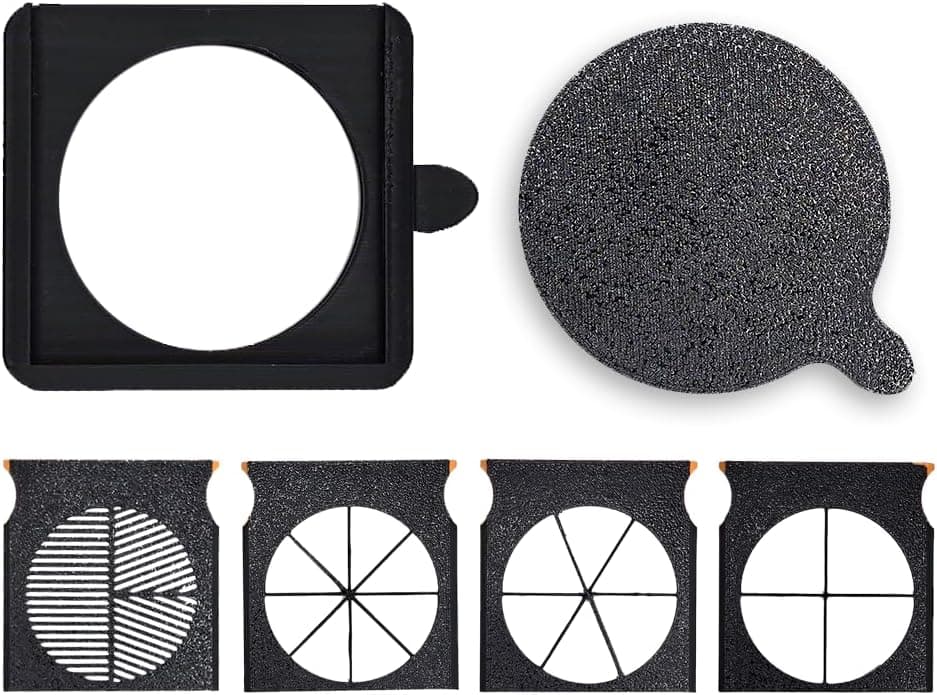
Point, tap, and image the night sky with no experience required, all in a 3kg package under $500.
The Seestar S50 earns its spot at the top of every smart telescope ranking for a reason: nothing else at $499 comes close to its combination of image quality, ease of use, and app polish. Its 50mm f/5 apochromat refractor with a Sony IMX662 sensor produces genuinely good deep-sky images after just a few minutes of live stacking. The Orion Nebula, Andromeda Galaxy, and dozens of other targets look impressive on your phone screen within 5 to 10 minutes of setup.
The Seestar app (iOS and Android) handles plate-solving, GoTo navigation, and automatic focus. You pick a target from the catalog, tap "Go," and wait. The learning curve is essentially zero. At 2.5kg, it fits in a backpack and sets up faster than most people can unfold a camping chair.
Who it's for: Anyone who wants deep-sky astrophotography without the learning curve, whether you're a complete beginner or an experienced visual observer who wants quick results.
The tradeoff: The 50mm aperture limits planetary views and resolving power on smaller deep-sky targets. And while the IMX662 sensor is capable, its 2MP resolution means you won't be producing wall-sized prints. For most people sharing to Instagram or showing friends at a star party, that's a non-issue.
Best overall smart telescope. Scores 93 on WhichScope.
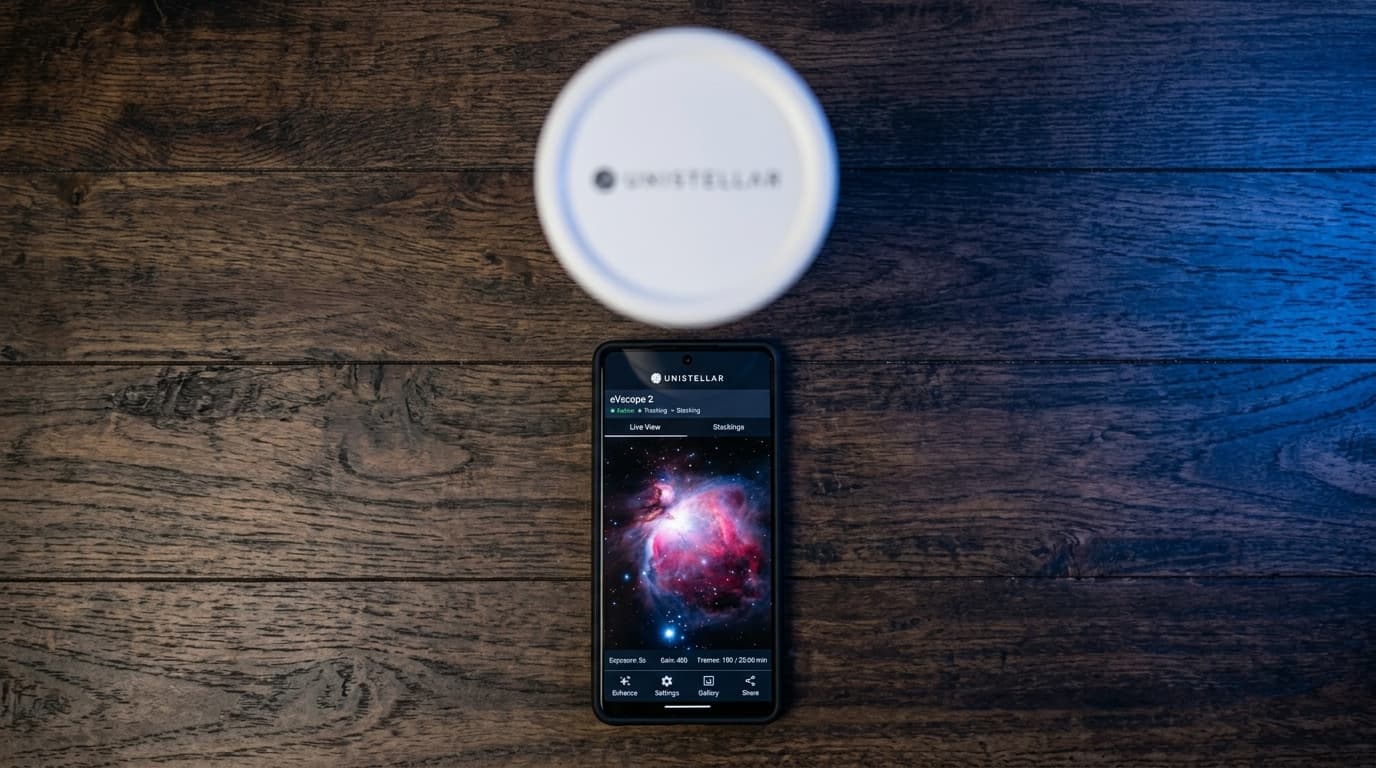
2. ZWO Seestar S30
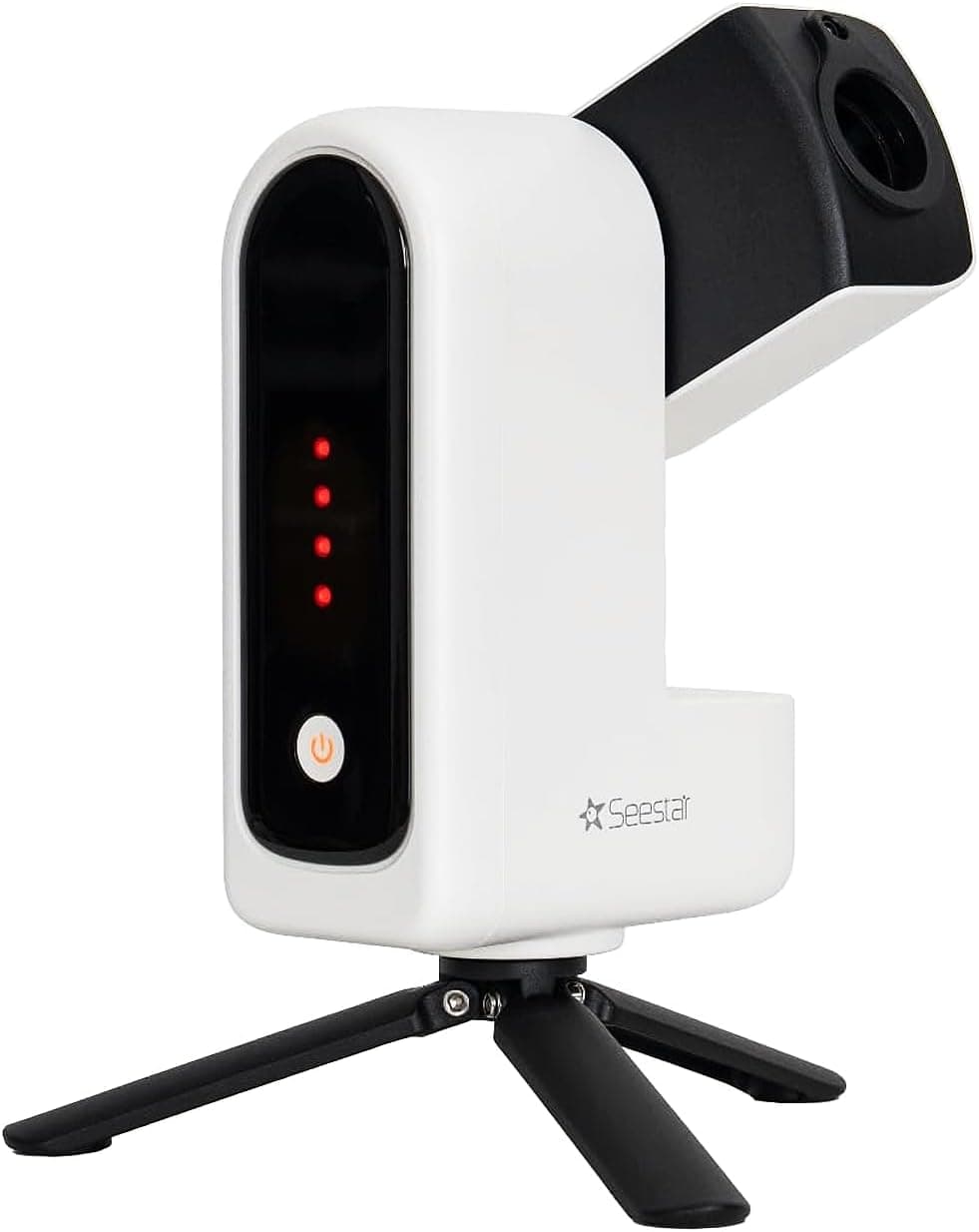
Pocket-sized smart telescope that finds, tracks, and stacks deep-sky targets automatically, no experience required.
The Seestar S30 is the entry point for smart telescopes, and at $399 it's a remarkable value. It scores 90 overall, three points behind the S50, with the highest value score (82) of any smart telescope in our database. At 1.65kg, it's also the lightest full-featured option available, making it the obvious choice for travel and casual use. Our full Seestar S30 review covers what those numbers mean in practice, including how it differs from the newer S30 Pro.
The S30 uses a smaller 30mm f/5 apochromat lens, which means less light-gathering than the S50. In practice, this translates to slightly longer stacking times to reach the same image depth. Bright targets like the Orion Nebula and Andromeda still look great after a few minutes, but fainter targets need 15 to 20 minutes instead of 10.
The app experience is identical to the S50 (same Seestar app), which is a major advantage. ZWO's software is the best in the smart telescope category, with reliable plate-solving, smooth GoTo, and an intuitive interface.
Who it's for: Budget-conscious buyers, travelers, or anyone who wants to try smart telescopes without spending $500+.
The tradeoff: The 30mm aperture is genuinely small. Deep-sky results take longer to build up, and the fainter end of the Messier catalog will look noisy. If you're serious about smart telescope imaging, the S50's extra aperture is worth the $150 upgrade.
Best value smart telescope at $349. Scores 91 on WhichScope.
3. DWARFLAB DWARF 3
DWARFLAB
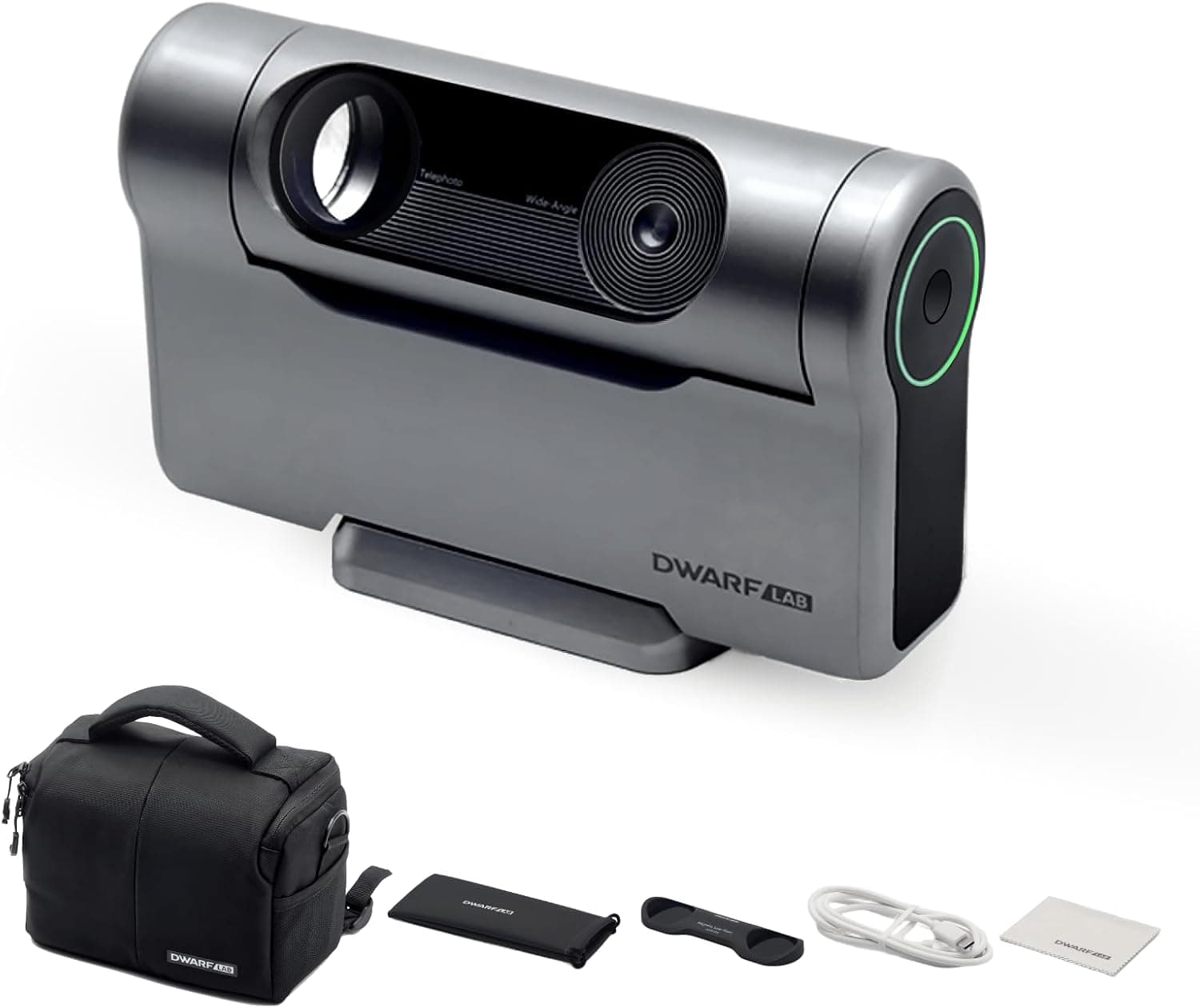
DWARFLAB DWARF 3Pocket-sized smart telescope with dual lenses, GoTo tracking, and live stacking for deep sky and daytime use
The DWARF 3 is DWARFLAB's latest, and its dual-lens design is what sets it apart. One lens handles deep-sky imaging (24mm f/4.2 with live stacking), while the second is designed for wider-field or daytime use. It's a genuinely different approach from the single-lens Seestars and Unistellars.
At 1.3kg and $549, the DWARF 3 offers unique versatility alongside the Seestar pair. The DWARFLAB app has improved significantly since the original DWARF II, with better plate-solving and a more polished interface, though it still trails ZWO's Seestar app in responsiveness.
We published a full DWARF 3 review with detailed impressions. The short version: it's a capable smart telescope that does more than the Seestars (daytime wildlife, dual-channel imaging) but doesn't quite match the S50's deep-sky image quality due to its smaller aperture.
Who it's for: Travelers who want the most versatile smart telescope possible, or anyone interested in daytime nature observation alongside night-sky imaging.
The tradeoff: The 24mm aperture is the smallest of any full-featured smart telescope. Deep-sky stacking takes longer and produces noisier results than the 50mm Seestars. The dual-lens concept is clever, but each individual lens is a compromise.
Most versatile smart telescope. Read our full DWARF 3 review.
4. DWARFLAB DWARF II
DWARFLAB
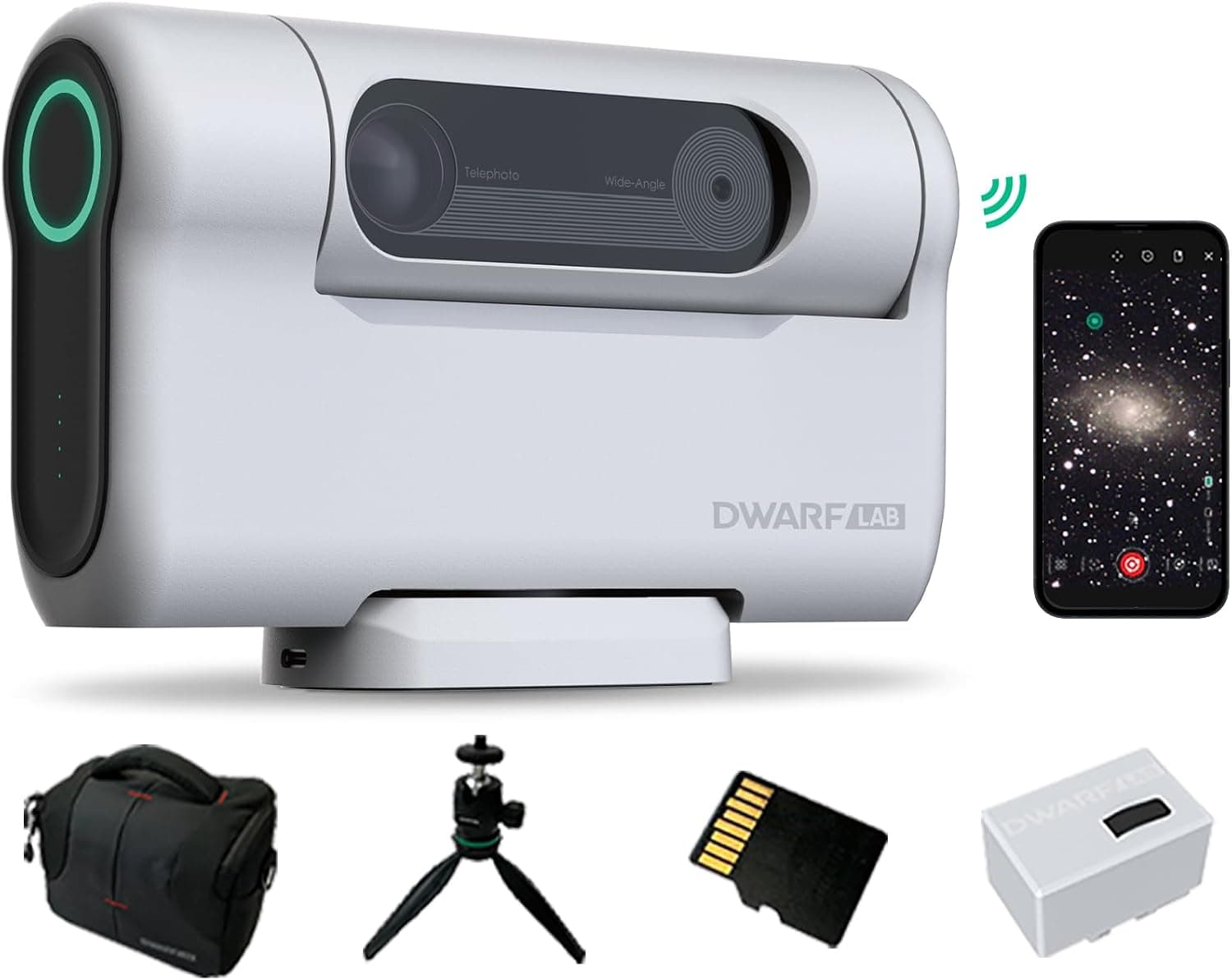
DWARFLAB DWARF IIA pocket-sized smart telescope that automates alignment, tracking, and live stacking for under $350
The DWARF II is the cheapest full-featured smart telescope you can buy at $339, and it punches above its price with an overall score of 86 and a value score of 82. If you want to spend the absolute minimum on a smart telescope that actually works, this is it.
Like the DWARF 3, it uses a 24mm f/4.2 lens with live stacking. At 1.2kg, it's the lightest smart telescope in our database. The build quality is plastic-forward and clearly budget, but the GoTo tracking and stacking work reliably. Amazon reviewers (4.3 stars across 213 reviews) generally confirm that it delivers on its core promise.
The DWARFLAB app is shared with the DWARF 3, and it handles alignment, tracking, and stacking automatically. It's not as polished as ZWO's app, but it gets the job done.
Who it's for: First-time smart telescope buyers on a tight budget, or anyone who wants a "try before you commit" entry point into the category.
The tradeoff: The 24mm aperture and older sensor produce noticeably softer, noisier images than the Seestar S50. The app can be finicky with alignment in light-polluted skies. If you can stretch to $349, the Seestar S30 offers a better overall experience.
Cheapest full-featured smart telescope at $339.
5. Unistellar Odyssey
Unistellar
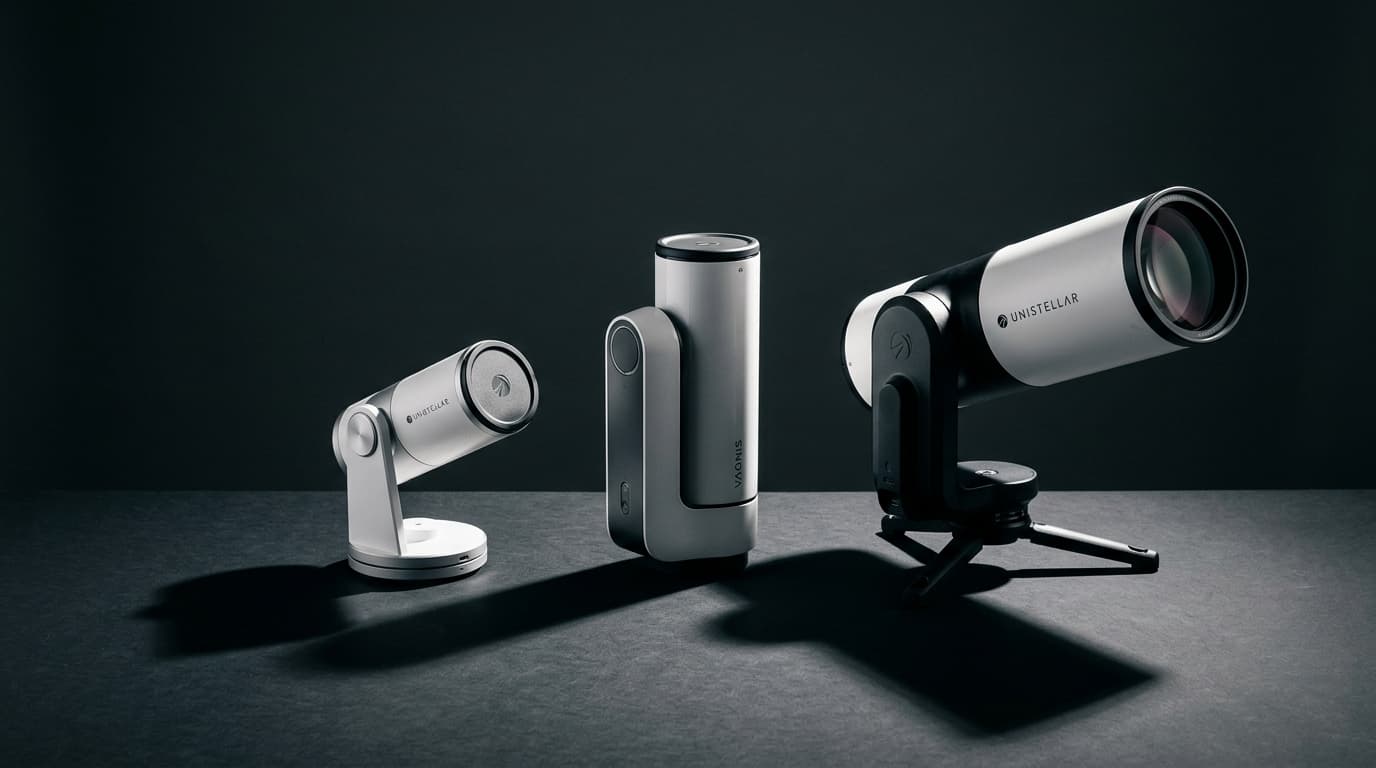
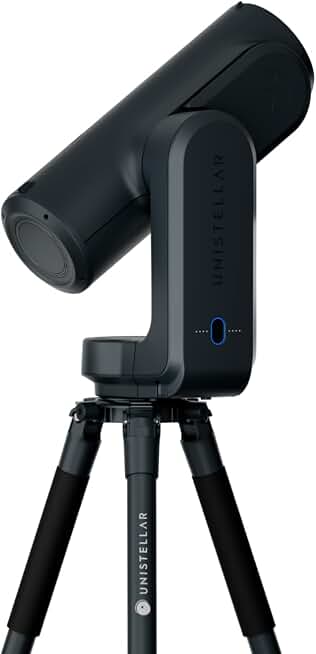
Unistellar OdysseyPoint, tap, observe: the Odyssey makes deep-sky imaging genuinely accessible without sacrificing serious capability.
The Unistellar Odyssey is the first smart telescope on this list that feels like a serious optical instrument. Its 114mm aperture collects over five times more light than the Seestar S50's 50mm lens, and that shows in the images. Deep-sky targets reveal more detail, fainter objects become reachable, and the overall image quality steps up noticeably.
At $2,599, you're paying a serious premium over the sub-$500 options. The Odyssey scores 85 overall, with its strongest showing in deep sky (73) and astrophotography (76). The Unistellar app handles plate-solving and automated observations, though community feedback suggests it's not quite as reliable as ZWO's software.
The 6.5kg weight and larger form factor mean this isn't a toss-it-in-a-backpack scope. You'll want a dedicated bag and a sturdy tripod. But if you've outgrown what the Seestars can produce and want significantly better images without learning a full astrophotography workflow, the Odyssey is the logical step up.
Who it's for: Enthusiasts who want noticeably better image quality than budget smart telescopes but don't want the complexity of a traditional astrophotography setup.
The tradeoff: Five times the price of a Seestar S50 for incrementally (not five times) better images. The value score of 38 reflects that. Unistellar's app has historically been less consistent than ZWO's.
Best premium smart telescope with 114mm aperture.
6. Vaonis Vespera II
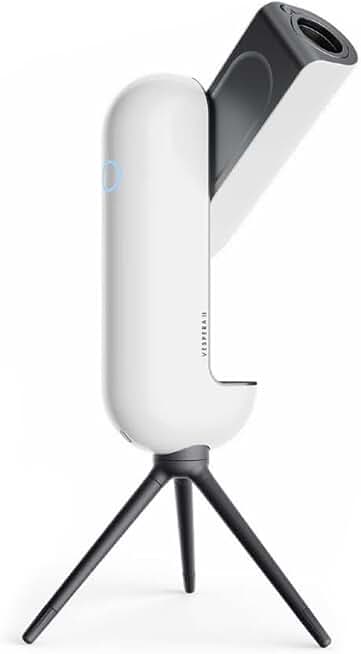
Fully automated smart telescope that stacks live images and delivers results straight to your phone
Vaonis takes a different approach to the smart telescope market. The Vespera II Exploration Station ($1,690) is a 50mm f/5 apochromat refractor, same optical formula as the Seestar S50, but wrapped in Vaonis' premium industrial design and paired with their own imaging software.
The Vespera II scores 81 overall with a portability score of 71 at 5kg. It's a well-built, well-designed product that produces solid deep-sky images. Vaonis markets it as a social observation tool, and its multi-user viewing feature lets several phones connect to the same session simultaneously.
The honest assessment: the Seestar S50 delivers comparable or better images at less than a third of the price. The Vespera II is the smart telescope you buy when design, build quality, and the Vaonis ecosystem matter to you more than raw value.
Who it's for: Buyers who want a premium, well-designed smart telescope and don't mind paying for it. Also suited for astronomy outreach events where multi-user viewing is valuable.
The tradeoff: At $1,690 for a 50mm scope, the value proposition is hard to justify on specs alone. The Seestar S50 at $499 offers a similar optical formula with better software. Amazon reviews (3.9 stars across 54 reviews) suggest the app experience is less polished than ZWO's.
Premium design with multi-user observation capability.
7. Celestron Origin Mark II
Celestron
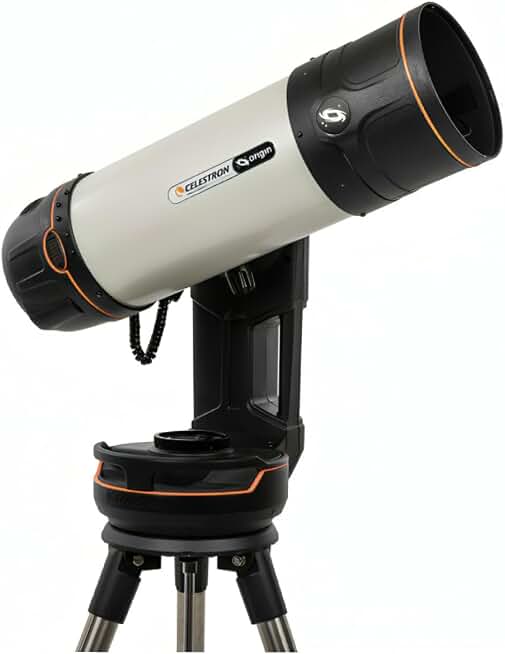
Celestron Origin Mark IICelestron Origin Mark II: a 152mm smart astrograph that turns your backyard into a deep-sky imaging station
The Celestron Origin Mark II is the most serious smart telescope you can buy. Its 152mm f/2.2 Schmidt-Cassegrain optical system is in a different league from every other product on this list. The ultra-fast focal ratio means it can capture detailed deep-sky images significantly faster than any competitor, and the larger aperture resolves more detail in galaxies and nebulae.
At $4,299 and 18.87kg, this is not a grab-and-go instrument. It's a backyard observatory replacement for people who want astrophotography results without the manual workflow. The astrophotography score of 90 is the highest of any smart telescope we've tested.
The Origin Mark II is brand new (only 2 Amazon reviews so far) and represents Celestron's second generation of the Origin platform. The original Celestron Origin ($3,802, scoring 82) is also available and shares the same optical design.
Who it's for: Dedicated astrophotographers who want the best possible images from an automated system, and have the budget and the space for a 19kg instrument.
The tradeoff: The price, weight, and setup time put this in a completely different category from portable smart telescopes. At $4,299, you're approaching the cost of a capable traditional astrophotography rig (equatorial mount, refractor, cooled camera) that would produce even better images with more effort.
Best astrophotography output of any smart telescope. 152mm f/2.2.

Every Smart Telescope Compared
Here's every active smart telescope in our database, ranked by overall score.
| Telescope | Aperture | Price | Overall | Astro | Value | Weight |
|---|---|---|---|---|---|---|
| ZWO Seestar S50 | 50mm | $499 | 93 | 71 | 76 | 2.5kg |
| ZWO Seestar S30 | 30mm | $349 | 91 | 69 | 86 | 1.65kg |
| DWARFLAB DWARF II | 24mm | $339 | 86 | 70 | 82 | 1.2kg |
| Unistellar Odyssey | 114mm | $2,599 | 85 | 76 | 38 | 6.5kg |
| Unistellar eVscope Equinox | 114mm | $926 | 85 | 74 | 55 | N/A |
| Unistellar Odyssey Pro | 114mm | $4,599 | 84 | 76 | 34 | 6.5kg |
| Celestron Origin Mark II | 152mm | $4,299 | 84 | 90 | 34 | 18.87kg |
| DWARFLAB DWARF 3 | 24mm | $519 | 83 | 70 | 68 | 1.3kg |
| Unistellar Equinox 2 | 114mm | $2,899 | 83 | 74 | 37 | 9kg |
| Unistellar eVscope 2 | 114mm | $4,999 | 82 | 74 | 34 | 9kg |
| Celestron Origin | 152mm | $3,802 | 82 | 76 | 35 | 19.05kg |
| Vaonis Vespera II Exploration Station | 50mm | $1,690 | 81 | 69 | 42 | 5kg |
| Vaonis Vespera II | 50mm | $1,890 | 81 | 69 | 41 | 2kg |
| Vaonis Vespera Pro | 50mm | $2,990 | 80 | 69 | 36 | 5kg |
Scores reflect WhichScope's multi-dimensional scoring methodology. "Astro" is the astrophotography score; "Value" factors in price relative to performance.
Smart vs. Traditional Telescopes
Smart telescopes and traditional telescopes serve fundamentally different purposes. Choosing between them depends on what you want from your time under the sky.
Choose a smart telescope if:
- You want deep-sky astrophotography without learning image processing
- You have limited time and want results in minutes, not hours
- You plan to share images socially or use them for outreach
- You observe from light-polluted suburban skies (live stacking cuts through light pollution effectively)
- Portability and quick setup are priorities
Choose a traditional telescope if:
- You want to see objects with your own eye through an eyepiece
- Planetary observing is your priority (a $300 Dobsonian will show you more on Jupiter and Saturn than a $2,500 smart scope)
- You want the largest possible aperture for your budget
- You enjoy the process of learning star-hopping, polar alignment, and manual astrophotography
- You want the highest possible image quality and are willing to invest time to get it
For many people in 2026, the answer is both. A smart telescope for quick deep-sky imaging sessions and a traditional Dobsonian or Newtonian for visual observing makes a compelling combination. Our types of telescopes guide covers the traditional options in detail.
