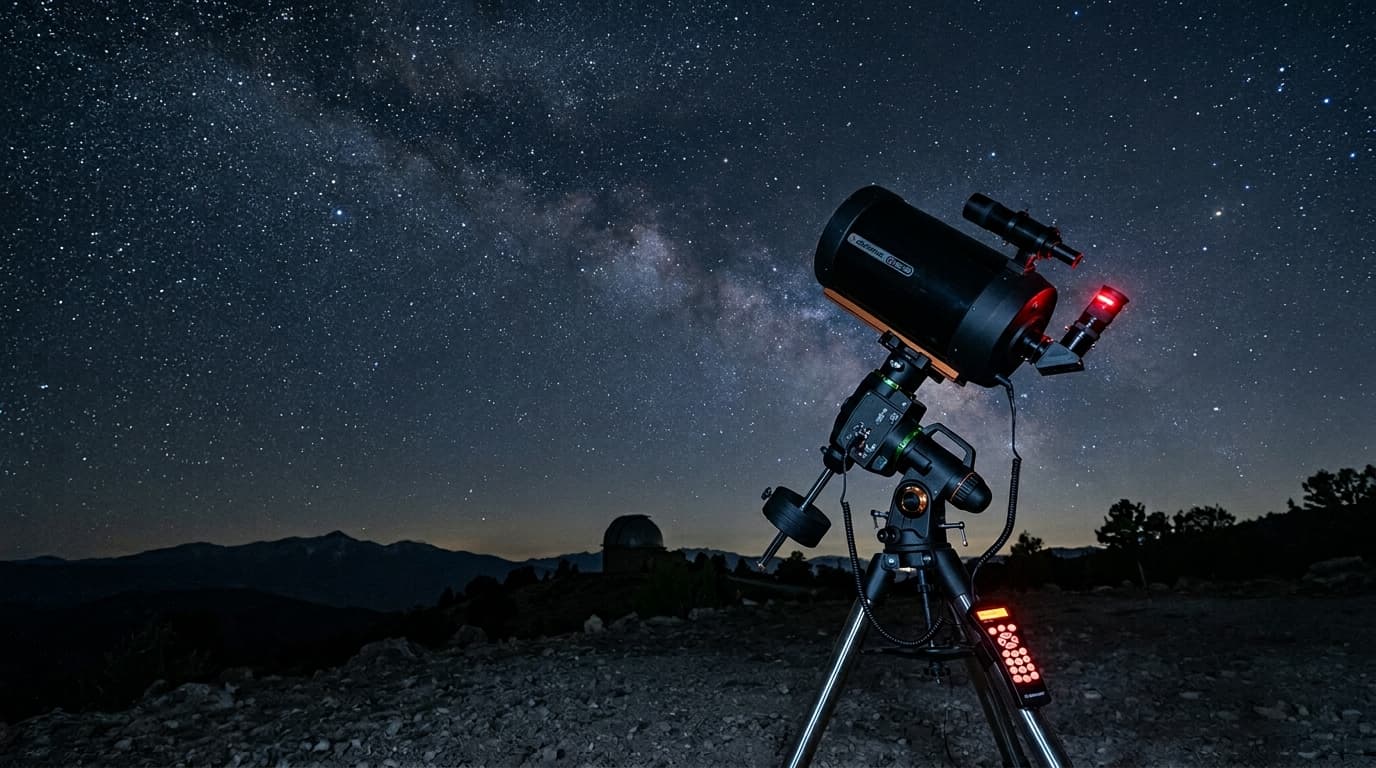

Planets and deep sky objects require different things from a telescope. Planets are bright but small, rewarding long focal lengths and high magnification. Galaxies and nebulae are large but dim, demanding raw aperture and fast focal ratios to gather enough light. The best telescope for planets in 2026 is the Celestron NexStar 8SE, an 8-inch SCT with a 2,032mm focal length that delivers serious planetary detail at $1,499. The best for galaxies is the Sky-Watcher FlexTube 300 SynScan, a 12-inch GoTo Dobsonian with an overall score of 85 and enough aperture to resolve structure in hundreds of deep sky objects.
What You Can Actually See
Before spending money, set realistic expectations. Aperture determines what is possible. No eyepiece, filter, or mount upgrade changes the physics of light collection.
| Aperture | Planets | Deep Sky |
|---|---|---|
| 60-80mm | Moon craters in sharp detail, Saturn's rings visible (tiny), Jupiter's two main equatorial bands (faint) | Bright star clusters (Pleiades, Double Cluster), Orion Nebula as a faint smudge |
| 114-130mm | Saturn's Cassini Division on steady nights, Jupiter's Great Red Spot when facing Earth, 4 Galilean moons with disk hints | Orion Nebula (M42) with real structure, Andromeda (M31) as an extended fuzzy patch, dozens of Messier objects |
| 200mm | Cloud band detail on Jupiter, ring structure and shadow on Saturn, polar caps on Mars at opposition | M42 with hints of color, galaxy arms visible in M31, globular clusters partially resolved, 100+ galaxies |
| 250-305mm | Fine planetary detail at 300-400x on steady nights, subtle cloud features, ring divisions | Hundreds of galaxies with visible structure, nebula filaments, globular clusters resolved to individual stars, galaxy groups |
Use our eyepiece calculator to figure out the magnification you will get with any telescope and eyepiece combination.
Quick Picks
| Category | Telescope | Score | Price |
|---|---|---|---|
| Best for planets | Celestron NexStar 8SE | 71 planetary | $1,699 |
| Best for galaxies | Sky-Watcher FlexTube 300 SynScan | 76 deep sky | $2,499 |
| Best all-rounder | Sky-Watcher FlexTube 300 SynScan | 85 overall | $2,499 |
| Best budget planets | Celestron NexStar 127SLT | 66 planetary | $679.99 |
| Best budget deep sky | Sky-Watcher Virtuoso GTi 150P | 57 deep sky | $402.31 |
| Best budget all-rounder | Celestron StarSense Explorer DX 130AZ | 74 overall | $499.95 |
Not sure what type of telescope suits you? Try our telescope finder tool or read our types of telescopes guide.
How We Chose
Every telescope on WhichScope is scored across 7 dimensions, including dedicated planetary and deep sky scores. The planetary score weights focal length, aperture, optical design (SCTs and Maks score higher for contrast), and GoTo tracking. The deep sky score weights aperture above all else, followed by focal ratio (faster is better for wide-field views), GoTo capability, and overall light throughput.
We filtered our database for the highest planetary scores and highest deep sky scores, then curated the top performers into this guide with a mix of price points.
Best Telescopes for Planets
1. Celestron NexStar 8SE: Best Overall for Planets
Celestron
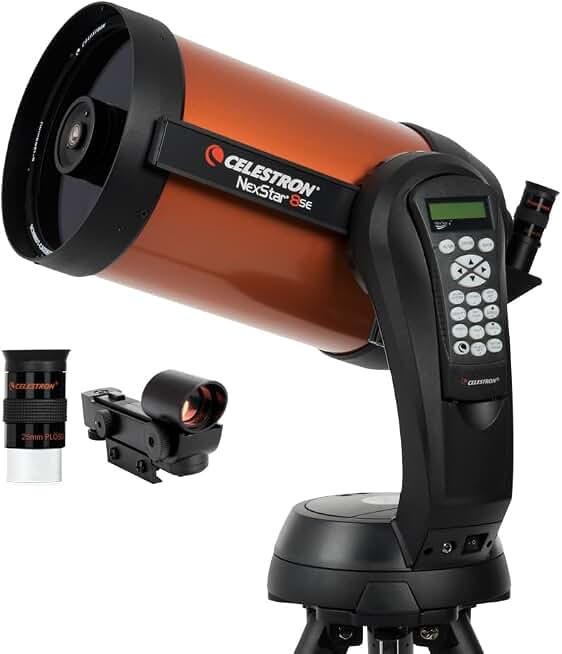
Celestron NexStar 8SEClassic looks, serious optics: the NexStar 8SE brings computerized GoTo precision to a proven 8-inch Schmidt-Cassegrain.
The NexStar 8SE is the telescope most serious planetary observers start with. The 203.2mm (8-inch) Schmidt-Cassegrain design delivers a 2,032mm focal length at f/10, which means high native magnification and the kind of image scale that turns Jupiter from a bright dot into a disk covered in cloud bands. On a steady night at 200-250x, you can see the Great Red Spot, shadow transits of the Galilean moons, and banding detail across the entire disk.
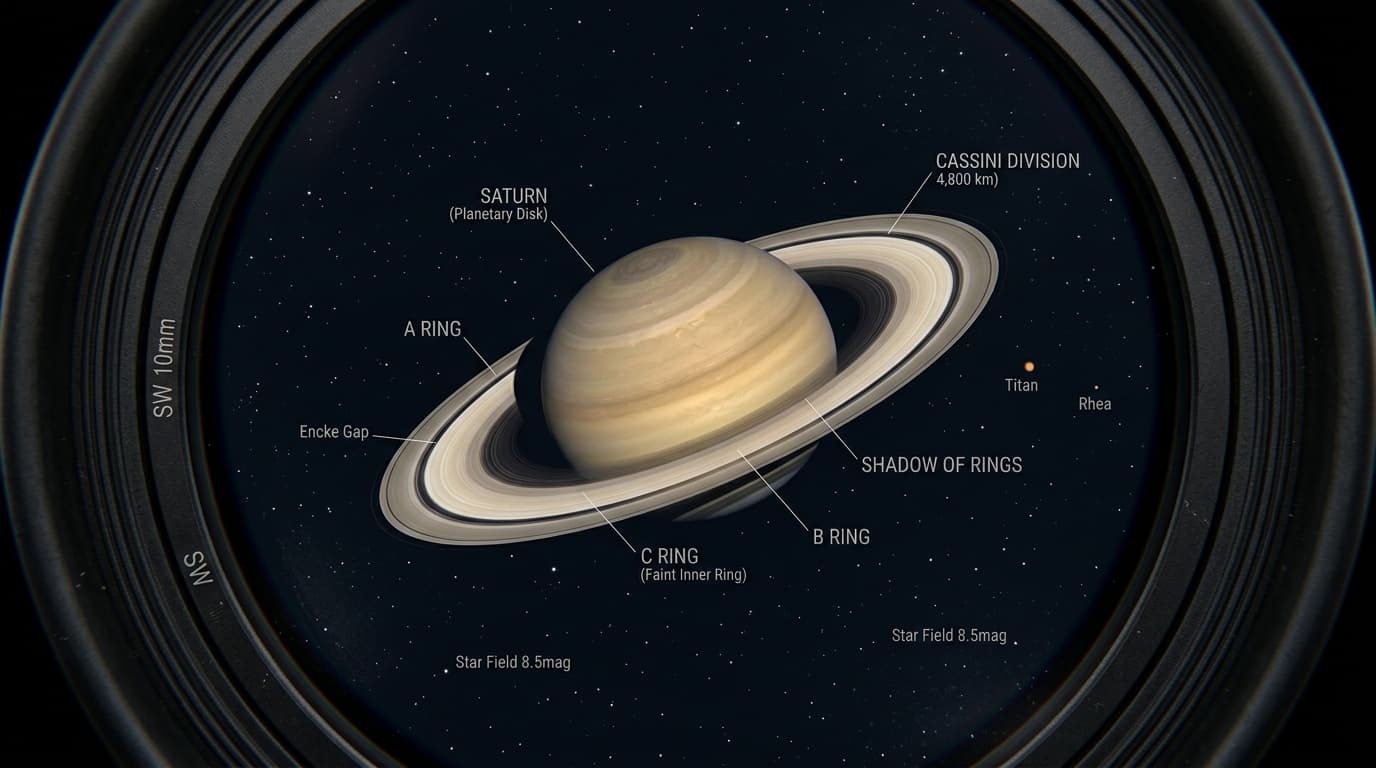
Saturn is where this scope earns its reputation. The Cassini Division in the rings is cleanly resolved, and the shadow of the globe on the rings gives Saturn a three-dimensional quality that smaller scopes cannot match.
The GoTo fork mount locates and tracks over 40,000 objects in the NexStar+ database. Tracking keeps planets centered at high magnification while you wait for moments of atmospheric steadiness. The whole kit is 14.5kg (32 lbs) per Celestron's spec, split into three pieces none heavier than the 5.4kg tube, portable enough for one trip to the car. With 2,493 Amazon ratings at 4.4 stars, this is one of the most proven telescopes on the market. For the full breakdown of its strengths and compromises, including the mount criticism owners raise, see our NexStar 8SE review.
The tradeoff: At $1,499, this is a serious investment. The fork mount works for visual but not for long-exposure astrophotography. The f/10 focal ratio means narrow true fields of view, so framing large deep sky objects requires careful eyepiece selection.
The standard for visual planetary observing. 8-inch SCT with GoTo at $1,499.
2. Celestron NexStar Evolution 9.25: Best Mid-Range Upgrade
Celestron
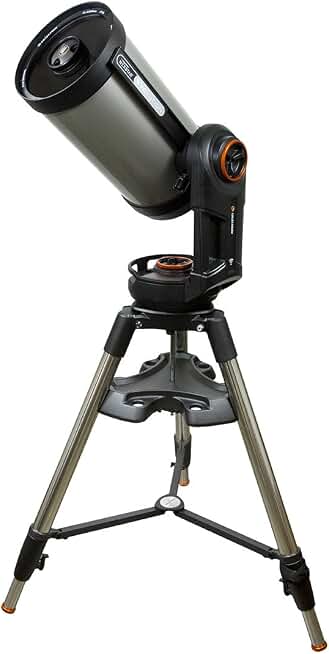
Celestron NexStar Evolution 9.25Serious aperture, smart technology, ready to use the night you unbox it
If you want more planetary detail than the 8SE without jumping to the $4,000 range, the Evolution 9.25 splits the difference. The 235mm aperture (9.25 inches) at f/10 gives you a 2,350mm focal length and 34% more light-gathering area than the 8-inch. That difference is visible on Jupiter: cloud band structure becomes finer, and festoons and ovals in the equatorial zone start to emerge at 250-300x.
The Evolution line adds built-in Wi-Fi and a rechargeable lithium battery, so there are no external power cords or hand controllers required. You control everything from the Celestron app on your phone or tablet. The GoTo database is the same NexStar+ system with 40,000+ objects.
At $1,009, the Evolution 9.25 is actually less expensive than the 8SE, which seems counterintuitive for a larger aperture. The difference is in the mount: the Evolution 9.25 hangs a bigger, heavier 235mm tube on the same class of single-arm alt-az fork, working the mount harder, and it carries 21.77kg total weight. That is heavy enough that setup is a two-trip affair.
The planetary score of 74 is the second-highest on this list, behind only the CGEM II 1100. For the price, this is the most planetary performance per dollar in our picks.
The tradeoff: The single-arm mount introduces more vibration at high magnification than the 8SE's design. At 21.77kg, portability is limited. And the alt-az mount means no equatorial tracking for astrophotography.
9.25-inch SCT with Wi-Fi GoTo for under $1,100. Strong planetary performer.
3. Celestron CGEM II 1100: Best Premium Planetary Scope
Celestron
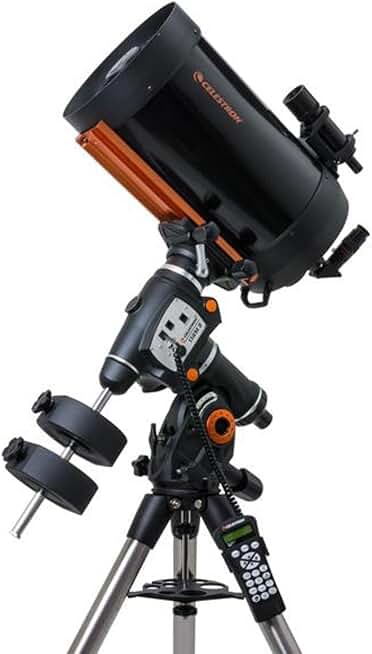
Celestron CGEM II 110011 inches of light-gathering power on a computerized equatorial mount, built for serious deep-sky and planetary work.
The CGEM II 1100 is for observers who want the best visual planetary experience available in a commercial telescope. The 279.4mm (11-inch) SCT at f/10 delivers a 2,800mm focal length, the longest on this list. At 300x, Jupiter shows intricate cloud structure: festoons, barges, and white ovals within the equatorial belts. Saturn's ring system reveals the Encke Gap, the Crepe Ring, and spoke features during ring plane crossings.
The CGEM II equatorial mount is the key differentiator. Unlike the alt-az fork mounts on the 8SE and Evolution, this is a proper German equatorial with computerized GoTo and sidereal tracking. The equatorial design eliminates field rotation, so objects stay oriented consistently during long observing sessions. It also opens the door to astrophotography, though the 11-inch SCT is demanding on any mount.
At $4,299, this is by far the most expensive telescope in this guide. The planetary score of 77 reflects the optical capability, but the overall score of 79 accounts for the complexity and weight. This is not a scope you set up on a whim.
The tradeoff: The price. The weight. The setup time. If you are not committed to a permanent or semi-permanent observing setup, this telescope will spend more time in storage than under the sky.
11-inch SCT on a GoTo equatorial mount. The planetary observer's benchmark.
4. Celestron NexStar 127SLT: Best Budget Planetary Scope
Celestron
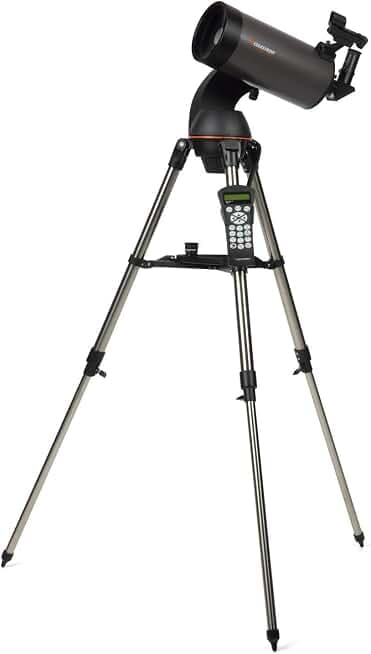
Celestron NexStar 127SLT127mm Maksutov-Cassegrain GoTo telescope that punches above its weight for planetary and lunar observing
The 127SLT proves you do not need to spend four figures to see meaningful planetary detail. The 127mm Maksutov-Cassegrain at f/11.8 delivers a 1,500mm focal length, which pushes Jupiter to 150x with a standard 10mm eyepiece and to 200x-plus with a Barlow. At those magnifications you see the two main equatorial belts with texture, the Great Red Spot when it faces Earth, moon shadow transits, and Saturn's rings with the Cassini Division on nights of good seeing. Its planetary score of 66 is the highest of any in-stock telescope under $1,000 in our database.
The Mak design is sealed and never needs collimation, and its long focal ratio is exactly what planets want. The GoTo mount does the rest: Celestron's SLT system finds and tracks 4,000+ objects after a SkyAlign on a few bright stars, and the tracking keeps a planet centered at high magnification while you wait for moments of steady air. With 1,185 Amazon reviews at 4.2 stars it is a proven platform. It is also the best traditional pick in our best telescopes under $1,000 guide.
We used to fill this slot with the Celestron 114LCM. Celestron's spec sheet describes it as a Bird-Jones design, a spherical mirror with a Barlow lens built into the focuser, and our scoring engine now accounts for that: its planetary score fell from 56 to 33 and it is no longer a pick.
The tradeoff: The f/11.8 focal ratio gives a narrow field, so large nebulae and open clusters will not frame well; this is a planets-and-Moon scope first. 127mm is modest aperture for faint galaxies. At 8.21kg it is a one-trip carry, and the Mak takes 20-30 minutes to reach thermal equilibrium on a cold night.
GoTo planetary tracking on a 127mm Mak. The best budget entry point for planet watching.
5. Celestron EdgeHD 925 OTA: Best Optics for Planetary Imaging
Celestron
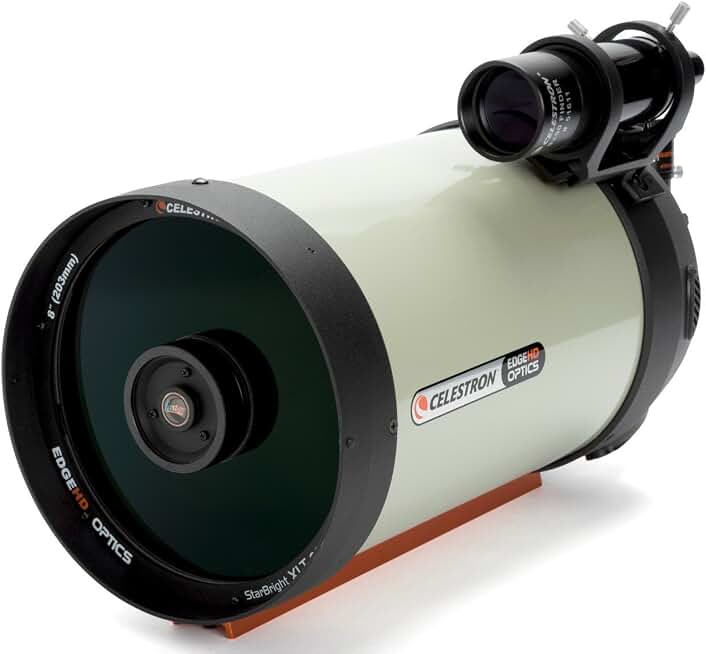
Celestron EdgeHD 925 OTACelestron's 9.25-inch workhorse: flat-field optics that satisfy both visual observers and astrophotographers
The EdgeHD 925 is Celestron's flat-field aplanatic Schmidt-Cassegrain, designed for observers and astrophotographers who demand edge-to-edge sharpness. The 235mm aperture at f/10 matches the Evolution 9.25 in light gathering, but the EdgeHD's corrected optics eliminate coma and field curvature that standard SCTs exhibit at the edges of the field. For planetary observation, this means pinpoint stars surrounding the planet right out to the edge of the eyepiece.
The 5.0-star Amazon rating (across 4 reviews) suggests the people who buy this OTA know what they are getting and are satisfied with the result. The planetary score of 72 reflects the optical quality, and the OTA-only format means you pair it with whatever mount suits your needs.
At $2,849, this is a premium optical tube for someone who already owns a capable mount. If you have a CGEM II, AVX, or EQ6-class mount, the EdgeHD 925 is one of the sharpest visual and imaging platforms available at this aperture. If you do not have a mount, the total system cost climbs quickly.
The tradeoff: OTA-only means no mount, no tripod, no GoTo. You need an existing equatorial mount rated for at least 15.42kg of payload. This is a component for experienced observers building a system, not a first telescope.
Flat-field 9.25-inch SCT. Edge-to-edge sharpness for demanding observers.
Best Telescopes for Galaxies and Deep Sky
Galaxies, nebulae, and star clusters are faint. The physics is simple: more aperture collects more photons, and more photons mean brighter, more detailed views. A fast focal ratio (f/4 to f/5) delivers wider true fields of view, which helps frame extended objects like the Veil Nebula or the Andromeda Galaxy. For a deeper explanation of why design matters, see our reflector vs refractor guide.
1. Sky-Watcher FlexTube 300 SynScan: Best Overall for Deep Sky
Sky-Watcher
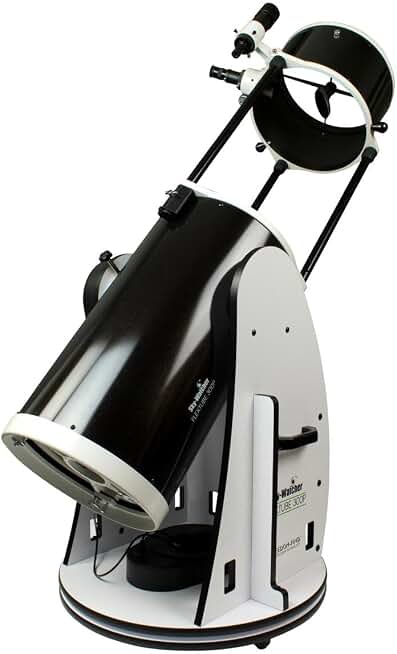
Sky-Watcher FlexTube 300 SynScan305mm of light-gathering power with GoTo convenience, in a Dobsonian that actually fits in your car.
The FlexTube 300 SynScan is the highest-scoring deep sky telescope in our database: 76 deep sky, 86 overall. The 305mm (12-inch) primary mirror at f/4.9 gathers light like nothing else in this price range. The Orion Nebula shows green-gray color and intricate structure. The Whirlpool Galaxy (M51) reveals two distinct spiral arms and the bridge connecting them. Globular clusters like M13 resolve into individual stars across the entire cluster face.
The collapsible truss tubes reduce stored length from about 1.4 meters to under 0.9 meters, so a 12-inch Dobsonian fits in the back seat of most cars. The SynScan GoTo system finds and tracks objects automatically, which matters enormously when hunting galaxies in Virgo or Leo that look identical through a finderscope.
At $2,499, it delivers capability that would cost $4,000+ in an SCT of comparable aperture. The tube weighs just 6.21kg thanks to the truss design. With 65 reviews at 3.8 stars, ratings reflect some users struggling with GoTo alignment on the Dobsonian platform.
The tradeoff: Dobsonians are alt-az mounts, so field rotation limits long-exposure astrophotography. The open truss tube needs collimation before every session. Thermal equilibrium takes 30-45 minutes on cold nights.
12-inch GoTo Dobsonian. The most deep sky capability per dollar in our database.
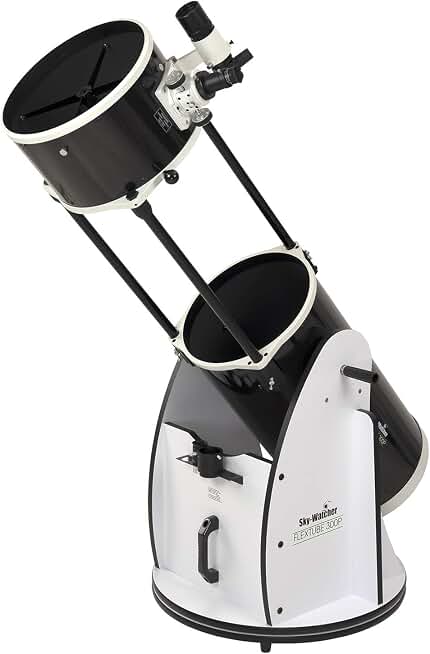
2. Sky-Watcher FlexTube 300P: Best Manual Deep Sky Scope
Sky-Watcher
Sky-Watcher FlexTube 300P305mm of light-gathering power in a collapsible GoTo Dobsonian you can actually transport.
The FlexTube 300P shares the same 305mm f/4.9 optics as the SynScan version but drops the GoTo electronics. Identical deep sky performance (76 deep sky score, 85 overall) at $1,649, saving $850. If you are comfortable star-hopping with a Telrad or RACI finderscope, that $850 buys a lot of eyepieces or a good observing chair.
Manual Dobsonians reward patience and sky knowledge: you learn the constellations, the hop patterns, and the relationships between guide stars and targets. Many experienced observers prefer this because it builds a mental map of the sky that GoTo users never develop.
At 15.88kg for the optical tube, the 300P is heavier than the SynScan version (6.21kg) because it uses a solid tube rather than a collapsible truss. Storage and transport are real considerations.
The tradeoff: No GoTo means you need to find objects manually. The solid tube is bulkier. And 48 Amazon reviews at 3.6 stars suggest some buyers receive units needing optical alignment out of the box.
12-inch manual Dobsonian. Same optics as the SynScan at $850 less.
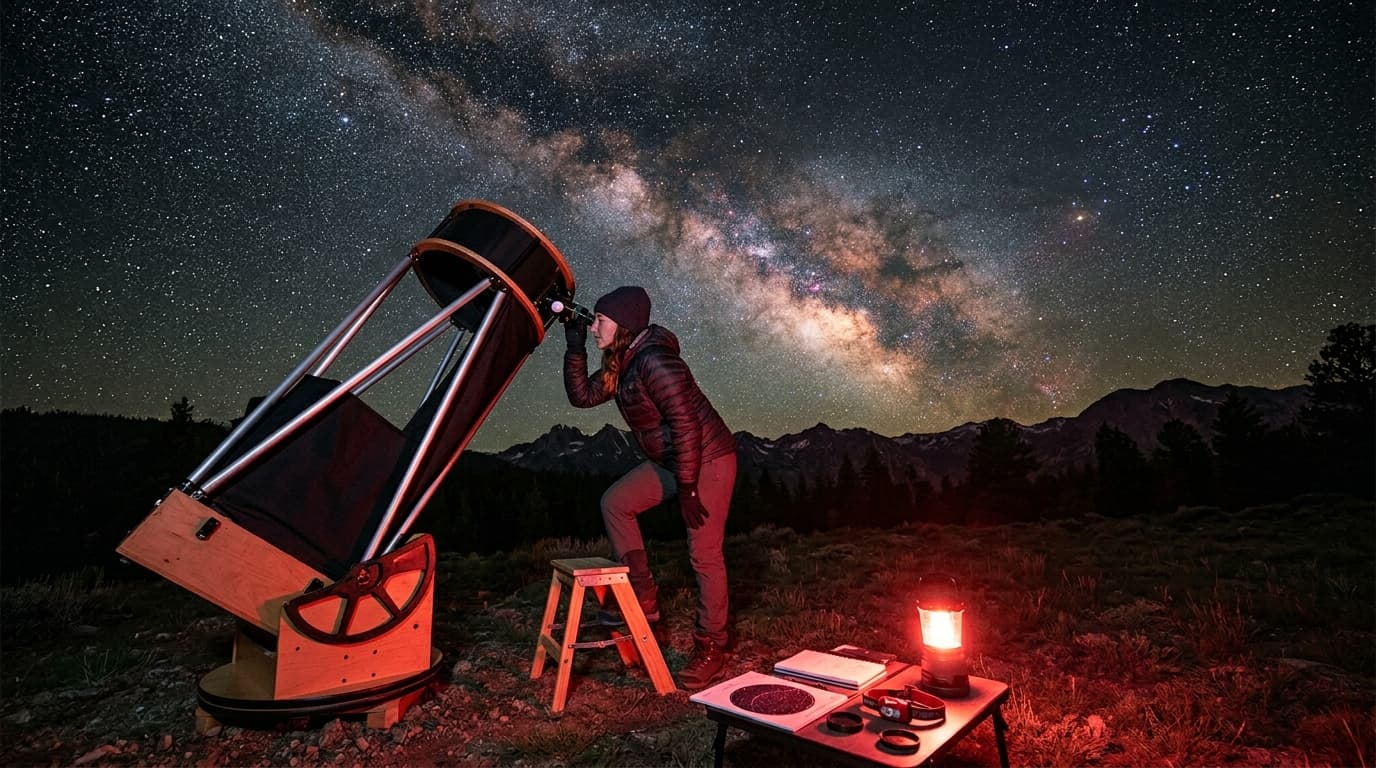
3. Celestron StarSense Explorer 12" Dob: Best App-Guided Deep Sky
Celestron
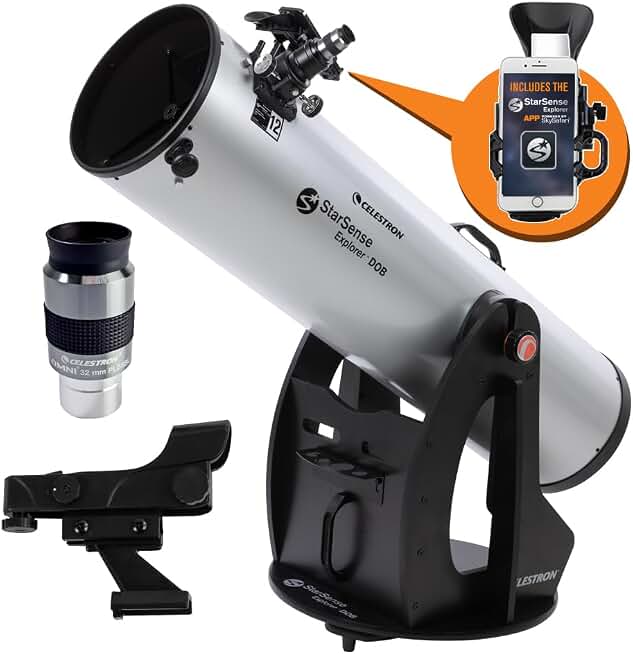
Celestron StarSense Explorer 12" Dob12 inches of light-gathering power meets smartphone navigation, making serious deep-sky observing accessible from night one.
Instead of GoTo motors, the StarSense Explorer uses a phone dock that plate-solves the sky in real time. The app shows exactly where the telescope is pointed and provides on-screen arrows to guide you to any target. You push the telescope manually, but you always know where you are going.
The optics are a 305mm f/4.9 parabolic mirror, matching the Sky-Watcher FlexTube models in aperture and focal ratio. M42, M31, M51, and hundreds of other objects are within reach. The scores of 68 planetary and 67 deep sky are slightly lower than the FlexTube models (77/76), reflecting the lack of motorized tracking rather than any optical difference.
At $1,603, this is $896 less than the SynScan version. The tradeoff: no motorized tracking, so objects drift through the eyepiece. For deep sky at moderate magnification (50-100x), drift is manageable. At higher powers on planets, you nudge the scope every 30 seconds. With 165 Amazon reviews at 4.4 stars, user satisfaction is high.
The tradeoff: Very heavy at 37.92kg (a two-person lift). Requires a compatible smartphone. No motorized tracking of any kind.
12-inch Dobsonian with app-guided star finding. Big aperture at $1,603.
4. Sky-Watcher Virtuoso GTi 150P: Best Budget Deep Sky
Sky-Watcher
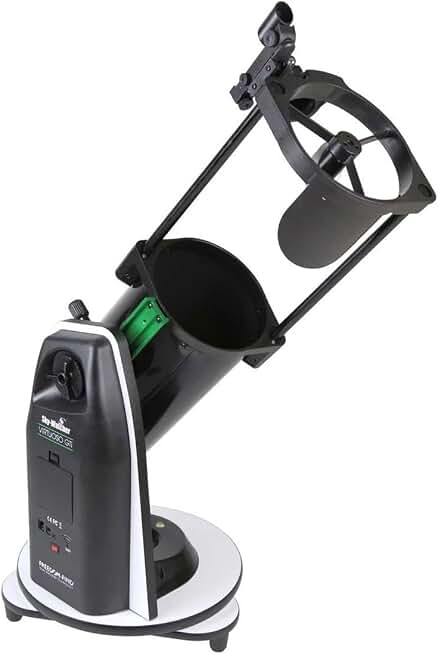
Sky-Watcher Virtuoso GTi 150PGoTo Dobsonian power in a tabletop package, with Wi-Fi control and the freedom to push around manually.
At $469, the Virtuoso GTi 150P puts 150mm (6 inches) of aperture on a motorized tabletop Dobsonian base with app-controlled GoTo. Six inches of aperture collects 73% more light than 114mm and opens up a meaningful chunk of the Messier catalog. The Orion Nebula shows real structure. The Andromeda Galaxy extends beyond a fuzzy blob into an elongated glow with a brighter core. Dozens of star clusters resolve into individual stars.
The 750mm focal length at f/5 delivers wide true fields of view that frame extended deep sky objects well, and the collapsible tube retracts for storage and transport. The GTi base is the differentiator at this price: point it with the SynScan app and it finds and tracks targets the way the big FlexTube SynScans in this guide do. For the faint deep sky objects beginners struggle to star-hop to, that matters more than raw optics. The deep sky score of 57 is the highest of any telescope under $500 in this guide.
If you would rather skip the electronics, the manual Sky-Watcher Heritage 150P offers the same 150mm f/5 optics on a push-to base for $309, making it the most affordable scope in this guide, and owners rate it 4.6 stars across 74 reviews.
The tradeoff: Both versions need something to stand on: a sturdy table, crate, or stool at your observing site. The open collapsible tube invites stray light and dew, so a fabric shroud is a common first accessory. And at 11.7kg the motorized base makes the GTi noticeably heavier than the manual Heritage at 9.34kg.
6 inches of GoTo-tracked aperture for $469. The budget deep sky entry point.
5. Sky-Watcher FlexTube 250 SynScan: Best Mid-Size Deep Sky
Sky-Watcher
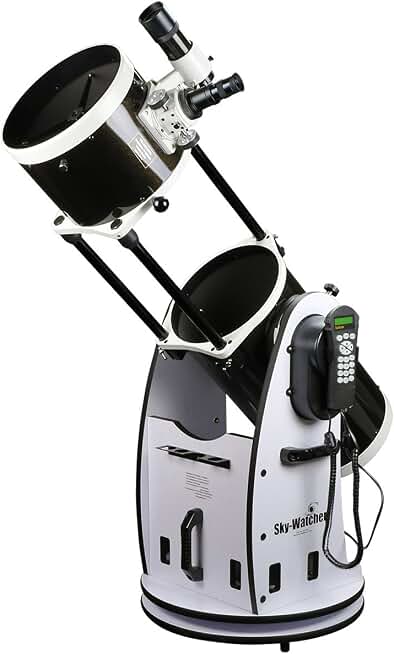
Sky-Watcher FlexTube 250 SynScan10-inch GoTo Dobsonian that collapses for transport without losing collimation, now with built-in WiFi control.
The FlexTube 250 SynScan is the 10-inch version of Sky-Watcher's collapsible GoTo Dobsonian line. The 254mm aperture at f/4.7 sits in a sweet spot: enough light for galaxy structure and nebula detail, while being more manageable than the 12-inch models. The deep sky score of 73 is just 3 points behind the 300mm FlexTubes.
The SynScan GoTo works identically to the 300 SynScan: align on a few stars, and the motors find and track 42,000+ objects. At $1,895, it costs $246 more than the manual FlexTube 300P while adding GoTo automation. The 34.56kg total weight is heavy for a 10-inch, due to the motorized base electronics.
The tradeoff: Not a grab-and-go telescope at 34.56kg. The 3.8-star Amazon rating (65 reviews) reflects the Dobsonian GoTo alignment learning curve. The f/4.7 focal ratio requires a coma corrector for sharp stars at the field edges.
10-inch GoTo Dobsonian with collapsible truss. Deep sky capability in a (relatively) portable package.
Best All-Rounders
Some observers want one telescope that handles both planets and galaxies well. The physics work against a single ideal design: planets want long focal lengths, deep sky wants fast focal ratios. But certain telescopes bridge the gap effectively.
1. Sky-Watcher FlexTube 300 SynScan: Best All-Rounder
Sky-Watcher
Sky-Watcher FlexTube 300 SynScan305mm of light-gathering power with GoTo convenience, in a Dobsonian that actually fits in your car.
The FlexTube 300 SynScan appears in both sections of this guide because it genuinely excels at both. The 305mm aperture resolves fine planetary detail at high magnification while collecting enough light for serious deep sky work. Scores of 77 planetary and 76 deep sky are the most balanced top-tier numbers in our database.
At 300x on Jupiter, you see cloud bands, festoons, and moon transits. At 60x on M31, you trace spiral arms. The GoTo tracking works equally well for keeping Jupiter centered at 400x and for hopping between galaxies in the Virgo Cluster. At $2,499, it costs in the range of premium 8-inch SCTs while delivering more aperture and broader capability.
Top-scoring all-rounder. 12-inch GoTo Dobsonian that handles planets and deep sky.
2. Celestron NexStar 8SE: Best All-Rounder SCT
Celestron
Celestron NexStar 8SEClassic looks, serious optics: the NexStar 8SE brings computerized GoTo precision to a proven 8-inch Schmidt-Cassegrain.
The NexStar 8SE leans planetary (71 vs 61 deep sky), but 203.2mm of aperture still shows the Orion Nebula, Andromeda Galaxy, Ring Nebula, Hercules Cluster, and dozens of other Messier objects. You will not see the faint galaxy structure a 12-inch Dobsonian reveals, but for mixed sessions the 8SE covers the full menu.
The SCT design is more compact and easier to set up than a Dobsonian. At roughly 14.5kg versus 30+ kg, the 8SE is the more practical all-rounder for most observers. Compare the NexStar 8SE against the FlexTube 300 SynScan to see the full spec breakdown.
Compact all-rounder. 8-inch SCT that excels on planets and handles deep sky targets.
3. Celestron StarSense Explorer DX 130AZ: Best Budget All-Rounder
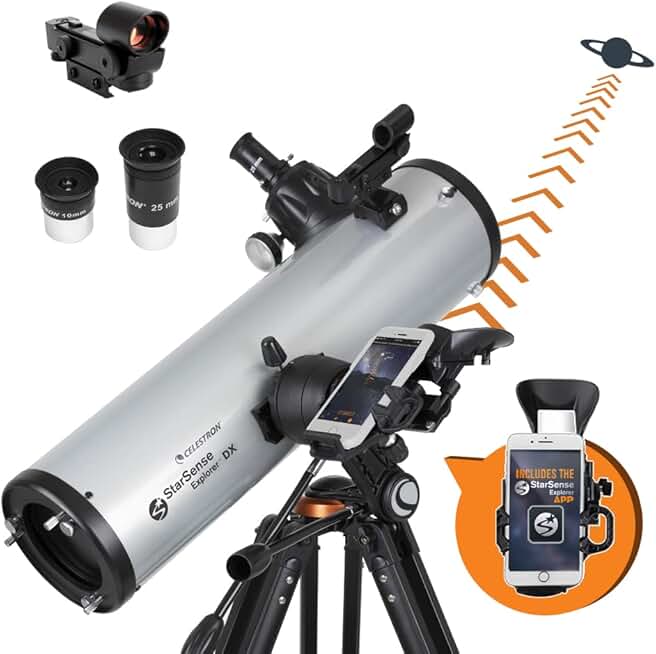
Smart phone-powered star finding meets a capable 130mm reflector, making the night sky genuinely accessible for beginners.
At $499.95, the DX 130AZ is the most affordable scope in this guide that handles both planets and deep sky objects honestly. The 130mm f/5 Newtonian has a 650mm focal length that balances magnification for planets with fields wide enough for the Orion Nebula and the Pleiades, and Celestron's spec sheet lists a parabolic primary mirror, which is what separates it from the cheaper 114mm StarSense models and the AstroMaster 130EQ that used to hold this slot (a spherical f/5 mirror, per the same spec sheets).
Finding is handled by the StarSense app: dock your phone, and it solves the sky through the camera and draws arrows to any target while you push the telescope. For a beginner splitting time between Jupiter and the Messier list, that solves the hardest part of both. With 1,550 Amazon reviews at 4.1 stars, the platform is well documented. The planetary score of 50 and deep sky score of 54 are modest, reflecting 130mm of aperture, but for under $450 this is the best balance of honest optics, finding aid and price in our database. It also leads our best telescopes under $500 guide.
The tradeoff: No motorized tracking. Objects drift through the eyepiece and you nudge every 30-60 seconds at planetary magnifications. The included eyepieces are basic. And 130mm means you see bright deep sky objects well, but fainter galaxies remain ghostly.
A parabolic 130mm with app-guided finding. The best budget all-rounder.
Planets vs Deep Sky: What is the Difference?
Understanding why different telescopes excel at different targets helps you choose the right one. The distinction comes down to optics and physics.
Why planets need focal length
Planets are small, bright disks. Jupiter spans about 40-50 arcseconds at opposition; Saturn's ring system spans about 40 arcseconds. To see detail on these tiny disks, you need image scale, which is determined by focal length. A 2,000mm telescope produces a focal plane image of Jupiter roughly twice the size of a 1,000mm telescope's image. That larger image can be magnified further before it becomes soft.
Schmidt-Cassegrain telescopes (SCTs) dominate planetary observing because their folded optical path delivers long focal lengths (2,000-2,800mm) in a compact tube. The same focal length in a refractor would require a tube over 2 meters long.
Why deep sky needs aperture
Galaxies, nebulae, and star clusters are extended objects spanning arcminutes to degrees, and they are extremely faint. Your eye needs photons to perceive detail, and the only way to collect more photons is a larger primary mirror or lens.
Doubling the aperture quadruples the light-gathering area. A 305mm mirror collects 2.25x more light than a 203mm mirror, and 7.15x more light than a 114mm mirror. That gap is the difference between seeing a galaxy as a faint smudge and seeing its spiral arms.
Why focal ratio matters for deep sky
Focal ratio (f/number) affects the true field of view. A fast scope (f/4 to f/5) delivers wider fields with any given eyepiece, helping frame large objects. A 305mm f/5 scope with a 32mm eyepiece gives roughly 1.3 degrees of true field, enough to frame Andromeda's core and inner disk. The same eyepiece on an f/10 scope gives only 0.65 degrees, cutting the framed area by 75%.
