

The ZWO Seestar S30 scores 90 overall in our database and carries the best value score (82) of any smart telescope we track. At $399 it photographs nebulae and galaxies from a city balcony with no astronomy knowledge required, which is a sentence that would have sounded absurd five years ago. Before you buy one, though, you need to know two things the search results will not tell you cleanly: how the S30 differs from the newer $600 S30 Pro that most reviews are actually about, and what a 30mm aperture genuinely cannot do.
Quick Verdict
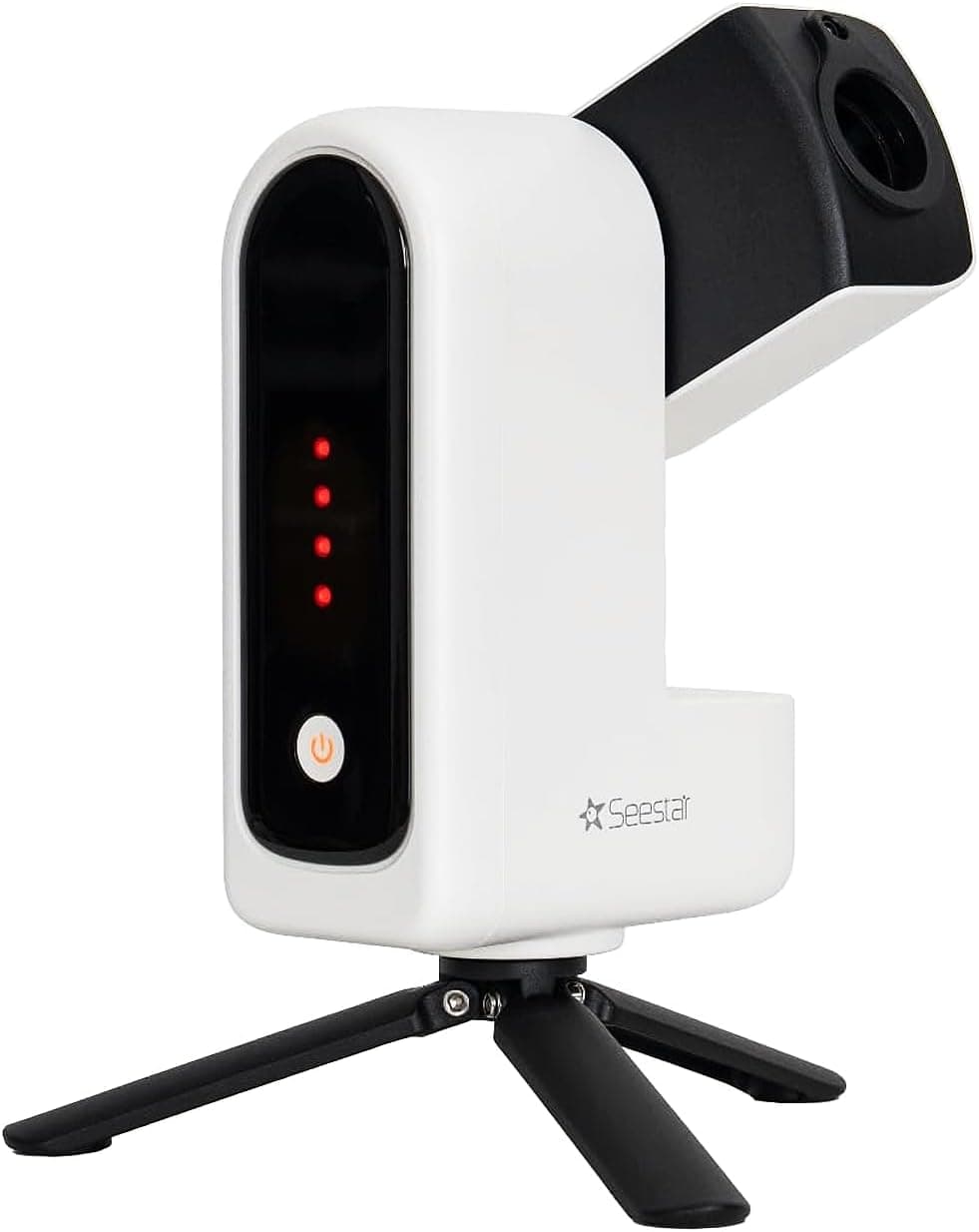
Pocket-sized smart telescope that finds, tracks, and stacks deep-sky targets automatically, no experience required.
| Category | Score |
|---|---|
| Overall | 90/100 |
| Value | 82/100 |
| Portability | 74/100 |
| Beginner-Friendliness | 72/100 |
| Astrophotography | 69/100 |
| Deep-Sky | 60/100 |
| Planetary | 48/100 |
Buy it if you want the cheapest genuinely good entry into deep-sky imaging, a wider field of view than the S50 for big nebulae, and a scope that fits in a daypack side pocket and sets itself up.
Skip it if you want to look through an eyepiece (there isn't one), you care about planets, or you can stretch to $499 for the Seestar S50, whose extra aperture pays off on everything faint.
Scores come from our 7-dimension methodology, computed from verified specs and live Amazon data. Where owner experience matters we cite it, drawing on early-owner reports from r/telescopes and the only hands-on review currently ranking for this search.
The cheapest smart telescope we recommend, and the best value score in its category.
S30 or S30 Pro? Read This First
Most of what Google returns for "Seestar S30" today, including ZWO's own FAQ page and the one hands-on review in the top ten, is about the Seestar S30 Pro, a different telescope that costs about $600. If you arrived here comparing prices and specs that do not seem to add up, this is why. The base S30 reviewed on this page is the $399 model.
What the extra ~$200 buys, per the hands-on testing published by astroforumspace.com and confirmed by owners on r/seestar:
| Seestar S30 | Seestar S30 Pro | |
|---|---|---|
| Price | $399 | ~$600 |
| Optics | 30mm f/5 triplet apochromat | 30mm f/5.3 quadruplet apochromat |
| Main sensor | 2MP class | 8MP Sony IMX585 (4K) |
| Storage | 64GB | 128GB |
| Second wide-field camera | No | Yes (63-degree FOV) |
| Milky Way / star-trail modes | No | Yes (Pro-exclusive) |
The Pro is a real upgrade, especially the 8MP sensor. But context matters: ZWO announced it only months after the S30 shipped, and the r/seestar owner community's reaction was less excitement than buyer's remorse. If your budget is $400, the S30 remains exactly what it was: the cheapest good smart telescope. If you were going to spend $600 anyway, the calculus changes, and at that point the $499 S50's larger 50mm aperture also re-enters the conversation. We do not yet track the S30 Pro in our database, so this review scores and recommends the base model only.
Full Specifications
| Spec | Seestar S30 |
|---|---|
| Optical design | 30mm f/5 triplet apochromatic refractor |
| Focal length | 150mm |
| Eyepiece | None; all viewing through the app |
| Mount | Motorized alt-azimuth GoTo, fully automated |
| Weight | 1.65kg (3.6 lbs) with folding tripod |
| Battery | Built-in, ZWO claims up to 6 hours (4 in video mode) |
| Storage | 64GB internal |
| Connectivity | WiFi to the Seestar app (iOS/Android) |
| Extras in box | Small tripod, USB-C cable, solar filter, carry case |
| Price | $399 (Amazon, prices change) |
| Amazon rating | 4.7 stars, 120 ratings |
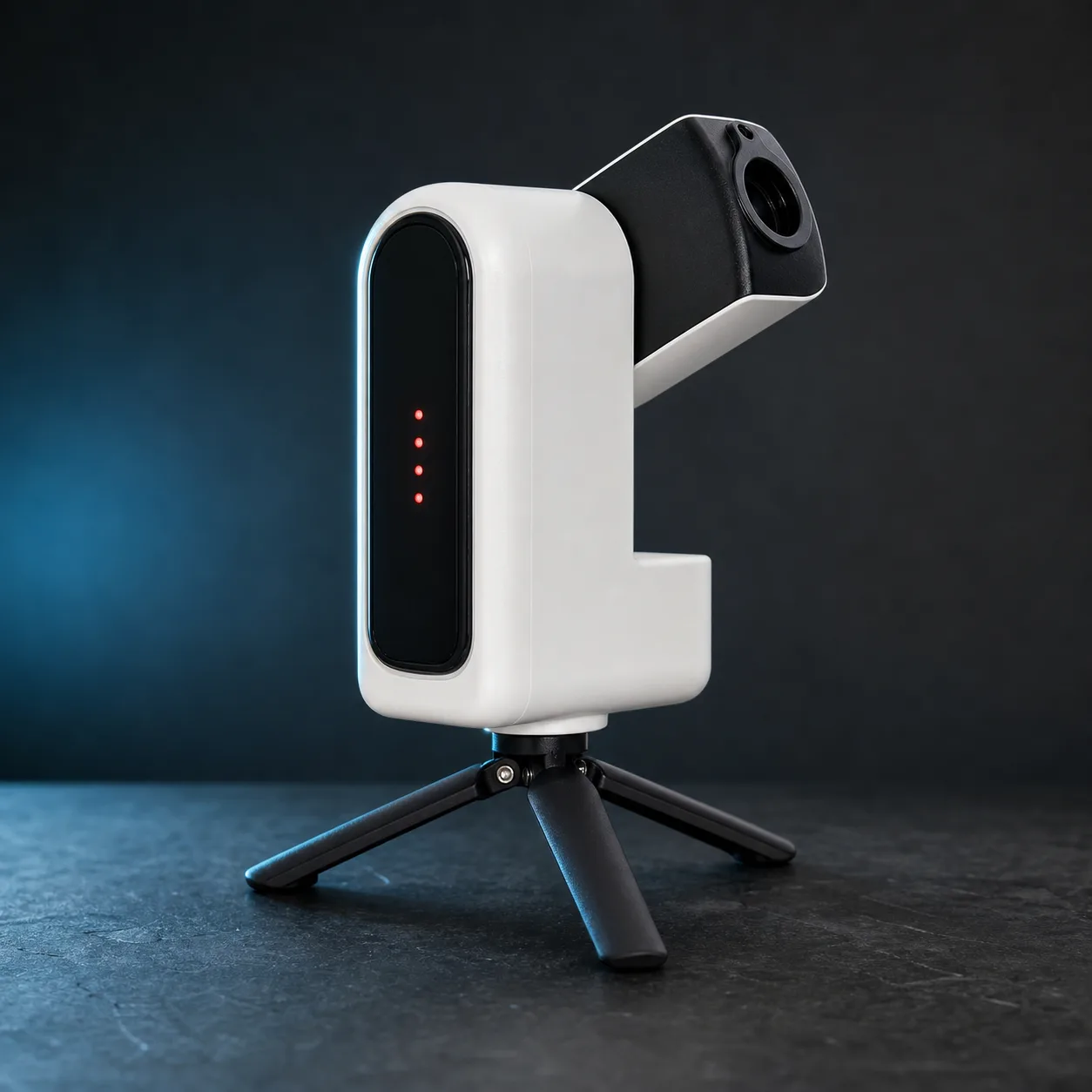
Two numbers define this telescope. The 30mm aperture is tiny by conventional standards, less than half the S50's light grab. And the 150mm focal length is very short, which is a feature, not a bug: it gives the S30 a noticeably wider field of view than the S50, wide enough to frame large targets like the Andromeda Galaxy, the Pleiades, and sprawling nebulae in a single shot without mosaics.
Score Breakdown
- Value: 82. The best value score of any smart telescope in our database. Nothing else under $500 produces images like this with zero skill required.
- Portability: 74. At 1.65kg with its tripod it disappears into a daypack. Setup is: put it down, press the power button, open the app.
- Beginner-Friendliness: 72. The app does alignment, finding, focusing, tracking, and stacking. The learning curve is a smartphone app, not a hobby.
- Astrophotography: 69. Real deep-sky images from a $399 box. The score is capped by the small sensor and the physics of 30mm.
- Deep-Sky: 60. Wide-field showpieces are its home turf; small, faint galaxies stay small at 150mm of focal length.
- Planetary: 48. Be honest with yourself about this number. Planets are effectively out of scope.
Setup and the App
The S30 runs the same Seestar app as the S50, and the experience is identical: the telescope levels itself, plate-solves its position against the stars, and offers a catalog of tonight's targets. Tap one, and it slews, centers, focuses, and begins stacking 10-second exposures into a progressively cleaner image you watch build on your phone. Owners consistently describe the first-night experience as the moment smart telescopes clicked for them.
Two practical notes from early owners. Live view refreshes about every half second, so slewing and framing feel responsive rather than laggy. And the S30 exports raw frames, so once you outgrow the app's automatic stacking you can reprocess your data properly in free tools like Siril or AutoStakkert; your old sessions get better as your skills do.
What It Photographs Well
Wide-field deep sky is the S30's entire purpose, and it delivers beyond what the price suggests. The Orion Nebula, the Pleiades, the Andromeda Galaxy, the North America Nebula: these targets fit the S30's wide frame better than they fit the S50's narrower one, which is the specific reason owners with both scopes reach for the S30 on big showpieces.
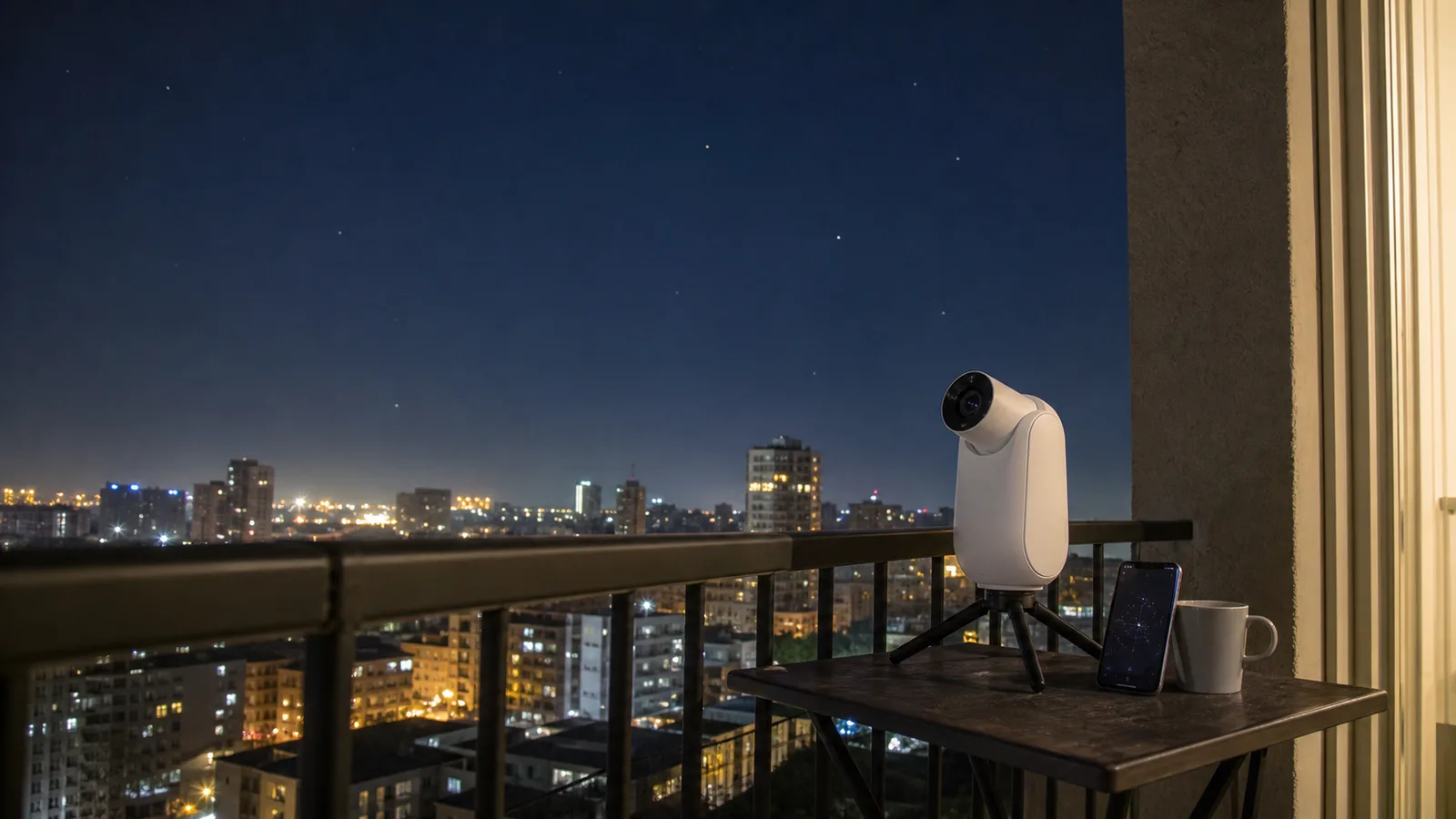
It also works from genuinely bad skies. One early owner published results from Bortle 8 urban Boston: a respectable Orion Nebula from 10 minutes of stacking, and a Soul Nebula that emerged from 52 minutes. That is the honest formula for city use: the S30 works under light pollution, you just pay in integration time, and a longer stack keeps improving the image. The Sun, with the included solar filter, and the Moon round out the target list.
Where It Falls Short
No eyepiece, ever. All viewing happens on your phone or tablet screen. If part of the appeal of a telescope is photons hitting your eye directly, no smart telescope delivers that, and the S30 is no exception.
The Moon is oddly mediocre. This is the most specific owner complaint on record: the in-app lunar processing over-sharpens, and side-by-side owners say the S50 renders the Moon visibly better. If lunar detail matters to you, that alone argues for the S50.
Planets are out. At 30mm and 150mm of focal length, Jupiter is a bright dot with four fainter dots around it, and Saturn's rings are a shape, not a view. Owners repeat this constantly to newcomers. If planets excite you, you want aperture and focal length: see our best telescopes for planets instead.
Small targets stay small. Galaxies beyond the showpieces render as compact smudges at 150mm. The S30 frames the sky wide; it does not zoom into it.
Sealed system. No filter threads for upgrades, no camera swaps, no eyepiece port. What it does on day one is what it does forever, minus firmware improvements.
Seestar S30 vs Seestar S50
Point, tap, and image the night sky with no experience required, all in a 3kg package under $500.
The S50 ($499, scores 93 overall) gathers 2.8 times more light through its 50mm aperture and reaches deeper on everything faint, resolves more detail at 250mm of focal length, and renders the Moon better. The S30 ($399) counters with a wider field of view that fits the largest showpiece targets in one frame, 850 grams less weight, and a $100 lower price.
Our take matches the owner consensus: the S50 is the better telescope, and the S30 is the better first telescope for the tightest budgets or for people who specifically want wide-field framing. If you are torn, the full spec-by-spec breakdown is on our S30 vs S50 comparison page.
Seestar S30 vs DWARF 3
DWARFLAB
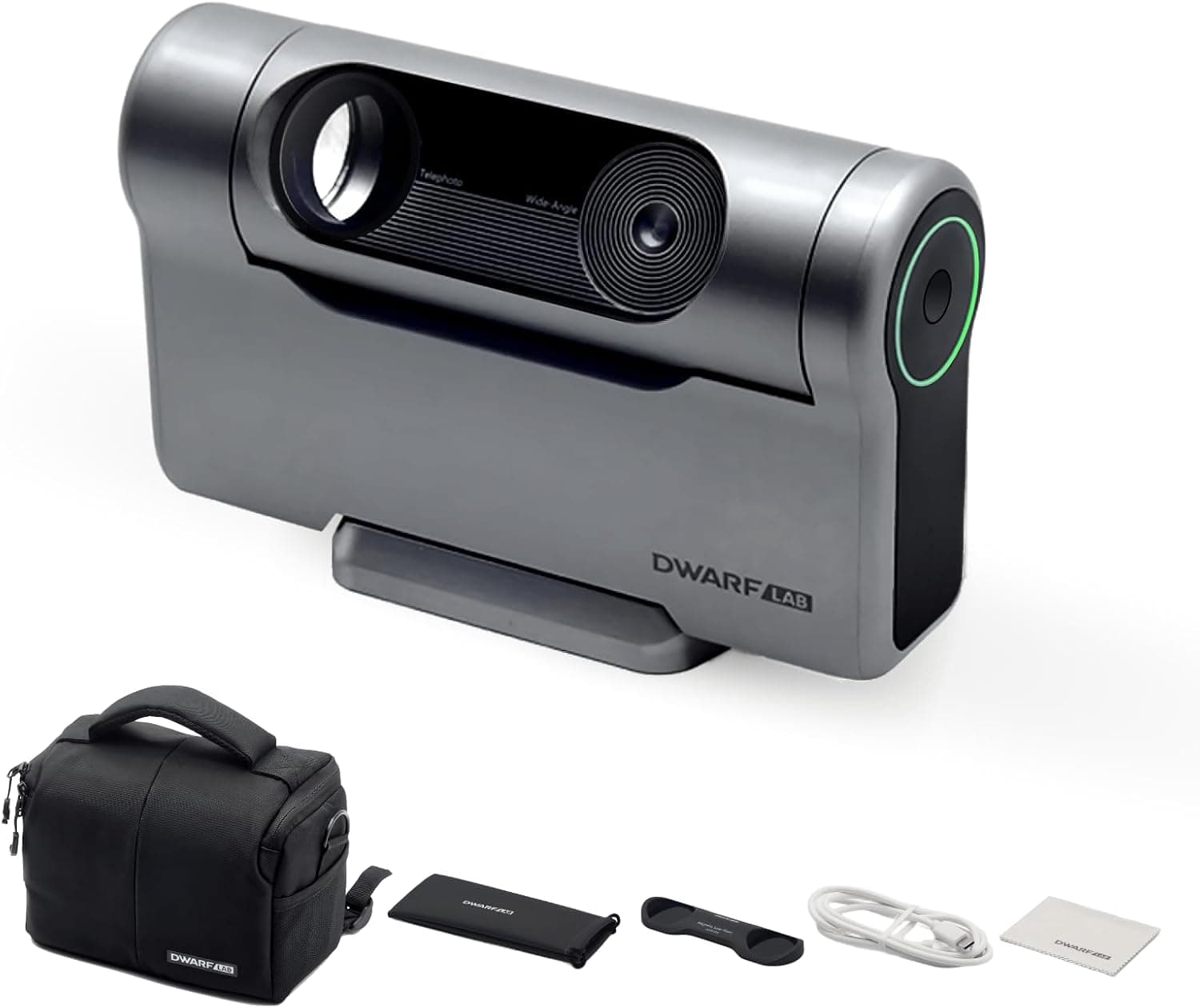
DWARFLAB DWARF 3Pocket-sized smart telescope with dual lenses, GoTo tracking, and live stacking for deep sky and daytime use
The DWARF 3 ($549, scores 83 overall) is the S30's closest non-ZWO rival: even smaller at 1.3kg, with a clever dual-lens design whose wide-angle camera does daytime wildlife and panoramas the Seestar cannot. The S30 answers with a larger 30mm aperture versus 24mm, a lower price, and the more polished app ecosystem. For pure night-sky imaging per dollar, the S30 wins; for a do-everything pocket camera that also does astronomy, the DWARF 3 has a real case. Spec-by-spec: DWARF 3 vs Seestar S30.
Who Should Buy the Seestar S30
Buy the S30 if: you want to find out whether astrophotography grabs you without committing real money, you live under city skies and want something that still produces, you value a scope that goes wherever a daypack goes, or you specifically want wide-field framing of big nebulae. At $399 with a 90 overall score and the best value rating in its category, it is the entry point we recommend for smart telescopes.
Buy something else if:
- You can find $100 more. The Seestar S50 is the stronger all-rounder and our highest-scoring smart telescope.
- You want planets or eyepiece views. A traditional scope is the answer; our telescope finder will route you from budget and goals in a minute.
- You are choosing between the S30 and the S30 Pro. Re-read the comparison above: the Pro's 8MP sensor is a genuine upgrade at ~$600, but at that money the S50 also deserves your shortlist.
- You want a serious imaging rig you can grow. Start from our astrophotography guide; sealed smart scopes do not upgrade.
