Comparison
DWARFLAB DWARF 3 vs ZWO Seestar S30

Performance Profile
Score Comparison
ZWO Seestar S30 is currently unavailable at Amazon. Prices mentioned in the comparison below may be out of date.
Our Take
The DWARFLAB DWARF 3 and ZWO Seestar S30 are closely matched across most observing categories. Both are smart telescopes that capture stacked images on a phone or tablet, both mount on alt-azimuth GoTo systems with tracking, and both weigh around 1.5kg. The small difference in aperture, 35mm against 30mm, favors the DWARF 3 slightly for light gathering, but this margin is modest enough that it rarely determines choice between instruments this size. The key specification separating them is optical design.
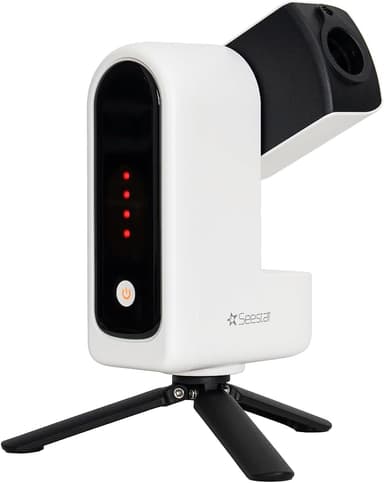
The Seestar S30 is an apochromat refractor, which corrects chromatic aberration across the visible spectrum. This design advantage shows most clearly when imaging the Moon and planets, where color fringing would otherwise degrade fine detail. The DWARF 3, with its faster f/4.3 focal ratio compared to the Seestar's f/5, gathers light slightly more efficiently and reaches focus more quickly during setup. Choose the Seestar S30 if imaging the Moon and planets is a priority and you want the optical refinement an apochromat provides.
Select the DWARF 3 if you value the marginally larger aperture and faster optical tube, or if you prefer a design optimized for general-purpose observing across all targets. For most buyers, either will perform competently; your choice hinges on whether lunar and planetary imaging matters enough to justify the Seestar's optical correction.
Key Differences
Why choose DWARFLAB DWARF 3
- 35mm aperture gathers more light than 30mm
Why choose ZWO Seestar S30
- Higher Value score (86 vs 62)
- Higher Planetary score (48 vs 37)