Comparison
DWARFLAB DWARF II vs ZWO Seestar S30

Performance Profile
Score Comparison
DWARFLAB DWARF II and ZWO Seestar S30 are currently unavailable at Amazon. Prices mentioned in the comparison below may be out of date.
Our Take
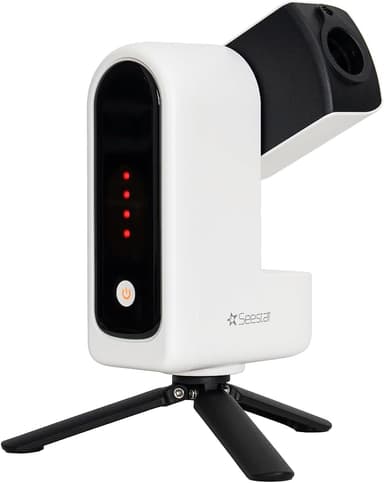
Both telescopes are compact smart instruments designed around smartphone imaging rather than eyepiece observation. The ZWO Seestar S30 has a small but meaningful advantage in aperture and focal length, giving it stronger performance on lunar and planetary targets, where its 30mm opening and 150mm focal length allow more detail to be captured in stacked images. The DWARFLAB DWARF II's more compact 24mm aperture and 100mm focal length keep it slightly more portable without sacrificing much across other tasks.
The core difference between them lies in optical design. The Seestar S30 is an apochromat refractor, which corrects color fringing across the spectrum and delivers cleaner images of bright objects. The DWARF II uses a shorter focal ratio design that trades some optical refinement for a wider field of view, making it more flexible for capturing extended deep-sky targets alongside planets.
Choose the ZWO Seestar S30 if lunar and planetary imaging is your priority and you value optical quality. The DWARFLAB DWARF II suits observers who want a more compact package without meaningful trade-offs in deep-sky performance, and who value the wider field of view for varied observing. Both handle astrophotography and ease of use similarly, so your decision hinges on whether you prioritize lunar-planetary detail or a slightly smaller footprint.
Key Differences
Why choose ZWO Seestar S30
- 30mm aperture gathers more light than 24mm
- Higher Planetary score (48 vs 34)
- Higher Amazon rating (4.7 vs 4.3 stars)