Comparison
DWARFLAB DWARF II vs ZWO Seestar S50
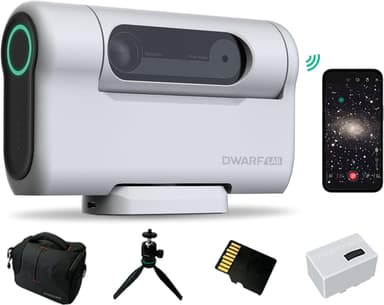
Performance Profile
Score Comparison
DWARFLAB DWARF II and ZWO Seestar S50 are currently unavailable at Amazon. Prices mentioned in the comparison below may be out of date.
Our Take
Both telescopes share core smart-scope features: GoTo mounts, tracking, and image capture to a mobile device. They're equally straightforward for beginners and equally capable at astrophotography. The decisive difference lies in aperture. The ZWO Seestar S50's 50mm aperture nearly doubles the DWARFLAB DWARF II's 24mm, which translates to substantially more light-gathering ability and resolving power.
This advantage matters most when imaging the Moon, planets, and faint deep-sky objects. The Seestar's apochromatic refractor design also helps deliver sharper images across the sensor. The DWARF II remains portable at 1.2kg, but the Seestar at 2.5kg is still genuinely portable for a telescope of its capabilities. Choose the DWARFLAB DWARF II if ultralight weight is your priority and you're content with modest image scale on lunar and planetary targets.
The ZWO Seestar S50 suits those who want stronger performance on these subjects and aren't concerned about the extra kilogram. For deep-sky imaging, the Seestar's greater aperture provides a clearer advantage. Both handle tracking and image stacking automatically, so either will deliver usable results; the Seestar simply captures more photons and resolves finer detail.
Key Differences
Why choose DWARFLAB DWARF II
- 1.3kg lighter and more portable
Why choose ZWO Seestar S50
- 50mm aperture gathers more light than 24mm
- Higher Portability score (86 vs 74)
- Higher Planetary score (53 vs 34)