Comparison
ZWO Seestar S30 vs ZWO Seestar S50
Performance Profile
Score Comparison
Our Take
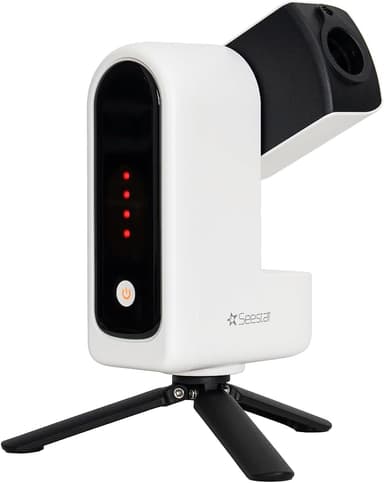
Both Seestars run the same app and the same live-stacking workflow, so this choice comes down to optics, size, and price. The ZWO Seestar S50 scores 93/100 overall and is the better pick for most buyers: its 50mm aperture gathers about 2.8 times the light of the S30's 30mm, it puts more detail on smaller deep-sky targets, and owners report it renders the Moon more naturally. The ZWO Seestar S30 scores 90/100 but wins on value (82 vs 76 in our scoring), costs about $100 less, and its shorter 150mm focal length frames a roughly 1.7 times wider field of view.
That field-of-view difference is the real fork in the road. The S30's wide frame swallows large showpieces whole: the full Andromeda galaxy, the North America Nebula, the Pleiades with room to spare. Owners image these from Bortle 8 city skies with 10 to 50 minute integrations. The S50's 250mm focal length puts more pixels on mid-size targets like the Dumbbell Nebula, globular clusters, and galaxy pairs, and its extra aperture builds the same signal in less stacking time.
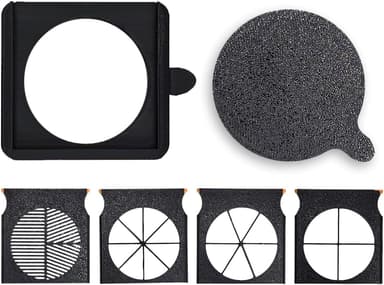
Know the shared limits before buying either. Neither is a planetary telescope: Jupiter and Saturn stay tiny dots at these focal lengths. Both image the Sun with their included solar filters, and both work under city light pollution if you accept longer integrations. Physically the S30 is the travel scope at 1.65kg, small enough for a daypack side pocket; the S50 weighs 2.5kg and wants its carry case.
One trap to avoid: the base S30 in this comparison is not the Seestar S30 Pro, a roughly $600 model ZWO launched in 2026. Per early hands-on coverage the Pro upgrades to quadruplet optics, an 8MP sensor over the base model's 2MP class, and 128GB of storage, which puts it above the S50 on price and pixel count. Most search results for the S30 now quietly discuss the Pro. This page compares the $399 base S30 against the $499 S50.
Buy the S50 if you want the most detail per session, care about lunar imaging, or mostly shoot mid-size deep-sky objects. Buy the S30 if you are budget-first, want the widest showpiece framing, or need something light enough to hike with. Nobody regrets either as a first smart telescope; the S50 is simply more telescope, and the S30 is more telescope per dollar.
Key Differences
Why choose ZWO Seestar S30
- $199 cheaper
- Higher Value score (89 vs 76)
Why choose ZWO Seestar S50
- 50mm aperture gathers more light than 30mm
- Higher Portability score (86 vs 74)
- 326 Amazon reviews vs 120