Comparison
Vaonis Hestia vs ZWO Seestar S30

Performance Profile
Score Comparison
ZWO Seestar S30 is currently unavailable at Amazon. Prices mentioned in the comparison below may be out of date.
Our Take
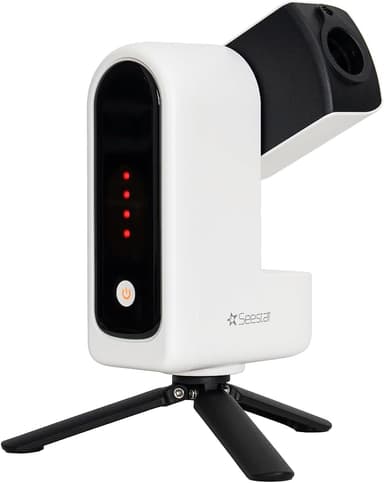
The ZWO Seestar S30 is the stronger choice for most buyers. Both telescopes have the same small 30mm aperture and use smart-scope design, showing stacked images on a phone or tablet rather than eyepiece viewing. The decisive difference lies in the Seestar's apochromat refractor design, which delivers better optical correction across the color spectrum. Combined with its GoTo mount and tracking capability, this allows the Seestar to capture sharper images across lunar, planetary, and deep-sky subjects.
The Hestia's simpler design and lighter weight make it genuinely more portable, but the Seestar's optical advantages apply across nearly every observing category. The Vaonis Hestia suits buyers prioritizing lightweight travel above all else. Its 0.85kg mass makes it genuinely easier to carry on extended trips where every gram matters. However, this weight savings comes at the cost of optical performance; the Hestia cannot match the Seestar's image quality or its ability to track moving objects automatically.
Both telescopes will show the moon as a bright crescent or gibbous disk and planets as small disks with limited surface detail. Neither is optimized for high-magnification planetary observation. For astrophotography capability, stacking quality, and tracking convenience, the Seestar S30 pulls ahead across the board.
Key Differences
Why choose ZWO Seestar S30
- Includes GoTo mount for automatic object finding
- Has tracking capability for astrophotography
- Higher Overall score (89 vs 56)
- Higher Value score (86 vs 66)
- Higher Beginner score (73 vs 48)
- Higher Astrophoto score (69 vs 37)