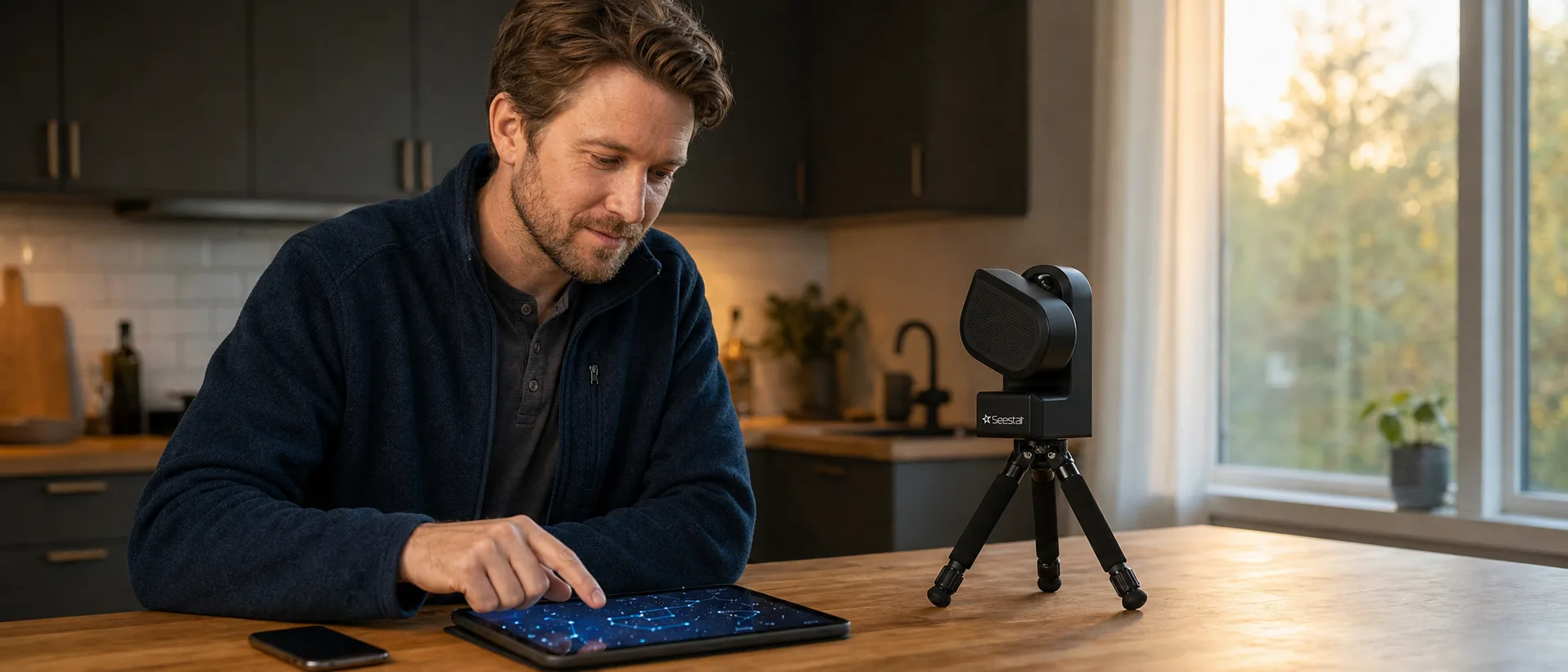

The ZWO Seestar S50 is the smart telescope that broke the hobby open. At $499 with a 50mm apochromatic refractor, built-in camera, GoTo mount, and live stacking, it delivers real astrophotography results to people who have never touched a telescope before. It scores 93 overall on WhichScope, the highest of any smart telescope in our database, and 317 Amazon reviewers give it 4.5 stars. But a 50mm aperture has real limits, and "smart" does not mean "magic." Here is what the Seestar S50 actually delivers, where it falls short, and whether it is worth your $499.
Quick Verdict
| Category | Score |
|---|---|
| Overall | 93/100 |
| Portability | 86 |
| Value | 76 |
| Beginner | 71 |
| Astrophoto | 71 |
| Deep Sky | 64 |
| Planetary | 53 |
Bottom line: The Seestar S50 is the best smart telescope under $500 for someone who wants to photograph the night sky without learning astrophotography first. Its 50mm aperture gives it a meaningful edge over competitors like the DWARF 3 (24mm) and Seestar S30 (30mm), and the automated workflow genuinely works on the first night. The tradeoff is that 50mm is still small by telescope standards, so faint targets need patience and dark skies, and planets will disappoint anyone expecting Saturn's rings in detail.
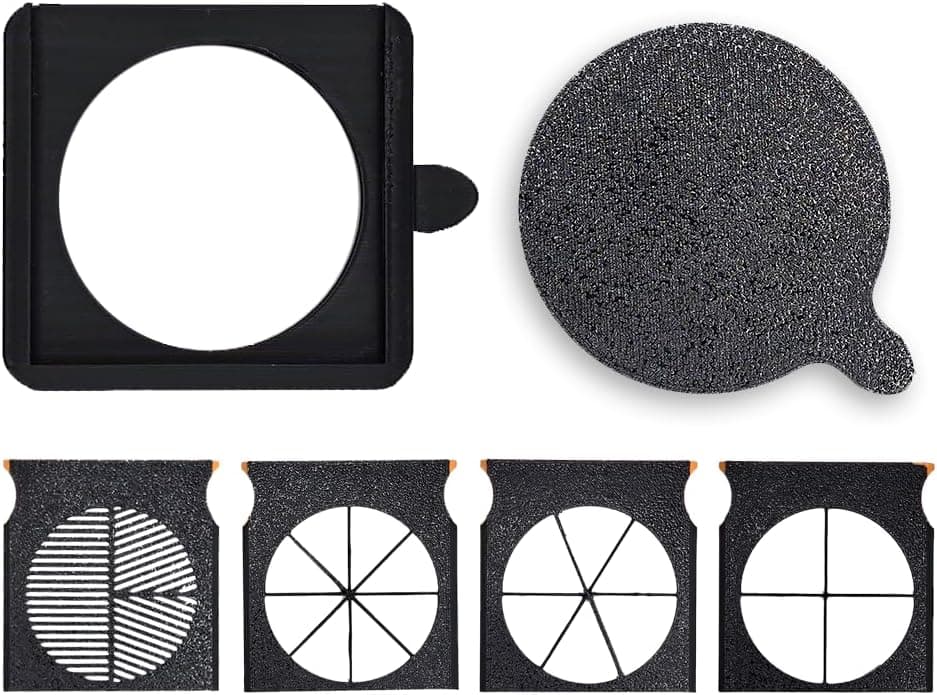
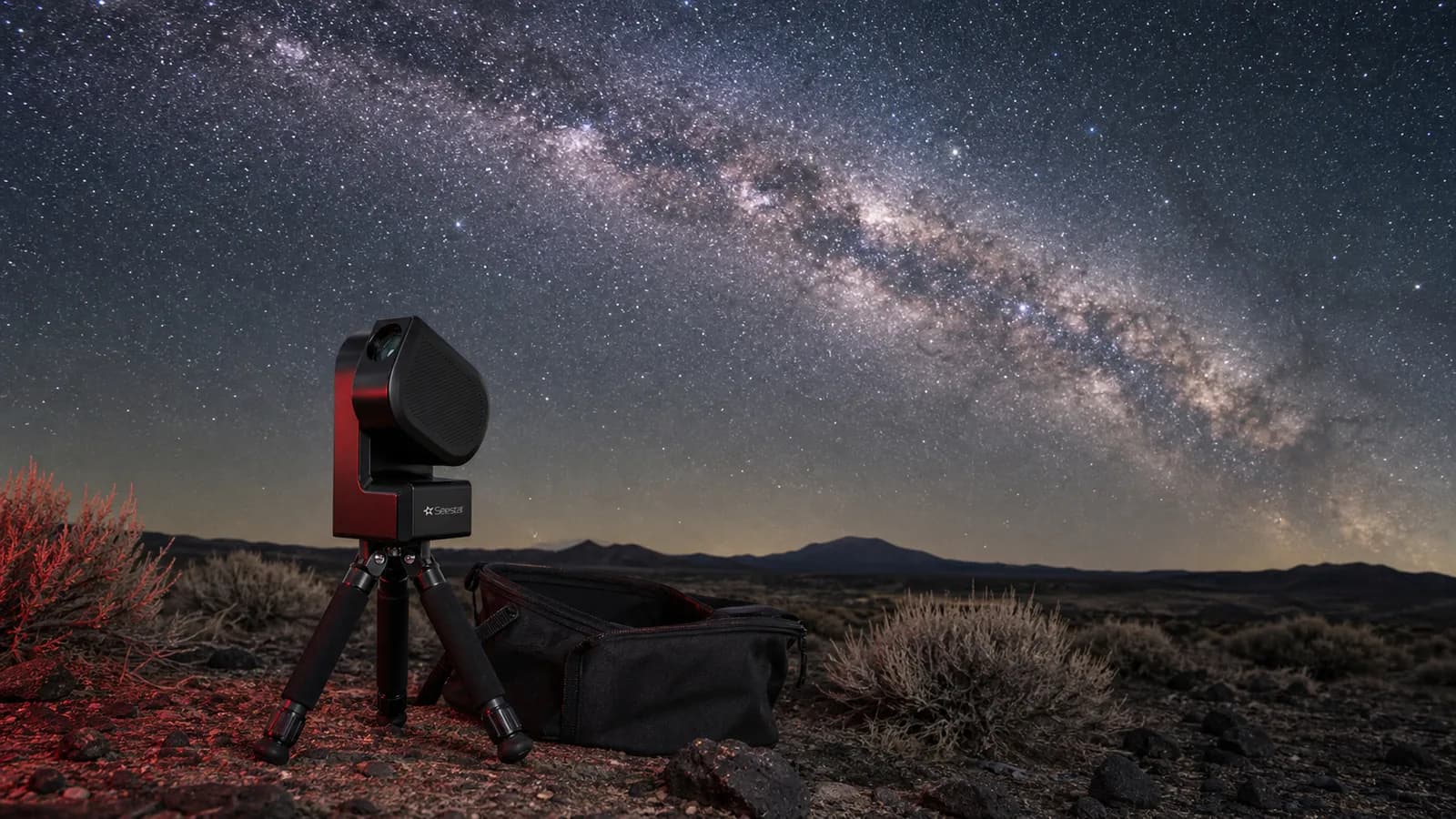
Point, tap, and image the night sky with no experience required, all in a 3kg package under $500.
Full Specifications
| Spec | Value |
|---|---|
| Aperture | 50mm (2 inches) |
| Focal Length | 250mm |
| Focal Ratio | f/5 |
| Optical Design | Apochromat Refractor |
| Sensor | Sony IMX662, 2MP |
| Mount | Alt-Az (motorized) |
| GoTo | Yes |
| Tracking | Yes |
| Live Stacking | Yes |
| Weight | 2.5kg (5.5 lbs) |
| Connectivity | WiFi, Bluetooth |
| App | iOS, Android |
| Price | $499 |
| Amazon Rating | 4.5/5 (317 reviews) |
Score Breakdown
The Seestar S50's 93 overall score reflects a product that does what it promises across nearly every dimension. Here is how each of our seven scoring dimensions breaks down.
Portability (86/100): At 2.5kg, the S50 is heavier than the DWARF 3 (1.3kg) but still light enough to carry to a dark site without planning your day around it. The all-in-one design means no separate mount, camera, or cables. You grab one device, one tripod, and your phone.
Value (76/100): At $499, the S50 offers the most aperture per dollar in the smart telescope category. The DWARF 3 charges $549 for 24mm, and Unistellar products start above $2,000. Against traditional telescopes, the calculus changes, but within its category, the S50 is well-priced.
Beginner (71/100): The entire point of the Seestar S50 is that you do not need to know anything about telescopes to use it. The app handles alignment, plate-solving, GoTo, tracking, and stacking. A true beginner can produce a stacked image of the Orion Nebula within 15 minutes of unboxing. The score is strong, not exceptional, because visual observers still need a traditional scope.
Astrophotography (71/100): The S50 automates the hardest parts of astrophotography: tracking, stacking, and processing. The Sony IMX662 sensor is capable, and the apochromatic optics keep chromatic aberration under control during multi-frame stacks. The limitation is resolution (2MP) and aperture (50mm), which cap the detail you can extract from faint targets.
Deep Sky (64/100): Bright targets like M42 (Orion Nebula), M31 (Andromeda), and the Pleiades look genuinely good after 10-20 minutes of stacking. Fainter objects like galaxies in the Virgo Cluster or dim planetary nebulae require dark skies and 30+ minutes of integration time. The 50mm aperture collects enough light for satisfying results on the top 50-100 deep-sky targets; beyond that, you are fighting the physics.
Planetary (53/100): This is where expectations need resetting. The S50 can image the Moon in impressive detail, including craters and maria. Jupiter shows as a disc with hints of banding, and Saturn shows its rings as a distinct shape. But you will not resolve the Cassini Division, the Great Red Spot, or cloud band detail. The 250mm focal length is simply too short for planetary work. If planets are your primary interest, a traditional telescope with more aperture will serve you far better.
What Works Well
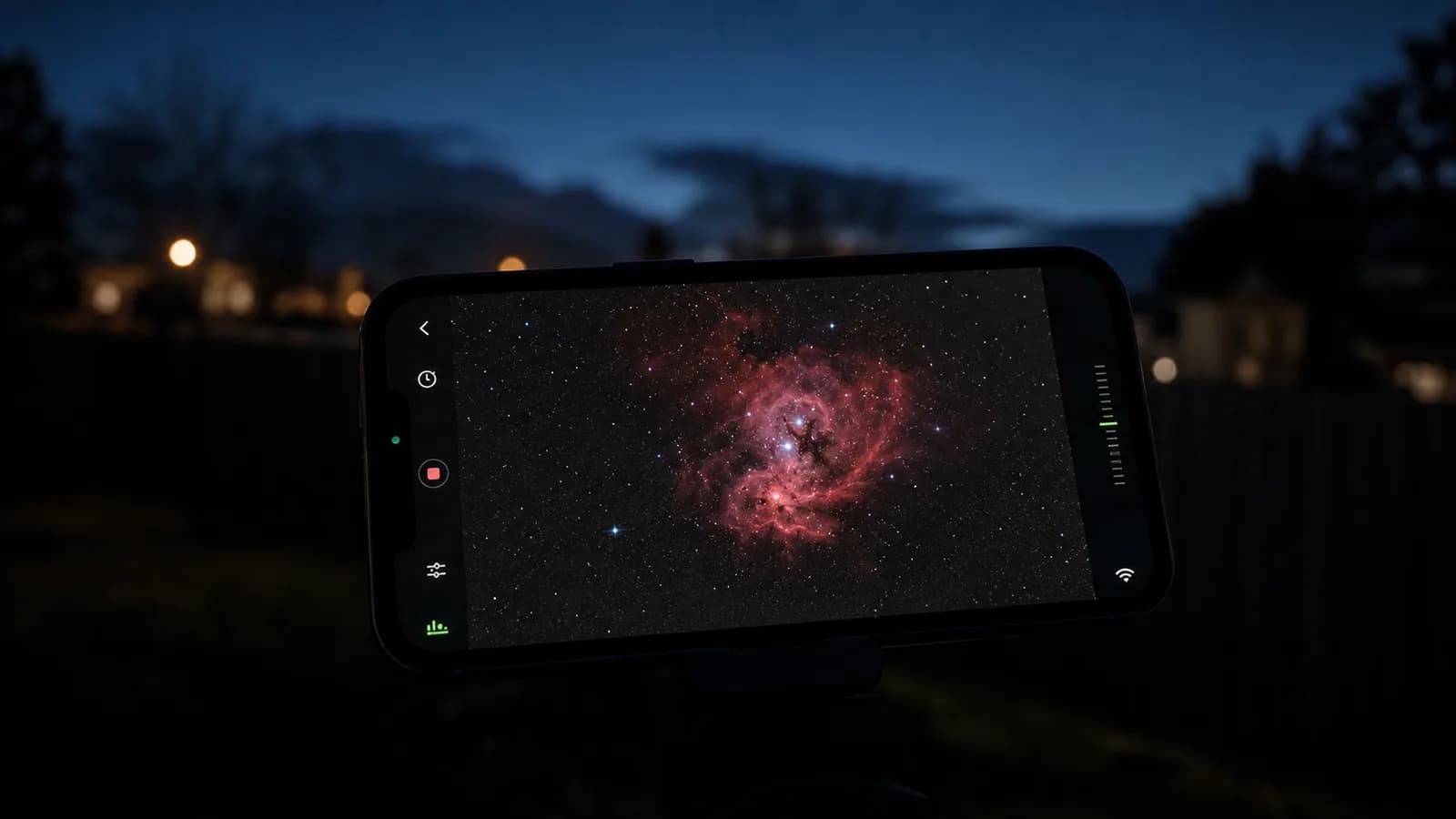
First-night results are real. This is the S50's strongest selling point, and it is not marketing exaggeration. You set the telescope down, open the app, let it align (usually under two minutes), tap a target from the catalog, and watch a live-stacked image build up on your phone. Community forums are full of first-time users posting Orion Nebula shots from their first night. No other product category delivers astrophotography results this quickly.
The app is genuinely good. The Seestar app handles the entire workflow: alignment via plate-solving, GoTo catalog browsing, automated tracking, live stacking with real-time preview, and basic post-processing. ZWO has iterated on it significantly since launch. It is not flawless (more on that below), but it is the most polished smart telescope app available.
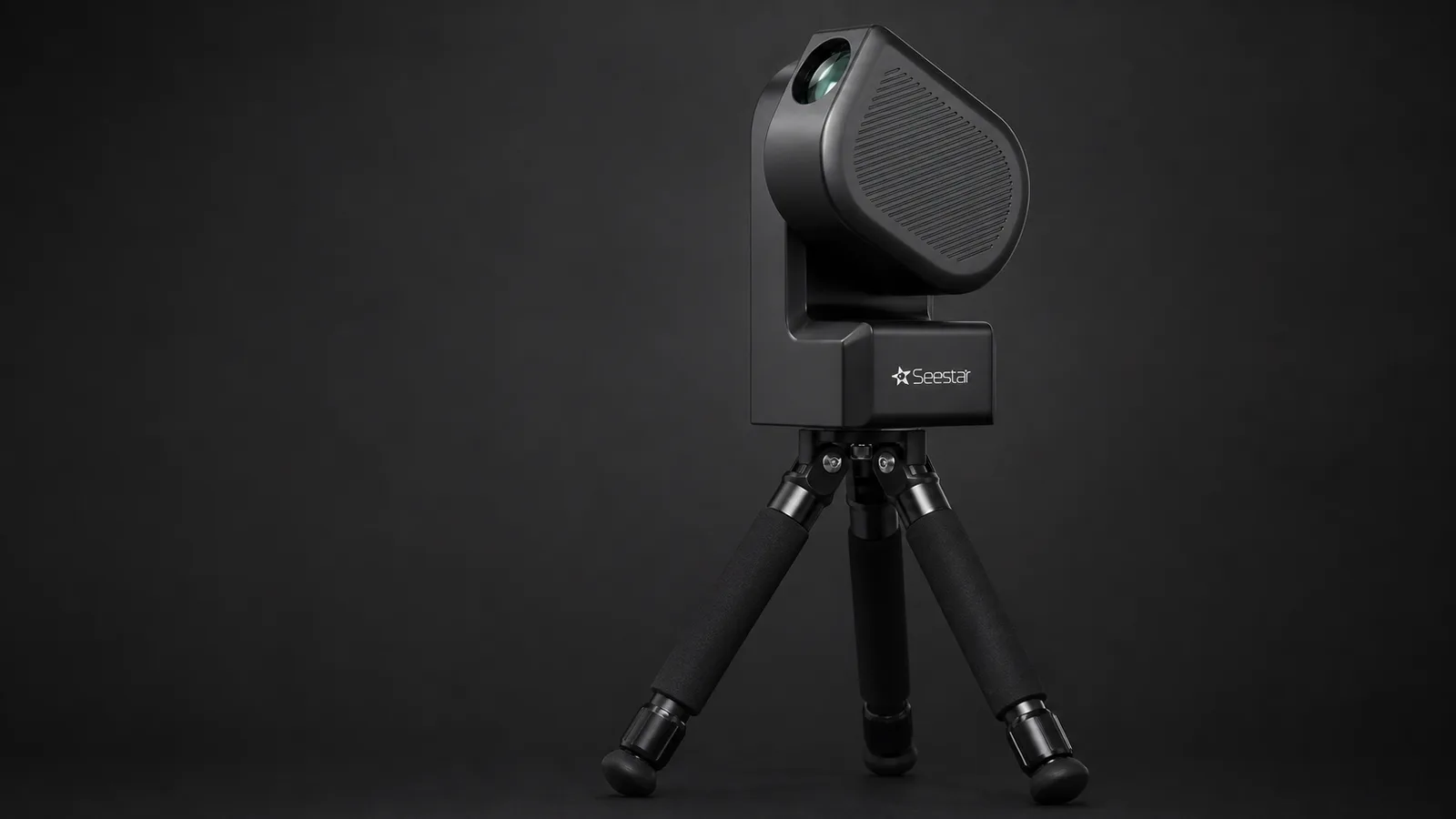
Apochromatic optics matter for stacking. The three-element apochromatic refractor design controls chromatic aberration, which becomes important when you are stacking dozens or hundreds of frames. Color fringing compounds with each stacked exposure in a cheaper doublet design; the S50's APO optics keep colors clean across long sessions.
The community ecosystem. ZWO is an established name in astrophotography (their ASI cameras are widely used), and the Seestar community is large and active. This means firmware updates, third-party processing tips, community image galleries for setting expectations, and a robust troubleshooting knowledge base. When you hit a problem, someone has likely solved it already.
Portability with capability. At 2.5kg, the S50 is not the lightest smart telescope (the DWARF 3 is 1.3kg), but it carries significantly more aperture. The balance of portability and optical capability is arguably the best in the category. You can realistically carry it to a dark site on foot without it being the central logistical challenge of your evening.
What Falls Short
50mm is still small. There is no way around this. The Seestar S50's aperture collects a fraction of the light that a traditional 6-inch or 8-inch telescope gathers. On bright showpiece targets, the difference is manageable through stacking. On faint targets, you hit a ceiling where more stacking time yields diminishing returns and the noise floor becomes the limiting factor. If you are chasing galaxy arms or faint nebula detail, you will eventually want more aperture.
2MP sensor limits cropping and detail. The Sony IMX662 is a good sensor for its size, but 2 megapixels means you cannot crop into an image and retain detail. What you see at full frame is essentially what you get. Higher-resolution sensors in future smart telescopes will likely address this, but for now it is a real constraint for users who want to zoom into specific features.
App bugs still exist. While the Seestar app has improved significantly since launch, community reports on Reddit and Cloudy Nights still mention occasional connectivity drops, stacking failures on certain targets, and UI quirks. ZWO's update cadence is good, but the app is not as bulletproof as the hardware. WiFi reconnection after phone sleep is a common pain point.
No visual observing. This is fundamental to all smart telescopes, not specific to the S50. There is no eyepiece. You do not "look through" the Seestar; you look at your phone screen. For many buyers this is fine or even preferred, but if the experience of directly observing Saturn's rings through an eyepiece matters to you, no smart telescope will satisfy that.
Battery life is undocumented. ZWO does not publish an official battery life spec, and community reports vary widely depending on temperature and usage patterns. Most users report 3-5 hours in moderate conditions, which is enough for a typical session but can be tight for extended outings. Carrying a USB power bank is a common workaround.
Real-World Results: What Can You Actually Photograph?
Setting realistic expectations is critical for a product with this much hype. Here is what the S50 actually delivers by target category.
The Moon: This is where the S50 shines brightest (literally). Single-frame captures show craters, maria, and terminator detail clearly. The 250mm focal length frames the full disc with room to spare. Moon shots are immediately shareable and require zero stacking. This is the target that makes people fall in love with the S50 on night one.
Bright nebulae (M42, M8, M17): After 10-20 minutes of stacking, you get real structure and color. The Orion Nebula is the S50's signature target; most users produce results that would have required thousands of dollars in equipment and months of learning just five years ago. Emission nebulae with strong hydrogen-alpha signal respond well to the S50's workflow.
Large galaxies (M31, M33, M81): The Andromeda Galaxy fills a good portion of the frame and shows dust lanes under dark skies with 20-30 minutes of integration. Smaller galaxies need more time and darker skies, and the 2MP resolution limits the detail you can extract.
Star clusters (M45, M13, Double Cluster): Open clusters like the Pleiades are striking, with the nebulosity around the stars visible after moderate stacking. Globular clusters like M13 resolve into a bright core with hints of individual stars at the edges, though a larger telescope will resolve far more.
Planets: The Moon aside, planetary imaging is the S50's weakest category. Jupiter shows a disc with faint banding. Saturn shows a ring structure but without fine detail like the Cassini Division. Mars appears as an orange disc. If planets are a priority, consider a traditional scope with longer focal length.
Faint targets (IC, NGC deep cuts): Here the 50mm aperture becomes the clear bottleneck. Targets fainter than magnitude 8-9 require dark skies (Bortle 3-4), extended stacking sessions (45-60+ minutes), and realistic expectations about detail. This is where the gap between a smart telescope and a larger traditional astrophotography rig becomes most visible.
Seestar S50 vs DWARF 3
This is the most common comparison in the smart telescope space. The DWARF 3 is DWARFLAB's latest entry at $549.
| Spec | Seestar S50 | DWARF 3 |
|---|---|---|
| Price | $499 | $549 |
| Aperture | 50mm | 24mm |
| Focal Length | 250mm | 100mm |
| Weight | 2.5kg | 1.3kg |
| Lenses | Single | Dual (tele + wide) |
| Solar Filter | Sold separately | Included |
| Overall Score | 93 | 83 |
| Amazon Rating | 4.5 (317 reviews) | 4.6 (132 reviews) |
The S50 wins this comparison on the spec that matters most for astrophotography: aperture. At 50mm vs 24mm, the S50 gathers over four times more light. That translates directly into better images of faint targets, shorter stacking times for comparable results, and more forgiveness in light-polluted conditions. It also costs $50 less.
The DWARF 3 counters with its dual-lens system (telephoto + wide-angle for Milky Way panoramas), included magnetic solar filter, and significantly lighter weight at 1.3kg. If portability is your absolute top priority or you want the wide-angle lens capability, the DWARF 3 has a case.
Choose the S50 if: image quality, aperture, and value matter most. This is the right choice for most buyers.
Choose the DWARF 3 if: you need the lightest possible smart telescope for travel, or the dual-lens and solar filter features are specifically important to your use case.
See our full comparison for a detailed side-by-side breakdown.
Seestar S50 vs Seestar S30
ZWO's own Seestar S30 undercuts the S50 at $399, making this an important within-brand comparison; we cover it in depth in our Seestar S30 review.
| Spec | Seestar S50 | Seestar S30 |
|---|---|---|
| Price | $499 | $399 |
| Aperture | 50mm | 30mm |
| Focal Length | 250mm | 150mm |
| Weight | 2.5kg | 1.65kg |
| Overall Score | 93 | 91 |
| Amazon Rating | 4.5 (317 reviews) | 4.7 (118 reviews) |
The $150 difference buys you 67% more aperture (50mm vs 30mm), which means roughly 2.8 times more light-gathering area. In practice, this gives the S50 a meaningful advantage on faint deep-sky targets and a shorter path to clean results under imperfect conditions.
The S30's 90 overall score is remarkably close to the S50's 93, which reflects its exceptional value at $399. If your budget is firm at under $400, the S30 is a very capable smart telescope. But if you can stretch to $499, the extra aperture is a worthwhile investment that you will appreciate as you move past the brightest, easiest targets.
Choose the S50 if: you want the best image quality ZWO offers in this category and are willing to spend $150 more for it.
Choose the S30 if: budget is the primary constraint, or you want an even lighter system at 1.65kg.
Seestar S50 vs a Traditional Telescope at $500
This is the question traditional astronomy enthusiasts ask most: "Why not buy a real telescope for $500?"
For $499, the Seestar S50 gives you 50mm of aperture with a fully automated camera, GoTo, tracking, and live stacking. For $535, a Celestron NexStar 130SLT gives you 130mm of aperture, a GoTo Alt-Az mount, and two eyepieces for direct visual observing.
| Spec | Seestar S50 | NexStar 130SLT |
|---|---|---|
| Price | $499 | $535 |
| Aperture | 50mm | 130mm |
| Type | Smart (screen-only) | Traditional (eyepiece) |
| GoTo | Yes | Yes |
| Astrophotography | Built-in, automated | Requires separate camera, adapter, processing |
| Weight | 2.5kg | 5.2kg |
| Setup Time | ~3 minutes | ~15-20 minutes |
| Learning Curve | Minimal | Moderate |
The 130SLT gathers nearly 7 times more light and gives you direct visual observations: Saturn's rings through an eyepiece, Jupiter's moons in real time, the faint glow of the Orion Nebula as your own eye perceives it. That experience has a quality that a phone screen cannot replicate.
The S50 gives you astrophotography without the learning curve. No polar alignment, no separate camera, no stacking software, no hours of processing. You get a shareable image on your first night.
These are fundamentally different products serving different needs. If you want to look through an eyepiece and learn the sky, buy a traditional telescope. If you want photographs of nebulae and galaxies with minimal effort, buy the S50. If you can afford both eventually, they complement each other well.
Who Should Buy the Seestar S50
Buy it if you:
- Want astrophotography results without learning astrophotography
- Are new to astronomy and want a first telescope that produces shareable images immediately
- Value convenience and portability; you want to be imaging within minutes of setup
- Have a budget around $500 and want the most capable smart telescope at that price
- Already own a traditional telescope and want a low-effort companion for imaging nights
Skip it if you:
- Want to look through an eyepiece and experience direct visual observing
- Primarily want to view planets in detail (the 50mm aperture and 250mm focal length are not designed for this)
- Are an experienced astrophotographer who already owns dedicated imaging equipment (you will quickly outgrow the S50's 2MP sensor and 50mm aperture)
- Need the absolute lightest smart telescope (the DWARF 3 at 1.3kg or the S30 at 1.65kg are lighter)
The Seestar S50 is the smart telescope to beat under $500. Best for beginners who want real astrophotography results on night one.
