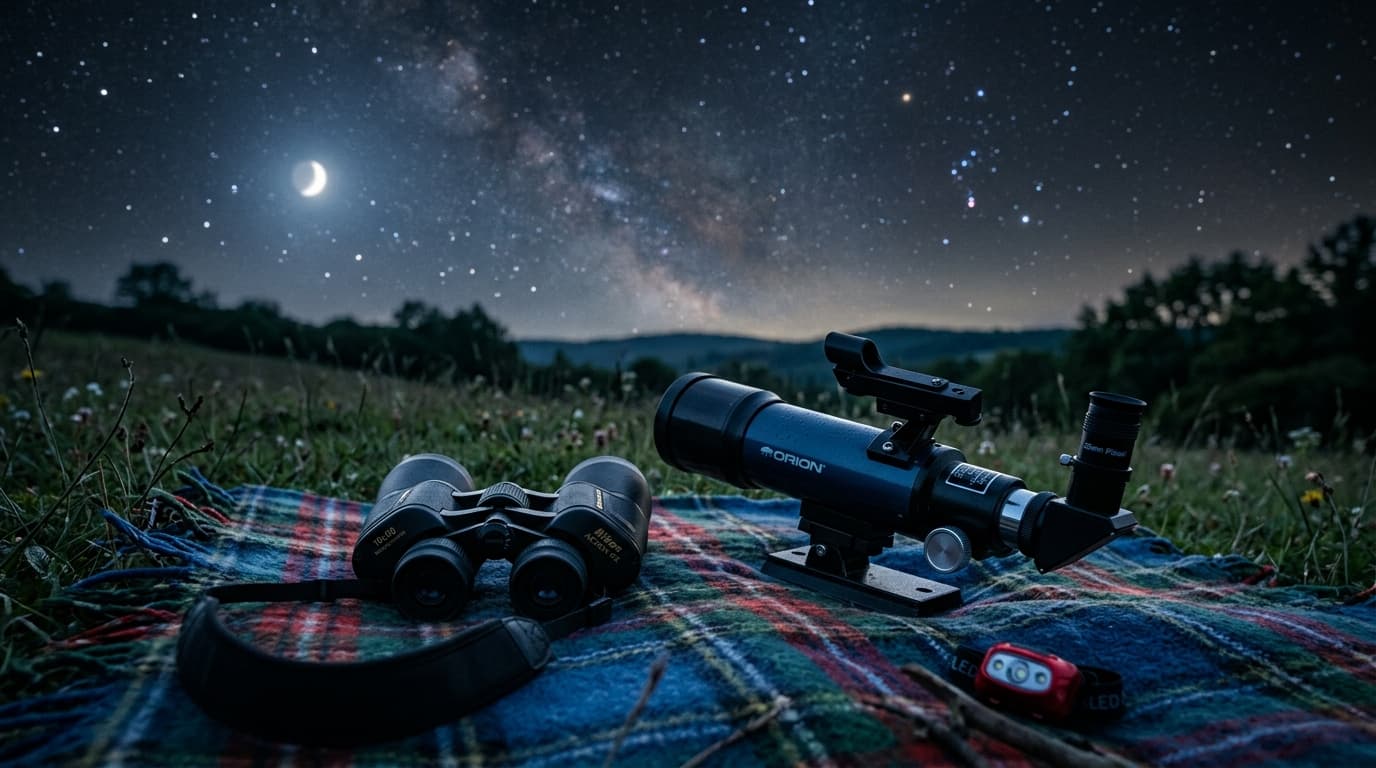

Binoculars and telescopes are different tools for the same sky. Binoculars win on portability, ease of use, and wide-field views. Telescopes win on magnification, detail, and specialized observing. Many experienced astronomers own both, and the right first choice depends on what you want to see, how much setup you tolerate, and your budget.
The Quick Answer
Choose binoculars if you want casual stargazing with zero setup, plan to travel, are still learning constellations, or have a tight budget ($50 to $150).
Choose a telescope if you want to see planetary detail (Saturn's rings, Jupiter's cloud bands), observe faint deep sky objects, photograph the night sky, or need a GoTo system to find targets automatically.
Best of both worlds: Start with binoculars to learn the sky. Add a telescope later when you know what you want to look at more closely. This is genuinely the most common recommendation from experienced amateur astronomers, and it is good advice.
When Binoculars Are Better

Zero setup time. You pick them up and look through them. There is no tripod to level, no finder scope to align, no software to initialize. Five seconds from sitting on the couch to observing the Moon. For a telescope, even a simple manual refractor takes 5 to 10 minutes of setup. GoTo telescopes can take 15 minutes or more to align.
Wider field of view. Standard 10x50 binoculars show roughly 6.5 degrees of sky at once. Most telescopes show 0.5 to 2 degrees. That wider view matters more than you might expect. The Pleiades star cluster spans about 2 degrees, so it fills binoculars beautifully but overflows the field of many telescopes. The Milky Way, which stretches across the entire sky, is a binocular object by nature.
Two-eye viewing. Using both eyes is more comfortable for extended sessions and produces a more immersive, three-dimensional sensation. Telescope observing with one eye (while squinting the other shut) gets fatiguing after 30 minutes.
What binoculars show well: Milky Way sweeping, open star clusters (the Pleiades, the Double Cluster in Perseus, the Beehive Cluster), large nebulae (the Orion Nebula fills the view), comet tails, wide double stars, and the crescent Moon with Earthshine. The Andromeda Galaxy is actually better in binoculars than in most telescopes because its angular size (3 degrees) exceeds most telescope fields of view.
Portability. A pair of 10x50 binoculars weighs roughly 800 grams and fits in a jacket pocket or day pack. You will bring them on camping trips, hikes, and vacations. A telescope stays home unless you plan ahead.
No learning curve. Everyone already knows how to use binoculars. Telescopes require learning about eyepieces, magnification, finder alignment, focusing, and (depending on the mount) star alignment or equatorial tracking.
When a Telescope Is Better
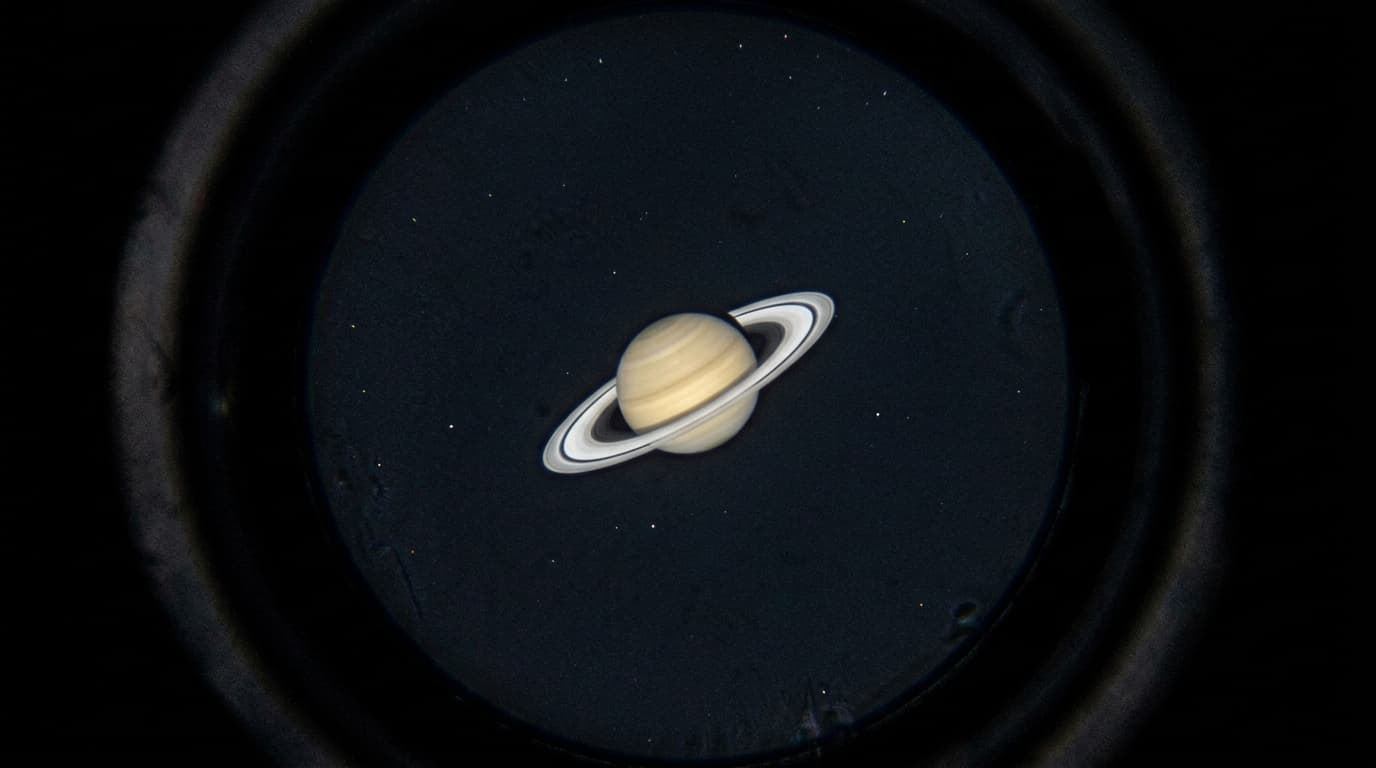
Magnification for planetary detail. Binoculars at 10x show Jupiter as a bright dot with four tiny companion points (its Galilean moons). A telescope at 100x to 200x reveals Jupiter's equatorial cloud bands, the Great Red Spot, and shadow transits of its moons. Saturn in binoculars looks slightly elongated. In a telescope, you see the ring system clearly separated from the disk, and with enough aperture, the Cassini Division within the rings. Mars at opposition shows polar ice caps and dark surface markings in a telescope. These views simply do not exist through binoculars.
Resolving small and faint objects. Planetary nebulae, globular clusters, and galaxy structure require both magnification and light-gathering power that binoculars cannot provide. The Ring Nebula (M57) is invisible in most binoculars at just 1.4 arcminutes across, but it resolves into a clear smoke ring in a 130mm telescope at 150x. Globular clusters like M13 look like fuzzy stars in binoculars but resolve into thousands of individual pinpoints in a telescope.
Lunar detail. Binoculars show the major maria (dark patches) and the largest craters. A telescope at 150x shows individual crater walls, mountain ranges along the terminator, rilles, and the shadow play that changes hour by hour. The Moon is arguably the most rewarding telescope target for beginners.
Astrophotography. Binoculars cannot do meaningful astrophotography. Telescopes, especially when paired with tracking mounts or smart processing, open up deep sky imaging, planetary photography, and lunar close-ups. If astrophotography interests you, check our best telescopes for astrophotography guide.
GoTo and tracking. Computerized telescopes locate and follow objects automatically. This eliminates the biggest beginner frustration: finding faint objects in the first place. Nothing in the binocular world offers this. For more on telescope mount types and features, see our types of telescopes guide.
What You Can See: Side-by-Side Comparison
This table compares three common setups: a pair of 10x50 binoculars ($80), a basic 70mm refractor telescope (around $90), and a 150mm GoTo Dobsonian (around $470). What you actually see depends on sky conditions and experience, but these are realistic expectations under suburban skies.
| Object | 10x50 Binoculars | 70mm Refractor | 150mm GoTo Dobsonian |
|---|---|---|---|
| Moon | Major seas, largest craters | Individual craters, mountain ranges | Fine crater detail, rilles, shadow play |
| Jupiter | Bright dot + 4 moons in a line | Small disk, cloud bands faintly | Cloud bands, Great Red Spot |
| Saturn | Bright dot, slightly elongated | Rings visible (small) | Ring detail, Cassini Division |
| Mars | Orange dot | Small orange disk | Polar caps, surface markings (at opposition) |
| Orion Nebula (M42) | Bright fuzzy patch, beautiful | Structure visible, some extent | Detailed nebulosity, Trapezium stars |
| Andromeda Galaxy (M31) | Fuzzy oval, full extent visible | Bright core only (field too narrow) | Bright core, hint of dust lanes |
| Pleiades (M45) | Full cluster in frame, stunning | Too zoomed in, only partial | Too zoomed in, only partial |
| Milky Way | Best view possible (wide sweep) | Too narrow, misses the point | Too narrow, misses the point |
| Ring Nebula (M57) | Not visible | Tiny dot, barely detectable | Small smoke ring at 150x |
| Globular cluster (M13) | Fuzzy star | Fuzzy ball | Partially resolved into stars |
Notice the pattern: binoculars win on wide, large targets. Telescopes win on small, faint, or detailed targets. This is not a contest with a single winner.
Binoculars as a First Step
A pair of 10x50 binoculars is genuinely a great first purchase for someone interested in astronomy. This is not a consolation prize or a "settle for less" recommendation. It is practical advice for three reasons.
First, binoculars teach you the sky. Constellations, star-hopping between landmarks, seasonal changes, the ecliptic, the Milky Way's structure: you learn all of this faster with binoculars than with a telescope because the wide field of view provides context. A telescope shows you a keyhole view. Binoculars show you the neighborhood.
Second, you discover what excites you. After a few months of binocular observing, you will know whether you are drawn to planets, deep sky objects, the Moon, or a mix. That knowledge tells you exactly which telescope to buy. A planetary observer needs a different scope than a deep sky hunter. See our reflector vs refractor guide and types of telescopes for how those choices break down.
Third, the cost is minimal. $50 to $120 for a capable 10x50 pair. If you decide astronomy is not for you, you still have a useful pair of binoculars for hiking, concerts, and birdwatching. A $300 telescope that collects dust is a harder loss.
When you are ready to move to a telescope, the transition is smooth. You already know where things are in the sky, what objects look like at low magnification, and what you want to see in more detail. You become a better telescope user because you started with binoculars.
Ready for a Telescope? Our Picks
If you have decided a telescope is the right next step, here are three recommendations at different price points. Each one makes sense for someone coming from binoculars or starting fresh. All scores come from our scoring methodology, rated 0 to 100 across seven dimensions.
1. Celestron Travel Scope 70
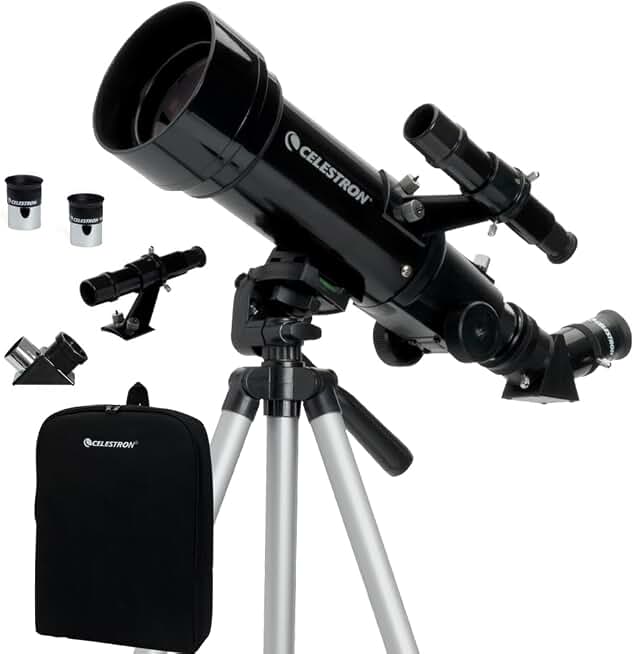
A capable 70mm grab-and-go refractor that earns its place in any beginner's kit without breaking the bank.
The Celestron Travel Scope 70 is the closest a telescope gets to binocular-level simplicity. At 1.91kg (4.2 lbs) total weight and $89.99, it is a low-risk way to try magnified astronomy. The 70mm aperture at f/5.7 provides enough light to show Saturn's rings, Jupiter's moons, lunar craters, and bright deep sky targets like the Orion Nebula. The value score of 93 reflects its price-to-performance ratio. With over 14,700 Amazon reviews and a 4.2-star rating, this scope has proven itself across thousands of first-time buyers.
Who it is for: Binocular owners who want to try telescope views without a big investment, families, and travelers.
The tradeoff: 70mm is a step up from binoculars for magnification, but you will hit its limits on faint deep sky objects quickly. The lightweight tripod struggles in wind.
2. Sky-Watcher Virtuoso GTi 150P
Sky-Watcher
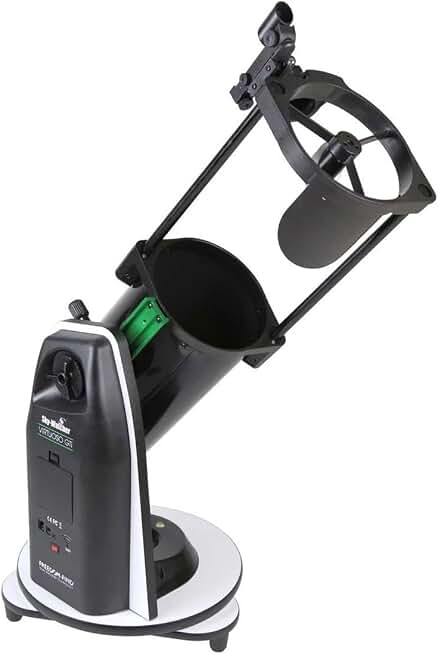
Sky-Watcher Virtuoso GTi 150PGoTo Dobsonian power in a tabletop package, with Wi-Fi control and the freedom to push around manually.
The Sky-Watcher Virtuoso GTi 150P is a serious step up. The 150mm parabolic Newtonian gathers 4.6 times more light than a 70mm refractor, and the motorized tabletop Dobsonian base, controlled over WiFi from the free SynScan Pro app, locates more than 10,000 objects and tracks them. That GoTo capability eliminates the steepest part of the telescope learning curve: finding things. The overall score of 76 and beginner score of 62 reflect a telescope designed to get you observing quickly. Six inches of aperture reaches deep sky objects that binoculars and small refractors cannot show: globular clusters begin to resolve, and galaxies show shape rather than presence. 52 Amazon reviews average 4.2 stars.
We used to fill this slot with the Celestron 114LCM. Celestron's spec sheet describes it as a Bird-Jones design, a spherical mirror with a Barlow lens built into the focuser, and our scoring engine now accounts for that. The GTi costs a little more and is a far better telescope.
Who it is for: Observers ready to invest in a telescope that will last several years, especially those who want GoTo to accelerate their learning.
The tradeoff: At $402.31, it is a real investment. At 11.7kg it needs a sturdy table, it runs on 8 AA batteries or an external 12V supply, and the app takes an evening to learn. Collimation is needed occasionally. For a broader look at this price range, see our best telescopes under $500 guide.
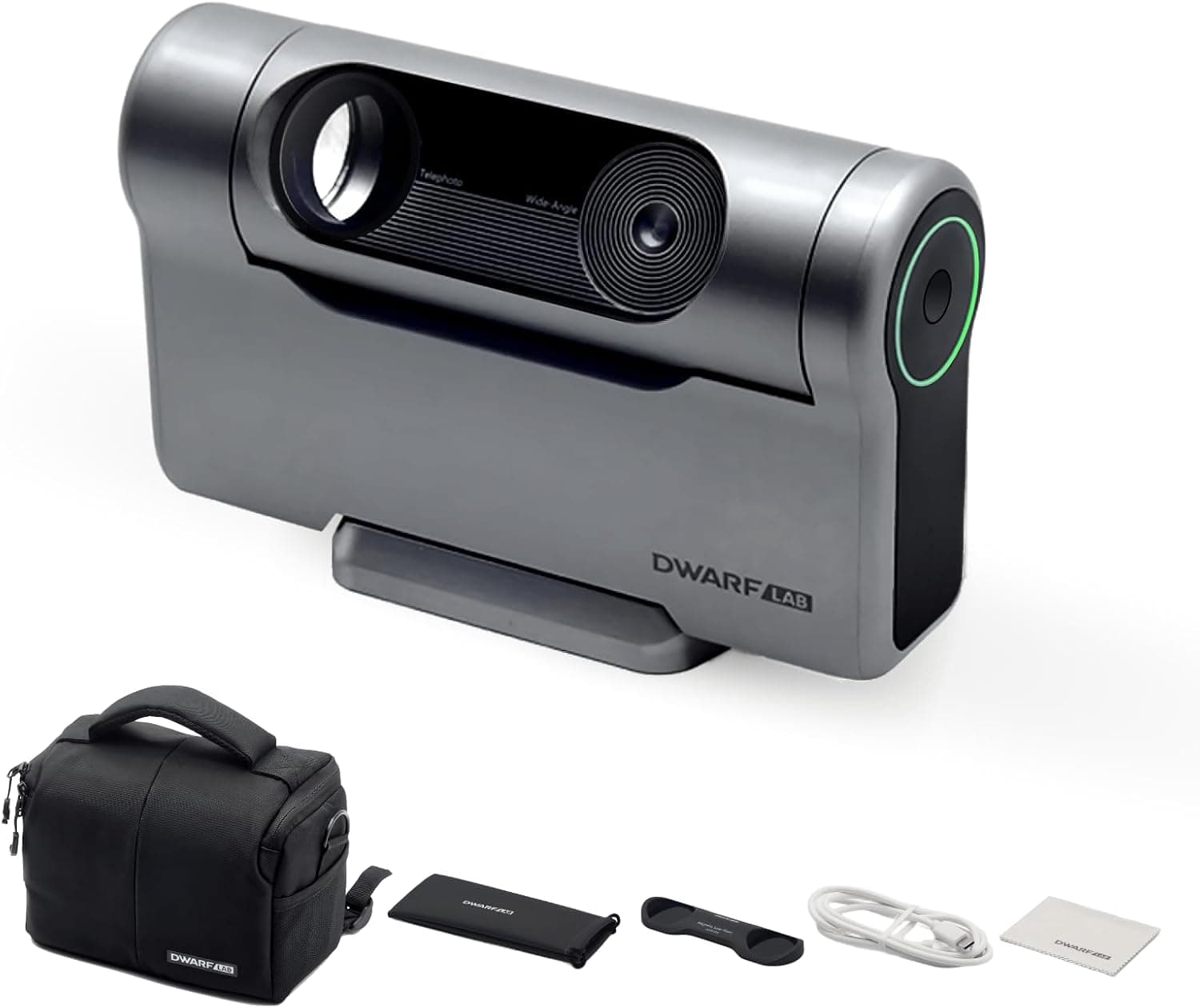
3. DWARFLAB DWARF 3
DWARFLAB
DWARFLAB DWARF 3Pocket-sized smart telescope with dual lenses, GoTo tracking, and live stacking for deep sky and daytime use
The DWARFLAB DWARF 3 is a smart telescope, and it is almost as easy to use as binoculars. Set it down, tap an object on your phone, and it slews, focuses, and starts stacking exposures automatically. Within minutes you see color images of galaxies and nebulae on your screen that no visual telescope at this price can match. The overall score of 83 is the highest among our three picks. The aperture sounds tiny, but the integrated sensor and live stacking software compensate by accumulating light over time, and it pairs a telephoto lens with a wide-angle one for Milky Way shots. At 1.3kg it weighs less than many binoculars. The 4.6-star Amazon rating across 139 reviews reflects genuine user enthusiasm. Read our DWARF 3 review for the full assessment.
The ZWO Seestar S50 and S30 score higher in our database and used to hold this slot, but both have been out of stock on Amazon for months; the DWARF 3 is the smart scope you can buy today.
Who it is for: People who want to see deep sky objects in color without learning traditional telescope skills, and observers in light-polluted areas where visual observing is limited.
The tradeoff: You view on a screen, not through an eyepiece. The experience is different from traditional telescope observing, and some astronomers find it less immersive. At $549, it costs more than capable visual telescopes with larger apertures. Planetary views are limited compared to a visual telescope. For a look at budget visual options, see our best telescopes under $200 and under $300 guides.
How to Decide: A Simple Framework
If none of the above has made the answer obvious, try this:
Budget under $150: Buy 10x50 binoculars ($50 to $120). They outperform any telescope at this price on most targets. If you still have money left, the Celestron Travel Scope 70 at $89.99 is a solid companion.
Budget $150 to $350: You can afford a capable telescope. Check our best telescopes under $200 and best telescopes under $300 guides. Consider buying binoculars and a budget telescope together.
Budget $350 to $500: GoTo telescopes become available, which changes the experience. The Sky-Watcher Virtuoso GTi 150P at $402.31 is the pick, and the parabolic StarSense Explorer DX 130AZ offers app-guided finding for less. See our best telescopes under $500 guide.
Budget $500+: Smart telescopes, large GoTo systems, and serious optics open up. Portable smart options like the DWARFLAB DWARF 3 at $549 weigh less than many binoculars while producing deep-sky images (see our DWARF 3 review). See our best telescopes under $1000 guide for more options, or use the telescope finder tool to filter by your priorities.
No matter what you choose, the best telescopes for beginners guide and the beginner ranked list are useful references for first-time buyers.
