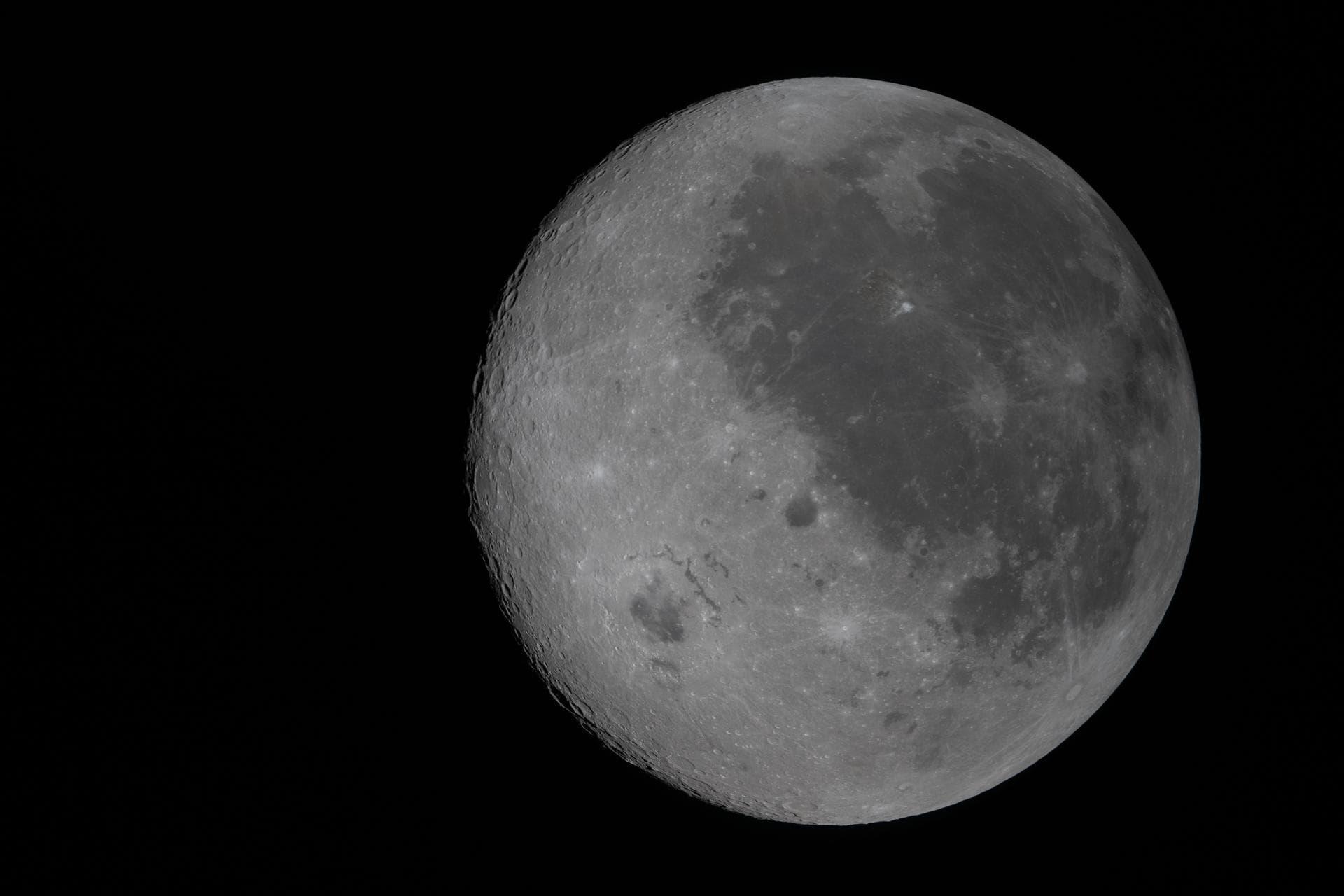

On April 6, 2026, four astronauts swung within 4,067 miles of the lunar surface, disappeared behind the far side for nearly 40 minutes, and broke a record that had stood since 1970. The Artemis II crew traveled 252,756 miles from Earth, eclipsing Apollo 13's mark by over 4,000 miles. They photographed the Orientale basin, watched a solar eclipse from lunar space, and reported seeing meteoroid impact flashes on the surface below.
For anyone who has ever pointed a telescope at the Moon, this feels personal. The view from Orion at closest approach shows roughly the same level of surface detail you'd see at 60-80x magnification from your backyard. The craters that filled the crew's windows are the same craters in your eyepiece. The difference is distance, not resolution.
NASA's Artemis program is reigniting human lunar exploration for the first time in over half a century, and telescope owners are better positioned than anyone to follow along. This guide connects the mission to what you can see, what you should observe this week, and where lunar astronomy goes from here.
The Artemis Program in 60 Seconds
Artemis is NASA's plan to establish a sustainable human presence on and around the Moon. Not a flags-and-footprints visit, but a lasting infrastructure that supports science, technology development, and eventual crewed missions to Mars.
Artemis I (2022) was the uncrewed test flight that proved the Space Launch System rocket and Orion spacecraft could make the round trip. Artemis II, which launched April 1, 2026, is the crewed follow-up: a 10-day mission to test Orion's life support, navigation, and communication systems with four humans aboard. No landing (that comes with Artemis III and IV, currently targeting the late 2020s), but the first crewed journey beyond low Earth orbit since Apollo 17 in December 1972.
The crew's trajectory took them on a free-return loop around the Moon, with the closest approach on April 6 bringing them within about 4,067 miles of the surface. They passed behind the far side, losing all contact with Earth for nearly 40 minutes while flying over terrain no human has ever seen directly. Splashdown is expected off the coast of San Diego on April 10 at approximately 8:07 p.m. EDT.
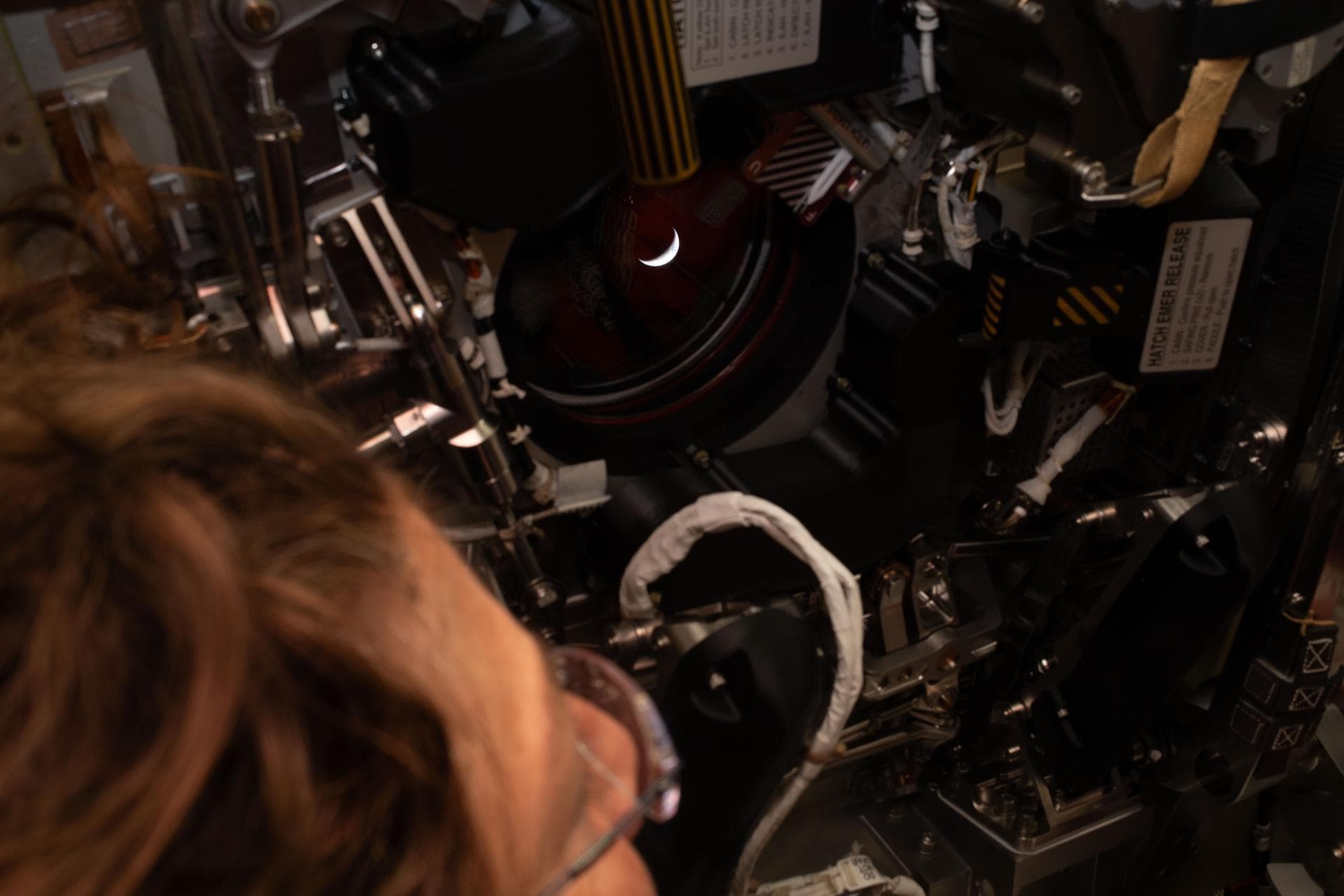
The human moments have been as compelling as the engineering. Commander Wiseman described the color nuances of the lunar surface: shades of brown and blue that reveal mineral composition and geological age. The crew photographed the Orientale basin in its entirety for the first time through human eyes, using zoom lenses to build mosaics of a feature previously captured only by robotic probes. And during a solar eclipse visible only from their position behind the Moon, they studied the Sun's corona glowing around the lunar limb.
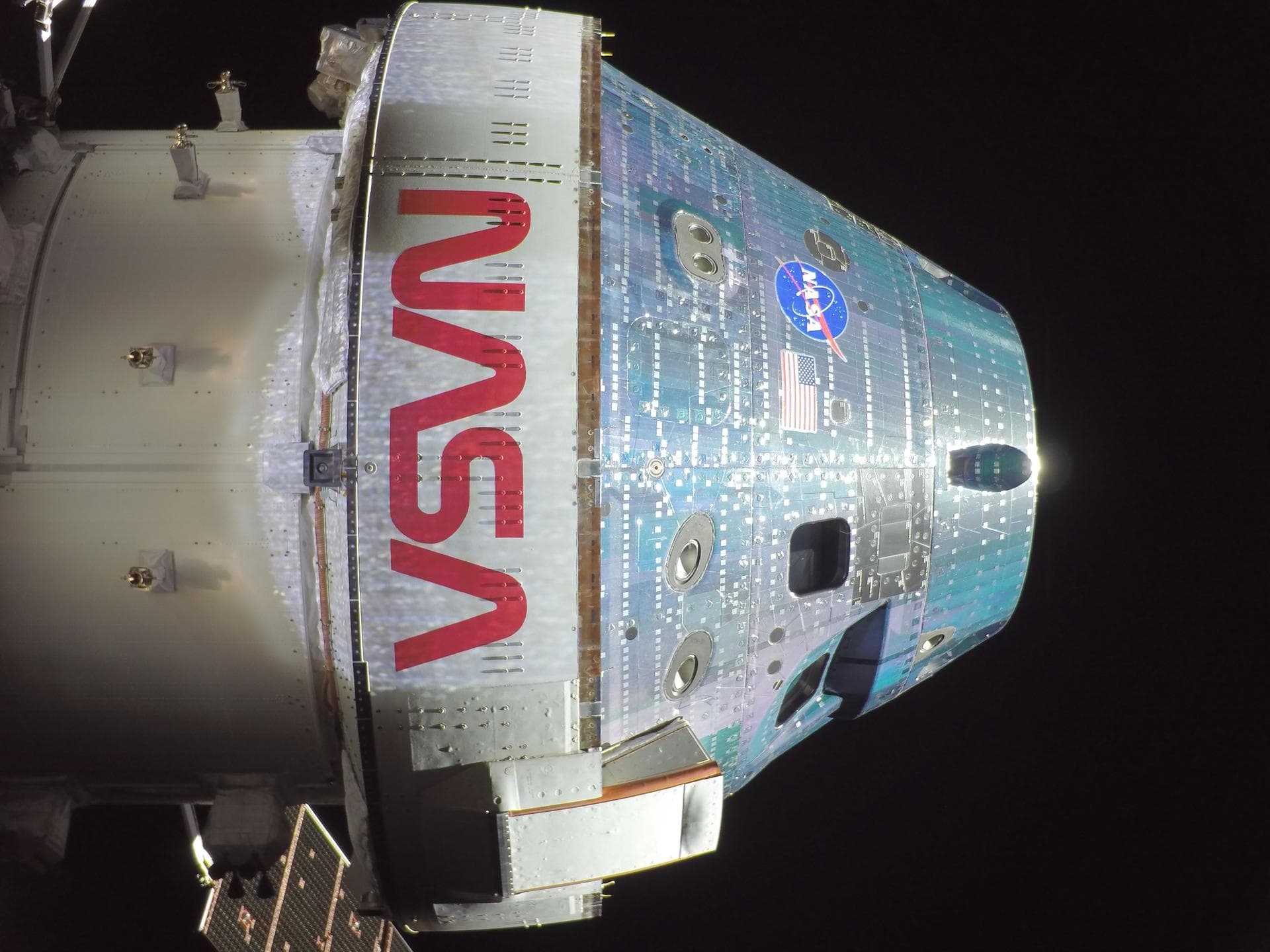
The Moon Through Astronaut Eyes vs. Your Telescope
There's a satisfying convergence between what the Artemis II crew sees and what you see through a decent telescope from Earth. At closest approach, Orion was about 4,000 miles from the surface. From Earth, you're about 240,000 miles away. But optics compress that gap dramatically.
A 130mm telescope at 80x resolves craters down to about 3-4 km across. That's enough to see the terraced walls of Copernicus, the central peaks of Tycho, the wrinkle ridges in Mare Serenitatis, and the rilles snaking through Aristarchus Plateau. At 150-200x on a steady night, you can resolve features under 2 km: detail that would impress anyone, astronaut or not.
What the crew gets that you don't is perspective. They see the Moon as a sphere filling their windows, with the terminator casting shadows that wrap around the visible limb. They see the far side, which is geologically distinct from the near side (more heavily cratered, almost no maria, and dominated by the vast South Pole-Aitken basin). They see color variation that's difficult to detect from Earth without specialized filters and processing.
But the specific features they photographed during the flyby (Orientale, Tycho, Copernicus, the south pole highlands that Artemis III will eventually target) are in your eyepiece right now. The difference between the crew's view and yours is one of proximity, not capability.
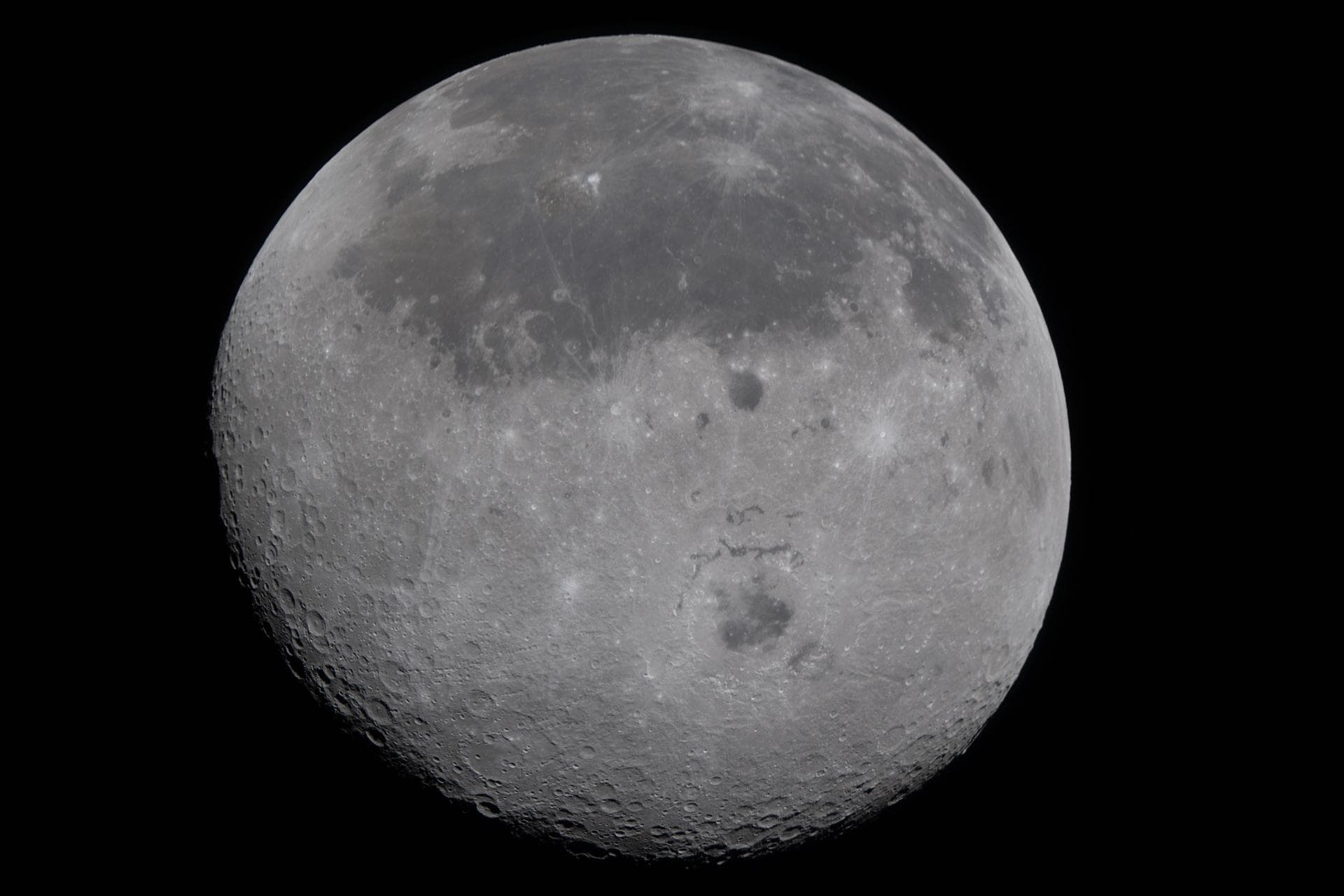
How to Observe the Moon Like an Artemis Explorer
The Moon is the most accessible target in amateur astronomy, and the Artemis mission gives you a reason to look at it with fresh intent. Here's how to get the most out of your observations this week and beyond.
Timing and Phase
The best lunar observing happens between crescent and gibbous phases, when the terminator (the boundary between day and night) crosses the surface. Along the terminator, sunlight hits at low angles and casts long shadows that reveal topography in dramatic three-dimensional relief. Craters that look like flat circles during full Moon become deep bowls with sharp rims and central peaks. Mountains cast shadows that let you estimate their height.
Avoid observing during full Moon unless you're specifically interested in ray systems, the bright splash patterns radiating from young impact craters like Tycho and Copernicus. Full Moon washes out most topographic detail with harsh, overhead lighting.
Targets Inspired by Artemis
Focus on the features the mission has spotlighted. The lunar south pole region is where Artemis III and IV plan to land, specifically around Shackleton Crater and the permanently shadowed craters that may contain water ice. From mid-northern latitudes, the south pole region is visible along the Moon's southern limb, challenging but rewarding when libration tilts it toward Earth.
Tycho Crater is a young impact site (about 108 million years old) with bright rays extending hundreds of kilometers. At moderate magnification, you can see its central peak and terraced walls. Copernicus is even more dramatic: 93 km across with multiple central peaks visible above 100x. The Apennine Mountains, where Apollo 15 landed, are a wall of peaks rising over 5 km above the adjacent mare.
For something more ambitious, try the Orientale basin, the feature the Artemis II crew photographed in full for the first time with human eyes. From Earth, Orientale is right on the western limb and extremely foreshortened. Favorable libration is required, and even then you're seeing it edge-on. But knowing that the crew saw it face-to-face from 4,000 miles away adds a new dimension to the challenge.
Equipment for Lunar Observing
Any telescope with at least 100mm of aperture will show you meaningful lunar detail. A 130mm reflector or 127mm Maksutov is the sweet spot for serious surface observation without breaking the bank.
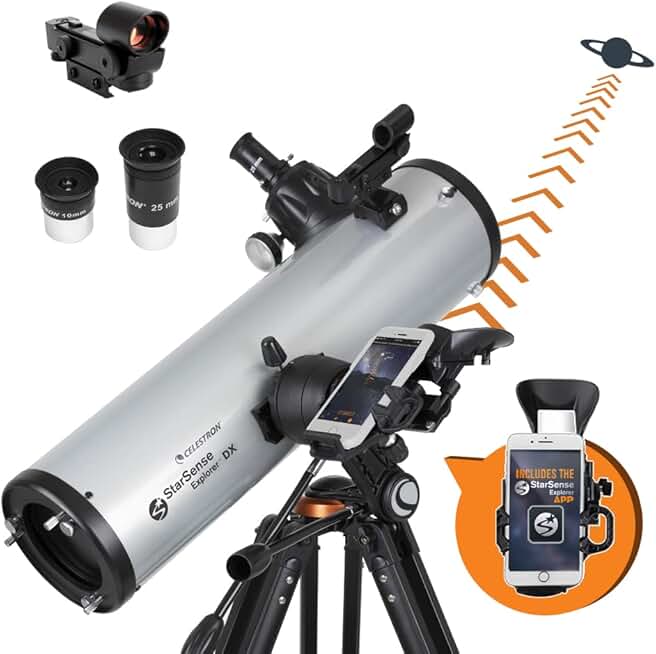
Smart phone-powered star finding meets a capable 130mm reflector, making the night sky genuinely accessible for beginners.
The Celestron StarSense Explorer DX 130AZ is a strong choice for lunar observing. Its 130mm parabolic mirror resolves craters down to 2-3 km on steady nights, and the StarSense app makes it easy to confirm what you are pointed at. At $499.95, it leads our best telescopes under $500 guide.
For planetary-sharp views of the Moon, a Maksutov-Cassegrain like the Celestron NexStar 127SLT delivers higher contrast at the eyepiece. The longer focal ratio (f/12) produces crisp, high-magnification views of crater walls and central peaks.
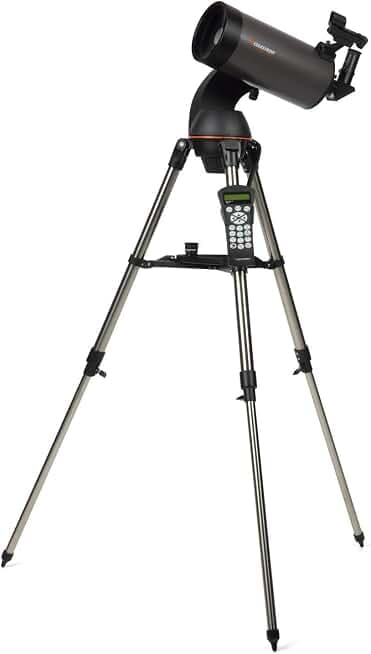
Celestron
Celestron NexStar 127SLT127mm Maksutov-Cassegrain GoTo telescope that punches above its weight for planetary and lunar observing
If you're just getting started and want a budget-friendly option, the Sky-Watcher Heritage 130P at $305 offers the same 130mm of parabolic aperture on a simple tabletop Dobsonian base; it is the stretch pick in our best telescopes under $300 guide. You find targets yourself, but on the Moon that is no hardship, and it shows Tycho, Copernicus, and the Apennine range in sharp detail.
Our top pick for lunar observing under $500. A parabolic 130mm resolves craters the Artemis II crew flew over.
Use a neutral-density or Moon filter to cut glare. The Moon is bright enough to cause eye fatigue after extended sessions, and a filter brings the brightness down to comfortable levels while preserving contrast.
Imaging the Moon
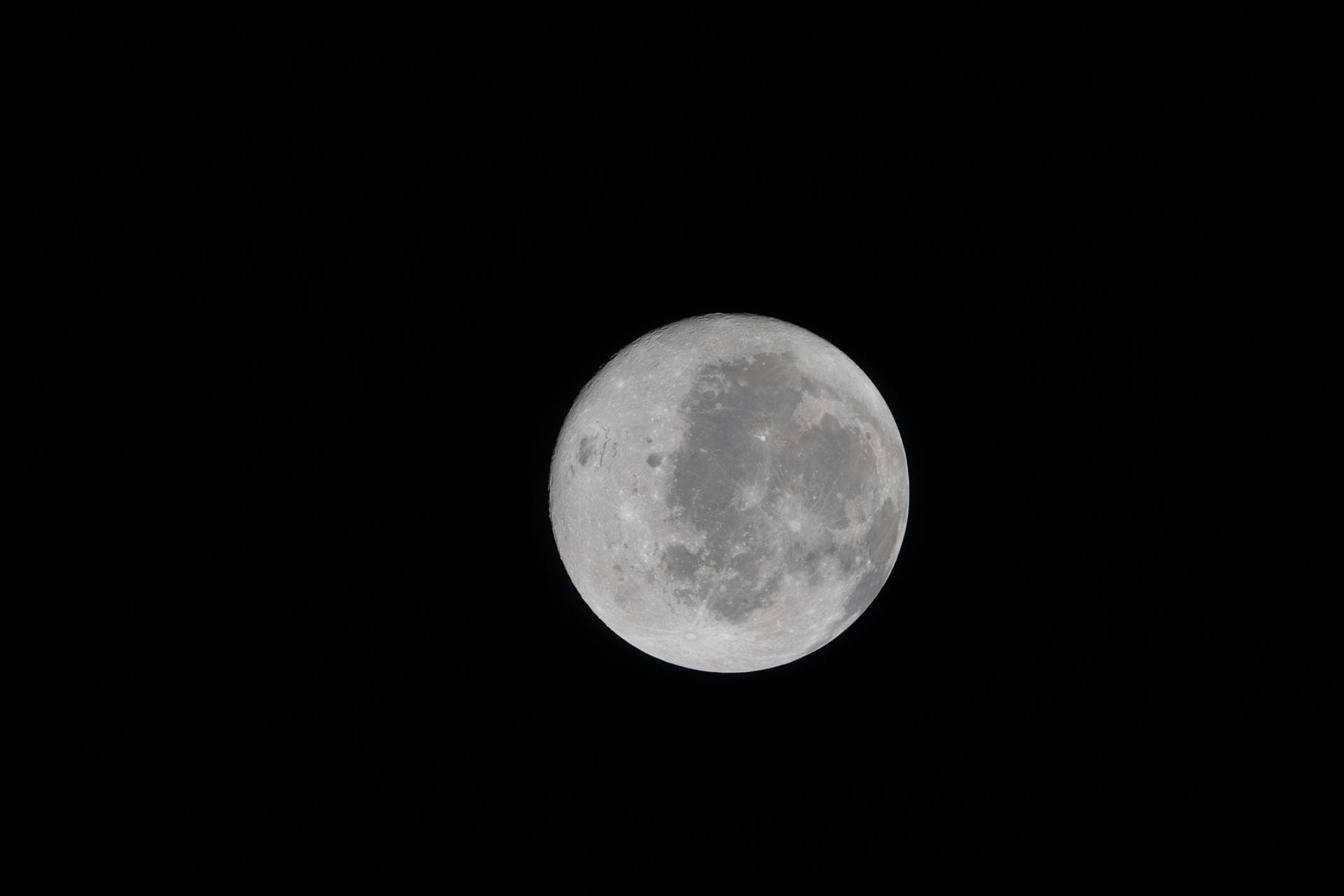
For imaging, you don't need an astrophotography rig. A smartphone held to the eyepiece (or a cheap adapter) can capture surprisingly good shots. For sharper results, a planetary camera shooting short video clips at high frame rates lets you use stacking software like AutoStakkert or Registax to beat atmospheric turbulence. The results can rival what spacecraft imagers produce from orbit.
The Pro Move
During the Artemis I mission in 2022, amateur astronomers successfully imaged the Orion spacecraft as a moving point of light using tracking data from NASA's Artemis Real-Time Orbit Website (AROW). Several observers with large Dobsonians and tracking mounts repeated this during Artemis II's outbound leg. At lunar distance the spacecraft is too faint for most amateur setups, but the attempt itself is a testament to what's possible with community coordination and public mission data.
Future Lunar Telescopes: What Artemis Makes Possible
Artemis isn't just about astronauts and footprints. It's building the infrastructure for permanent lunar science, including telescopes that would make ground-based astronomers weep with envy.
The most concrete near-term project is LuSEE-Night (Lunar Surface Electromagnetics Experiment at Night), a radio telescope heading to the lunar far side aboard a Firefly Aerospace Blue Ghost lander via NASA's Commercial Lunar Payload Services program. Its launch is scheduled for later in 2026.
LuSEE-Night will operate in the radio-quiet zone on the Moon's far side, the only place in the inner solar system that's shielded from Earth's radio interference. Its mission: listen for extremely faint low-frequency signals from the cosmic Dark Ages, the period roughly 380,000 years after the Big Bang when the universe contained no stars, no galaxies, and no light. Detecting the hydrogen signals from that era could revolutionize our understanding of how the first cosmic structures formed. This kind of observation is physically impossible from Earth's surface or even from Earth orbit.
Beyond LuSEE-Night, the vision gets bigger. The Moon's far side has no atmosphere, no light pollution, and a surface stable enough to support optical and infrared interferometers with baselines measured in kilometers. Permanently shadowed polar craters maintain temperatures close to absolute zero, making them natural cryogenic environments for infrared detectors. Future Artemis missions could establish the power, communication, and transportation infrastructure that makes permanent lunar observatories viable.
For telescope enthusiasts, this is the long game: a future where the Moon isn't just something you look at through your scope, but a place where the most powerful telescopes in human history are looking back at the universe.
Your Move
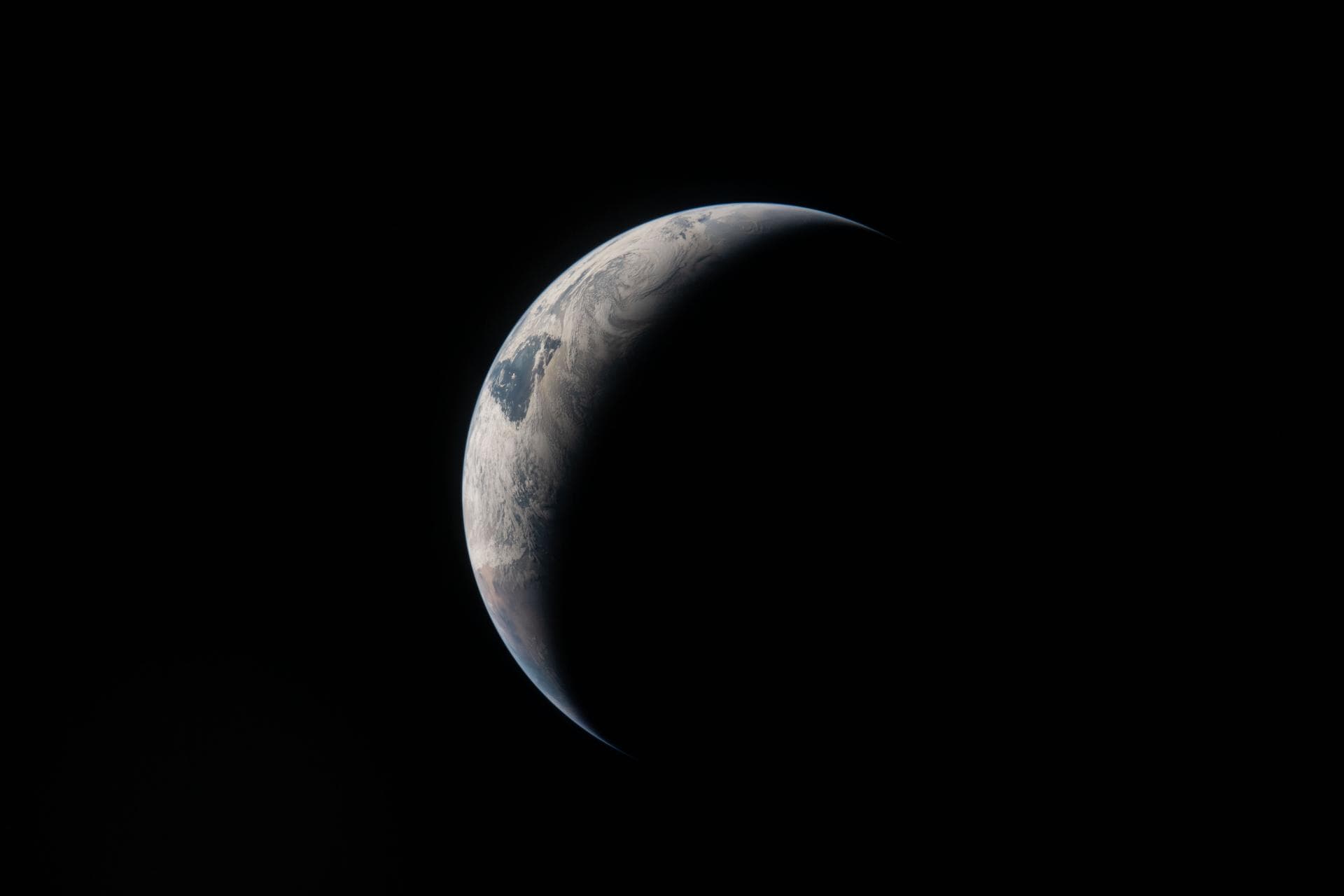
The Artemis II crew is on their way home. Splashdown is expected April 10 off San Diego. By the time you read this, you might already be able to watch the recovery live on NASA+.
But the Moon isn't going anywhere, and neither is the momentum behind Artemis. Here's what you can do right now:
Observe tonight. Check the current lunar phase and find the terminator. Identify the south pole region, Tycho, Copernicus, or the Apennine range. Take a photo. You're seeing the same features the crew just flew over.
Share what you see. Post your images with #ArtemisII. The mission has brought lunar observing into mainstream conversation in a way it hasn't been since the Apollo era. Your crater shot might be someone's first real look at the Moon through a telescope.
Follow what comes next. Artemis III will attempt the first crewed lunar landing since 1972, targeting the south pole. LuSEE-Night will become the first radio telescope on the far side. And the community of people who point telescopes at the Moon, amateur and professional alike, is about to get a lot more to look at.
The Artemis Generation isn't just watching from mission control. With a telescope in your backyard, you're already part of it.
