Comparison
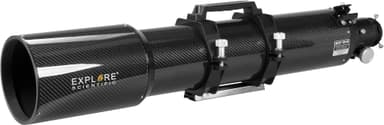
Celestron NexStar 8SE vs Explore Scientific ED127 FCD100
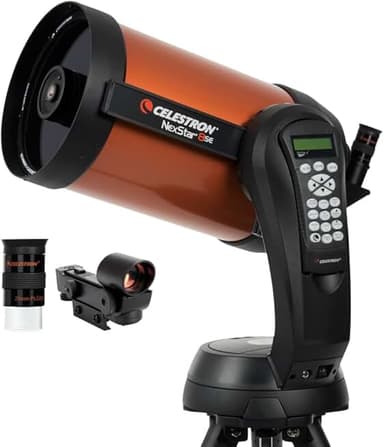
VS
Performance Profile
Score Comparison
Celestron NexStar 8SEExplore Scientific ED127
Overall
80
57
Value
42
35
Beginner
52
26
Astrophoto
61
46
Portability
53
59
Planetary
71
42
Deep Sky
61
39
Our Take
The Celestron NexStar 8SE is the clear winner for most amateur astronomers. It delivers superior optical performance across every observing category, with nearly 60 percent more aperture that makes a tangible difference in planetary detail and deep-sky object visibility. The automated GoTo mount eliminates the learning curve of manual alignment, while the fork design keeps setup straightforward.
The single most important differentiator is aperture. The NexStar 8SE's 203mm objective versus the ED127's 127mm means dramatically better light-gathering power and resolution; this advantage compounds across all observing targets. The Celestron NexStar 8SE suits observers who want immediate results and broad observing capability without sacrificing ease of use.
The Explore Scientific ED127 FCD100 appeals primarily to experienced equatorial mount users prioritizing portability and refractor optics for planetary viewing in established setups. Buy the Celestron NexStar 8SE unless weight is genuinely limiting your transport options or you're already experienced with equatorial mounts and understand that its smaller aperture comes with real tradeoffs. For most amateur astronomers, the larger aperture and automated features justify the modest price premium.
Key Differences
Why choose Celestron NexStar 8SE
- 203.2mm aperture gathers more light than 127mm
- Includes GoTo mount for automatic object finding
- Has tracking capability for astrophotography
- Higher Overall score (80 vs 57)
- Higher Beginner score (52 vs 26)
- Higher Astrophoto score (61 vs 46)
Why choose Explore Scientific ED127
- 4.5kg lighter and more portable
- Faster f/7.5 for wider field of view
Specifications
SpecCelestron NexStar 8SEExplore Scientific ED127
Optical Specs
Aperture203.2mm127mm
Focal Length2032mm952mm
Focal Ratiof/10f/7.5
Optical DesignSchmidt-Cassegrain-
Mount & Tracking
Mount TypeForkEquatorial
GoToYesNo
TrackingYesNo
Physical
Weight10.84kg6.35kg
Included Accessories
FinderStarPointerFinder scope
Pricing & Reviews
Price$1699$1600
Amazon Rating4.4 stars2.3 stars
Reviews2,4932
Try these telescopes in our Eyepiece Calculator:
Related Comparisons
Celestron NexStar 8SE vs Explore Scientific ED102 FCD100Celestron NexStar 8 SE Schmidt-Cassegrain Computerized Telescope with 1.25" Eyep vs Explore Scientific ED127 FCD100Celestron NexStar 8SE vs Celestron NexStar Evolution 9.25Explore Scientific ED102 FCD100 vs Explore Scientific ED127 FCD100Celestron NexStar 8SE vs Explore Scientific ED102 FCD100Explore Scientific ED127 FCD100 vs Explore Scientific ED127 FCD100