Comparison
Celestron NexStar 8 SE Schmidt-Cassegrain Computerized Telescope with 1.25" Eyep vs Explore Scientific ED127 FCD100
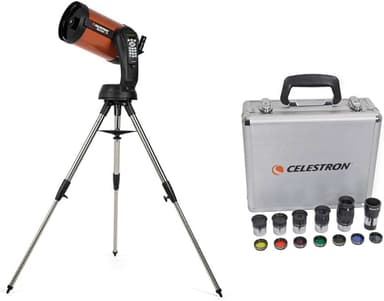
VS
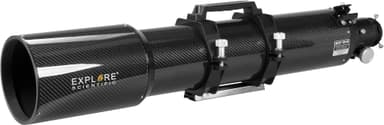
Performance Profile
Score Comparison
Celestron NexStar 8Explore Scientific ED127
Overall
60
57
Value
39
35
Beginner
39
26
Astrophoto
38
46
Portability
30
59
Planetary
53
42
Deep Sky
47
39
Our Take
It depends on your priorities and observing style. The Celestron NexStar 8 SE delivers superior light-gathering power and automated GoTo convenience, scoring higher overall and especially for planetary observation. However, the Explore Scientific ED127 FCD100 excels in portability and astrophotography, weighing just 6.35kg compared to the Celestron's 24.22kg, while offering better optical quality for long-exposure imaging thanks to its apochromatic ED design. The single most important differentiator is portability versus aperture.
The Celestron NexStar 8 SE's 203mm aperture provides significantly more light and detail for visual observation, but demands serious transport logistics. The ED127's lightweight construction and equatorial mount make it genuinely portable for field use and astrophotography. The Celestron NexStar 8 SE suits observers prioritizing deep sky detail and planetary viewing from a fixed location who value automated GoTo tracking. The Explore Scientific ED127 FCD100 better serves astrophotographers and travelers who need to transport their equipment regularly.
Choose the Celestron for maximum aperture and convenience; choose the ED127 for versatility and portability. Your decision hinges on whether you'll observe from home or the field.
Key Differences
Why choose Celestron NexStar 8
- 203.2mm aperture gathers more light than 127mm
- Includes GoTo mount for automatic object finding
- Higher Beginner score (39 vs 26)
- Higher Planetary score (53 vs 42)
- Higher Amazon rating (4.5 vs 2.3 stars)
- 88 Amazon reviews vs 2
Why choose Explore Scientific ED127
- $199 cheaper
- 17.9kg lighter and more portable
- Higher Portability score (59 vs 30)
Specifications
SpecCelestron NexStar 8Explore Scientific ED127
Optical Specs
Aperture203.2mm127mm
Focal Length-952mm
Focal Ratio-f/7.5
Optical DesignSchmidt-Cassegrain-
Mount & Tracking
Mount TypeForkEquatorial
GoToYesNo
TrackingNoNo
Physical
Weight24.22kg6.35kg
Included Accessories
FinderStarPointerFinder scope
Pricing & Reviews
Price$1799$1600
Amazon Rating4.5 stars2.3 stars
Reviews882
Try these telescopes in our Eyepiece Calculator:
Related Comparisons
Celestron NexStar 8 SE Schmidt-Cassegrain Computerized Telescope with 1.25" Eyep vs Celestron NexStar 8SECelestron Advanced VX 6" SCT vs Celestron NexStar 8 SE Schmidt-Cassegrain Computerized Telescope with 1.25" EyepCelestron NexStar 8 SE Schmidt-Cassegrain Computerized Telescope with 1.25" Eyep vs Explore Scientific ED102 FCD100Celestron NexStar 8 SE Schmidt-Cassegrain Computerized Telescope with 1.25" Eyep vs Celestron NexStar Evolution 8 EdgeHDCelestron Advanced VX 8" SCT vs Celestron NexStar 8 SE Schmidt-Cassegrain Computerized Telescope with 1.25" EyepCelestron NexStar 8 SE Schmidt-Cassegrain Computerized Telescope with 1.25" Eyep vs Sky-Watcher EvoStar 100 APO Doublet Refractor