Comparison
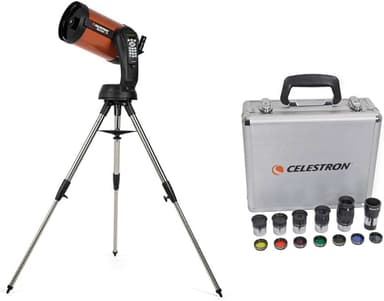
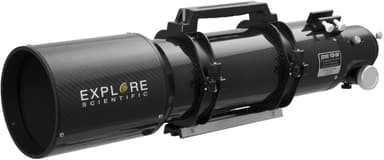
Celestron NexStar 8 SE Schmidt-Cassegrain Computerized Telescope with 1.25" Eyep vs Explore Scientific ED102 FCD100
VS
Performance Profile
Score Comparison
Celestron NexStar 8Explore Scientific ED102
Overall
60
40
Value
39
30
Beginner
39
25
Astrophoto
38
39
Portability
30
63
Planetary
53
8
Deep Sky
47
16
Our Take
The Celestron NexStar 8 SE is the clear winner for most amateur astronomers. It outperforms the Explore Scientific ED102 FCD100 across nearly every observational category, delivering superior planetary and deep-sky performance while remaining genuinely useful for beginners despite its learning curve. The single most important differentiator is aperture and optical design.
The Celestron NexStar 8 SE's 203mm Schmidt-Cassegrain collects significantly more light than the ED102's 102mm refractor, enabling deeper observations and brighter images of faint objects. This size advantage translates directly into the Celestron's commanding leads in planetary, deep-sky, and overall scores. The Celestron NexStar 8 SE suits observers prioritizing observation quality and computerized convenience, particularly those observing from fixed locations.
The Explore Scientific ED102 FCD100 is best for hikers and travelers who need a lightweight, portable scope for casual stargazing without computerized complexity. The Celestron NexStar 8 SE represents better value despite its higher price; you're investing in substantially superior optics and capabilities. Only choose the ED102 if portability is non-negotiable and you accept severely compromised observational performance.
Key Differences
Why choose Celestron NexStar 8
- $451 cheaper
- Includes GoTo mount for automatic object finding
- Higher Overall score (60 vs 40)
- Higher Beginner score (39 vs 25)
- Higher Planetary score (53 vs 8)
- Higher Deep Sky score (47 vs 16)
Why choose Explore Scientific ED102
- 21.0kg lighter and more portable
- Higher Portability score (63 vs 30)
Specifications
SpecCelestron NexStar 8Explore Scientific ED102
Optical Specs
Aperture203.2mm-
Focal Ratio-f/7
Optical DesignSchmidt-Cassegrain-
Mount & Tracking
Mount TypeForkEquatorial
GoToYesNo
TrackingNoNo
Physical
Weight24.22kg3.18kg
Included Accessories
FinderStarPointerFinder scope
Pricing & Reviews
Price$1799$2250
Amazon Rating4.5 stars2.0 stars
Reviews881
Related Comparisons
Celestron NexStar 8 SE Schmidt-Cassegrain Computerized Telescope with 1.25" Eyep vs Celestron NexStar 8SECelestron Advanced VX 6" SCT vs Celestron NexStar 8 SE Schmidt-Cassegrain Computerized Telescope with 1.25" EyepCelestron NexStar 8 SE Schmidt-Cassegrain Computerized Telescope with 1.25" Eyep vs Celestron NexStar Evolution 8 EdgeHDCelestron Advanced VX 8" SCT vs Celestron NexStar 8 SE Schmidt-Cassegrain Computerized Telescope with 1.25" EyepCelestron NexStar 8 SE Schmidt-Cassegrain Computerized Telescope with 1.25" Eyep vs Sky-Watcher EvoStar 100 APO Doublet RefractorCelestron NexStar 8SE vs Explore Scientific ED102 FCD100