Comparison
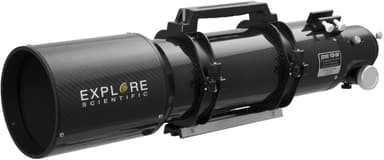
Celestron NexStar 8SE vs Explore Scientific ED102 FCD100
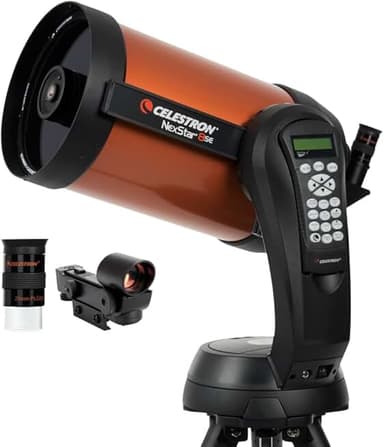
VS
Performance Profile
Score Comparison
Celestron NexStar 8SEExplore Scientific ED102
Overall
80
40
Value
42
30
Beginner
52
25
Astrophoto
61
39
Portability
53
63
Planetary
71
8
Deep Sky
61
16
Our Take
The Celestron NexStar 8SE is the clear winner for most amateur astronomers. This computerized 8-inch reflector significantly outperforms the Explore Scientific ED102 FCD100 across nearly every metric that matters to visual observers. The single most important differentiator is aperture and design; the NexStar's 203mm Schmidt-Cassegrain collects substantially more light than the ED102's smaller refractor, delivering superior contrast and detail for planetary observation and deep-sky work.
The NexStar's GoTo mount and tracking system add tremendous practical value, allowing you to locate and follow objects with ease, while the ED102 requires manual positioning. The ED102's only real advantage is portability; at just 3.18kg, it's genuinely travel-friendly, but this benefit collapses under the weight of the NexStar's superior optical performance and ease of use. The Celestron NexStar 8SE suits observers who want versatile planetary and deep-sky capabilities without constant manual effort.
The Explore Scientific ED102 FCD100 appeals only to those prioritizing maximum portability and willing to accept severely limited observing performance. For most amateur astronomers, the NexStar's higher overall score of 80 versus 40 reflects reality; purchase the Celestron NexStar 8SE.
Key Differences
Why choose Celestron NexStar 8SE
- $551 cheaper
- Includes GoTo mount for automatic object finding
- Has tracking capability for astrophotography
- Higher Overall score (80 vs 40)
- Higher Value score (42 vs 30)
- Higher Beginner score (52 vs 25)
Why choose Explore Scientific ED102
- 7.7kg lighter and more portable
- Faster f/7 for wider field of view
Specifications
SpecCelestron NexStar 8SEExplore Scientific ED102
Optical Specs
Aperture203.2mm-
Focal Length2032mm-
Focal Ratiof/10f/7
Optical DesignSchmidt-Cassegrain-
Mount & Tracking
Mount TypeForkEquatorial
GoToYesNo
TrackingYesNo
Physical
Weight10.84kg3.18kg
Included Accessories
FinderStarPointerFinder scope
Pricing & Reviews
Price$1699$2250
Amazon Rating4.4 stars2.0 stars
Reviews2,4931
Try these telescopes in our Eyepiece Calculator:
Related Comparisons
Celestron NexStar 8 SE Schmidt-Cassegrain Computerized Telescope with 1.25" Eyep vs Explore Scientific ED102 FCD100Celestron NexStar 8SE vs Celestron NexStar Evolution 9.25Celestron NexStar 8SE vs Explore Scientific ED102 FCD100Celestron NexStar Evolution 8 EdgeHD vs Explore Scientific ED102 FCD100Celestron NexStar 8SE vs Vaonis Vespera II Exploration StationCelestron NexStar 8 SE Schmidt-Cassegrain Computerized Telescope with 1.25" Eyep vs Celestron NexStar 8SE