Comparison
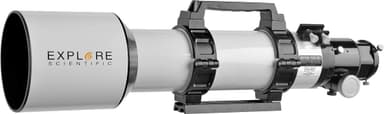
Celestron NexStar 8SE vs Explore Scientific ED102 FCD100
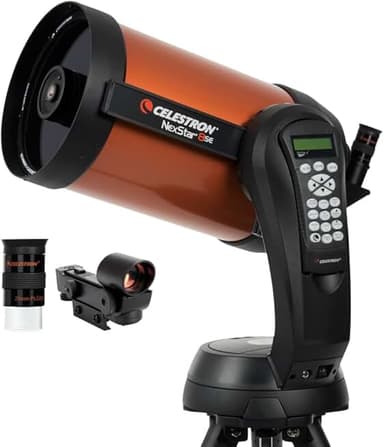
VS
Performance Profile
Score Comparison
Celestron NexStar 8SEExplore Scientific ED102
Overall
80
51
Value
42
34
Beginner
52
25
Astrophoto
61
31
Portability
53
61
Planetary
71
34
Deep Sky
61
38
Our Take
The Celestron NexStar 8SE is the clear winner for most amateur astronomers. It delivers superior performance across nearly every category, with an overall score of 80 compared to the ED102's 51. The single most important differentiator is aperture; the NexStar's 203mm mirror gathers nearly four times more light than the ED102's 102mm refractor, translating to dramatically better views of faint galaxies, nebulae, and planetary detail. The NexStar's computerized GoTo mount also eliminates the learning curve of manual star-hopping, making it genuinely beginner-friendly despite its lower beginner score reflecting its complexity.
The Explore Scientific ED102 FCD100 makes sense only for observers prioritizing portability and simplicity. At under 5kg, it's genuinely travel-friendly; the NexStar at 10.84kg demands commitment. The ED102's optical quality is respectable for a refractor, but its performance gaps are substantial across all observing disciplines. Buy the Celestron NexStar 8SE if you want serious observing capability and don't mind a heavier telescope.
Buy the Explore Scientific ED102 FCD100 if you frequently relocate your observing site and value ease of setup over image brightness. The NexStar is the safer, more rewarding investment for nearly everyone else.
Key Differences
Why choose Celestron NexStar 8SE
- 203.2mm aperture gathers more light than 102mm
- Includes GoTo mount for automatic object finding
- Has tracking capability for astrophotography
- Higher Overall score (80 vs 51)
- Higher Beginner score (52 vs 25)
- Higher Astrophoto score (61 vs 31)
Why choose Explore Scientific ED102
- 5.9kg lighter and more portable
- Faster f/7 for wider field of view
- Higher Amazon rating (5.0 vs 4.4 stars)
Specifications
SpecCelestron NexStar 8SEExplore Scientific ED102
Optical Specs
Aperture203.2mm102mm
Focal Length2032mm-
Focal Ratiof/10f/7
Optical DesignSchmidt-Cassegrain-
Coating-Multi-Coated
Mount & Tracking
Mount TypeForkAlt-Az
GoToYesNo
TrackingYesNo
Physical
Weight10.84kg4.94kg
Included Accessories
FinderStarPointerFinder scope
Pricing & Reviews
Price$1699$1800
Amazon Rating4.4 stars5.0 stars
Reviews2,4931
Try these telescopes in our Eyepiece Calculator:
Related Comparisons
Celestron NexStar 8SE vs Explore Scientific ED102 FCD100Celestron NexStar 8SE vs Celestron NexStar Evolution 9.25Explore Scientific ED102 FCD100 vs Explore Scientific ED127 FCD100Celestron NexStar 8SE vs Vaonis Vespera II Exploration StationCelestron NexStar 8 SE Schmidt-Cassegrain Computerized Telescope with 1.25" Eyep vs Celestron NexStar 8SECelestron NexStar 8SE vs Celestron NexStar Evolution 9.25