Comparison
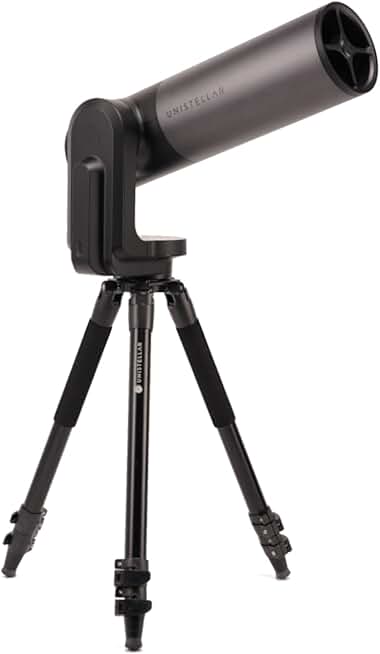
Unistellar eVscope Equinox vs ZWO Seestar S50
Performance Profile
Score Comparison
Unistellar eVscope Equinox and ZWO Seestar S50 are currently unavailable at Amazon. Prices mentioned in the comparison below may be out of date.
Our Take
The choice between these two smart telescopes hinges on what you prioritize: portability and ease of setup, or light-gathering power for faint objects. The ZWO Seestar S50 weighs 2.5kg and requires minimal preparation; the Unistellar eVscope Equinox is heavier but has twice the aperture, which matters for detecting dim deep-sky objects. The aperture difference is the fundamental distinction. At 114mm versus 50mm, the eVscope Equinox collects roughly four times more light.
This advantage shows primarily when imaging galaxies, nebulae, and star clusters; both telescopes capture planetary and lunar detail similarly because their sensors resolve fine detail rather than human vision through an eyepiece. For the Moon and brighter planets, the smaller aperture of the Seestar S50 is adequate. The Seestar S50's compact refractor design and minimal weight suit observers who travel or observe frequently from varied locations. Its straightforward setup appeals to those new to astronomy.
Choose the eVscope Equinox if you plan to pursue deep-sky imaging seriously and can accommodate a larger instrument at a fixed observing site. If you value spontaneity and simplicity, the Seestar S50's portability is its real strength.
Key Differences
Why choose Unistellar eVscope Equinox
- 114mm aperture gathers more light than 50mm
- Faster f/4 for wider field of view
Why choose ZWO Seestar S50
- Higher Value score (71 vs 51)
- Higher Portability score (86 vs 50)
- Higher Amazon rating (4.5 vs 3.6 stars)
- 326 Amazon reviews vs 27