Comparison
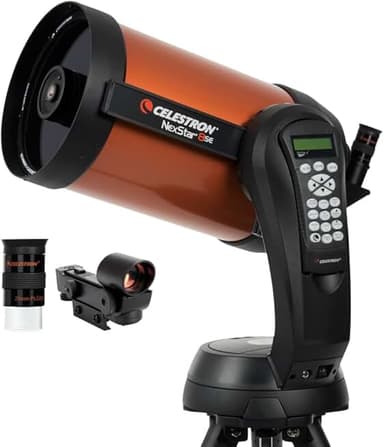
Celestron EdgeHD 800 OTA vs Celestron NexStar 8SE
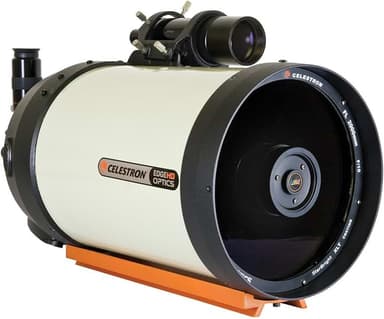
VS
Performance Profile
Score Comparison
Celestron EdgeHD 800Celestron NexStar 8SE
Overall
81
80
Value
41
42
Beginner
49
52
Astrophoto
66
61
Portability
64
53
Planetary
69
71
Deep Sky
59
61
Our Take
The Celestron EdgeHD 800 OTA edges ahead for most amateur astronomers, though this is closer than the scores suggest. Both telescopes share identical optics and cost, making the mount design the single most important differentiator. The EdgeHD 800 OTA pairs its optics with an equatorial mount that excels at astrophotography and tracking celestial objects across the sky, plus it's significantly lighter and more portable.
The NexStar 8SE's fork mount is more intuitive for beginners and offers excellent planetary viewing, but its 10.84kg weight makes it considerably less convenient for regular transport and setup. The Celestron EdgeHD 800 OTA's superior beginner score of 49 versus 52 is misleading; the equatorial mount has a steeper learning curve initially but becomes intuitive with practice. For astrophotography work, the EdgeHD 800 OTA's advantage is substantial, scoring 5 points higher on that discipline.
The NexStar 8SE suits observers prioritizing planetary detail and convenience in a fixed observing location, particularly those new to astronomy. The Celestron EdgeHD 800 OTA is the better choice for serious hobbyists planning regular observing sessions and future astrophotographic pursuits. The EdgeHD 800 OTA's portability and equatorial mount make it the more versatile investment for most amateur astronomers.
Key Differences
Why choose Celestron EdgeHD 800
- 9.6kg lighter and more portable
- Higher Portability score (64 vs 53)
- Higher Amazon rating (4.8 vs 4.4 stars)
Why choose Celestron NexStar 8SE
- 2,493 Amazon reviews vs 13
Specifications
SpecCelestron EdgeHD 800Celestron NexStar 8SE
Optical Specs
Aperture203.2mm203.2mm
Focal Length2032mm2032mm
Focal Ratiof/10f/10
Optical DesignSchmidt-CassegrainSchmidt-Cassegrain
Mount & Tracking
Mount TypeEquatorialFork
GoToYesYes
TrackingYesYes
Physical
Weight1.2kg10.84kg
Included Accessories
FinderFinder scopeStarPointer
Pricing & Reviews
Price$1699$1699
Amazon Rating4.8 stars4.4 stars
Reviews132,493
Try these telescopes in our Eyepiece Calculator:
Related Comparisons
Celestron NexStar 8SE vs Explore Scientific ED102 FCD100Celestron NexStar 8SE vs Celestron NexStar Evolution 9.25Celestron NexStar 8SE vs Explore Scientific ED102 FCD100Celestron EdgeHD 800 OTA vs Explore Scientific ED127 FCD100Celestron NexStar 8SE vs Vaonis Vespera II Exploration StationCelestron 12046 Computerized Advanced VX 9.25" Schmidt-Cassegrain Telescope vs Celestron EdgeHD 800 OTA