Comparison
Celestron StarSense Explorer DX 5" SCT vs Explore Scientific ED80 Essential Series Air-Spaced Apochromatic 80mm Triplet Re
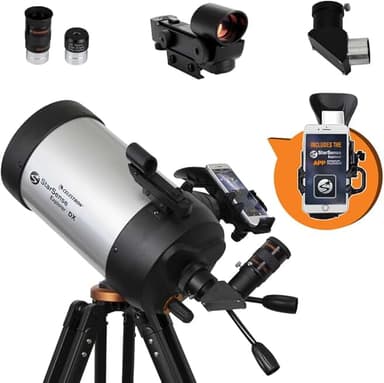
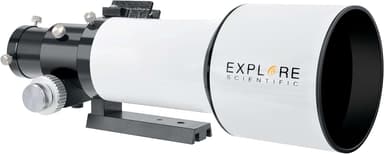
VS
Performance Profile
Score Comparison
Celestron StarSense ExplorerExplore Scientific ED80
Overall
68
63
Value
56
46
Beginner
38
32
Astrophoto
42
48
Portability
59
63
Planetary
56
48
Deep Sky
45
38
Our Take
The Celestron StarSense Explorer DX 5" SCT edges out the Explore Scientific ED80 with a five-point overall advantage and superior planetary performance, making it the better choice for observers prioritizing light-gathering power and planetary detail. The single most important differentiator is aperture; the Celestron's 127mm objective collects 59 percent more light than the ED80's 80mm, a substantial advantage for viewing the Moon, planets, and brighter deep-sky objects. The Celestron StarSense Explorer DX 5" SCT suits observers who want maximum optical performance from a compact scope and value the convenience of computerized tracking, despite the steeper learning curve.
The Explore Scientific ED80 Essential Series is ideal for backyard astronomers prioritizing portability and optical purity for planetary observation with minimal setup complexity. The choice hinges on your priorities. If you seek versatility and don't mind a slightly heavier scope with automated finding capabilities, the Celestron delivers better value. If weight and ease of transport matter more than raw light-gathering, and you're willing to sacrifice some deep-sky performance, the ED80's refractor optics and featherweight design make it the pragmatic choice.
For most amateur astronomers, the Celestron's extra aperture and tracking justify its marginal price difference.
Key Differences
Why choose Celestron StarSense Explorer
- 127mm aperture gathers more light than 80mm
- Has tracking capability for astrophotography
- 1,550 Amazon reviews vs 14
Why choose Explore Scientific ED80
- 3.9kg lighter and more portable
- Faster f/6 for wider field of view
Specifications
SpecCelestron StarSense ExplorerExplore Scientific ED80
Optical Specs
Aperture127mm80mm
Focal Length1250mm480mm
Focal Ratiof/9.8f/6
Optical DesignSchmidt-CassegrainApochromat Refractor
Mount & Tracking
Mount TypeAlt-AzEquatorial
GoToNoNo
TrackingYesNo
Physical
Weight6.62kg2.7kg
Included Accessories
FinderRed dot finderFinder scope
Pricing & Reviews
Price$580$600
Amazon Rating4.1 stars4.2 stars
Reviews1,55014
Try these telescopes in our Eyepiece Calculator:
Related Comparisons
Celestron StarSense Explorer DX 5" SCT vs Sky-Watcher Quattro 150P Imaging NewtonianCelestron NexStar 5SE vs Celestron StarSense Explorer DX 5" SCTExplore Scientific ED80 Essential Series Air-Spaced Apochromatic 80mm Triplet Re vs SVBONY SV555 54mm Petzval APOAskar SQA55 Telescope 55mm Aperture F4.8 Quintuplet Air-Spaced SD Glass Petzval vs Explore Scientific ED80 Essential Series Air-Spaced Apochromatic 80mm Triplet ReCelestron NexStar 127SLT vs Celestron StarSense Explorer DX 5" SCTCelestron NexStar Evolution 9.25 vs Celestron StarSense Explorer DX 5" SCT