Comparison
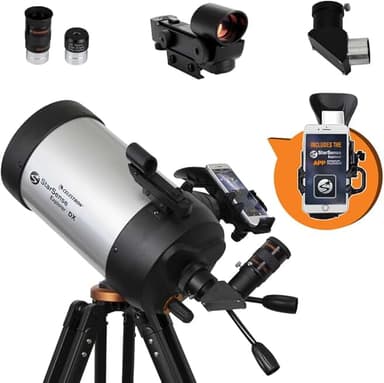
Celestron NexStar Evolution 9.25 vs Celestron StarSense Explorer DX 5" SCT
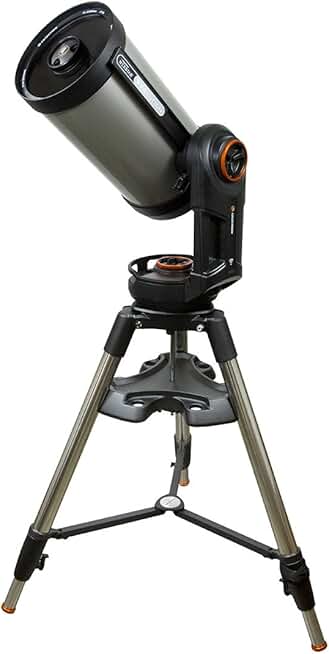
VS
Performance Profile
Score Comparison
Celestron NexStar EvolutionCelestron StarSense Explorer
Overall
74
68
Value
50
56
Beginner
38
38
Astrophoto
50
42
Portability
35
59
Planetary
74
56
Deep Sky
61
45
Our Take
The Celestron NexStar Evolution 9.25 is the clear winner for serious amateur astronomers willing to invest in capability and accept its weight penalty. The single most important differentiator is aperture; the 9.25-inch primary mirror gathers nearly 3.4 times more light than the 5-inch, translating to dramatically superior performance on planets and deep sky objects. This advantage shows in their respective scores: the NexStar Evolution leads on planetary observation (74 vs. 56), deep sky viewing (61 vs. 45), and astrophotography (50 vs. 42).
The StarSense Explorer DX 5" SCT earns consideration only if portability dominates your priorities; at 6.6 kg versus 21.8 kg, it's genuinely travel-friendly and still delivers respectable views of brighter objects. However, both telescopes tie on beginner scores (38/100), suggesting neither excels as an entry-level choice despite the price difference. Buy the NexStar Evolution 9.25 if you're committed to observing from a permanent or semi-permanent location and want genuine optical capability.
Buy the StarSense Explorer DX 5" SCT only if you'll abandon it at home when portability becomes inconvenient. The NexStar Evolution 9.25 justifies its cost premium through superior optics and performance across nearly every category.
Key Differences
Why choose Celestron NexStar Evolution
- 235mm aperture gathers more light than 127mm
- Includes GoTo mount for automatic object finding
- Higher Planetary score (74 vs 56)
- Higher Deep Sky score (61 vs 45)
Why choose Celestron StarSense Explorer
- $429 cheaper
- 15.1kg lighter and more portable
- Higher Portability score (59 vs 35)
Specifications
SpecCelestron NexStar EvolutionCelestron StarSense Explorer
Optical Specs
Aperture235mm127mm
Focal Length2350mm1250mm
Focal Ratiof/10f/9.8
Optical DesignSchmidt-CassegrainSchmidt-Cassegrain
CoatingMulti-Coated-
Mount & Tracking
Mount TypeAlt-AzAlt-Az
GoToYesNo
TrackingYesYes
Physical
Weight21.77kg6.62kg
Included Accessories
Finder-Red dot finder
Pricing & Reviews
Price$1009$580
Amazon Rating-4.1 stars
Reviews-1,550
Try these telescopes in our Eyepiece Calculator:
Related Comparisons
Celestron NexStar 6SE vs Celestron NexStar Evolution 9.25Celestron NexStar Evolution 9.25 vs Sky-Watcher SkyMax 127Celestron StarSense Explorer DX 5" SCT vs Sky-Watcher Quattro 150P Imaging NewtonianCelestron NexStar 5SE vs Celestron StarSense Explorer DX 5" SCTCelestron NexStar 127SLT vs Celestron StarSense Explorer DX 5" SCTCelestron NexStar Evolution 9.25 vs Sky-Watcher Quattro 150P Imaging Newtonian