Comparison
Celestron StarSense Explorer DX 130AZ vs Explore Scientific FL-AR102600TN Firstlight Tube Refractor Telescope with TWI Na
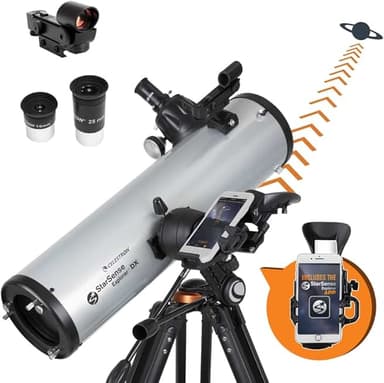
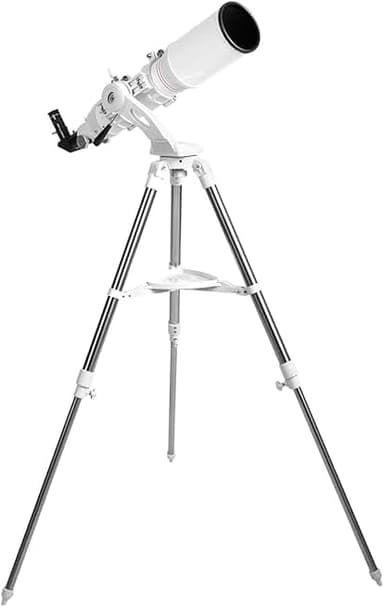
VS
Performance Profile
Score Comparison
Celestron StarSense ExplorerExplore Scientific FL-AR102600TN
Overall
73
58
Value
64
52
Beginner
41
36
Astrophoto
53
32
Portability
57
56
Planetary
50
38
Deep Sky
54
39
Our Take
The Celestron StarSense Explorer DX 130AZ is the clear winner here, outscoring its competitor across nearly every category. The single most important differentiator is aperture; the Celestron's 130mm objective versus the Explore Scientific's 102mm translates to roughly 62 percent more light-gathering power, directly improving performance on deep sky objects, planets, and faint targets. This aperture advantage explains the Celestron's 15-point overall score lead and its superior ratings in deep sky, planetary, and astrophotography work.
The Celestron StarSense Explorer DX 130AZ should be purchased by anyone seeking serious observing capability and willing to accept a Newtonian's slightly steeper learning curve. The Explore Scientific FL-AR102600TN Firstlight Tube Refractor telescope suits observers prioritizing optical simplicity and minimal maintenance, though its smaller aperture limits what you can see. Given the modest $39 price difference and substantial performance gap, the Celestron represents significantly better value.
Its only real disadvantage is marginally greater weight and the collimation maintenance reflectors require, but these are minor concerns compared to the observing advantages its larger mirror provides.
Key Differences
Why choose Celestron StarSense Explorer
- 130mm aperture gathers more light than 102mm
- Has tracking capability for astrophotography
- Faster f/5 for wider field of view
- Higher Overall score (73 vs 58)
- Higher Value score (64 vs 52)
- Higher Astrophoto score (53 vs 32)
Why choose Explore Scientific FL-AR102600TN
No significant advantages identified.
Specifications
SpecCelestron StarSense ExplorerExplore Scientific FL-AR102600TN
Optical Specs
Aperture130mm102mm
Focal Length650mm600mm
Focal Ratiof/5f/6.47
Optical DesignNewtonian-
Mount & Tracking
Mount TypeAlt-AzAlt-Az
GoToNoNo
TrackingYesNo
Physical
Weight8.16kg8.39kg
Included Accessories
FinderStarPointerRed dot finder
Pricing & Reviews
Price$429$390
Amazon Rating4.1 stars3.8 stars
Reviews1,5507
Try these telescopes in our Eyepiece Calculator:
Related Comparisons
Celestron StarSense Explorer DX 130AZ vs Telescope, 150EQ Newtonian Reflector Telescope for Adults Astronomy BeginnersCelestron AstroMaster 130EQ vs Celestron StarSense Explorer DX 130AZCelestron StarSense Explorer DX 130AZ vs SVBONY SV503 102mm ED RefractorCelestron StarSense Explorer DX 130AZ vs SVBONY SV503 80mm ED RefractorExplore Scientific FL-AR102600TN Firstlight Tube Refractor Telescope with TWI Na vs Sky-Watcher Sky-Watcher EvoGuide 50DX – 50mm Guide Scope APO Doublet Refractor –Celestron AstroMaster 130EQ-MD vs Explore Scientific FL-AR102600TN Firstlight Tube Refractor Telescope with TWI Na