Comparison
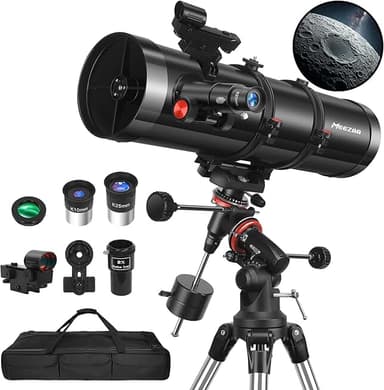
Celestron StarSense Explorer DX 130AZ vs Telescope, 150EQ Newtonian Reflector Telescope for Adults Astronomy Beginners
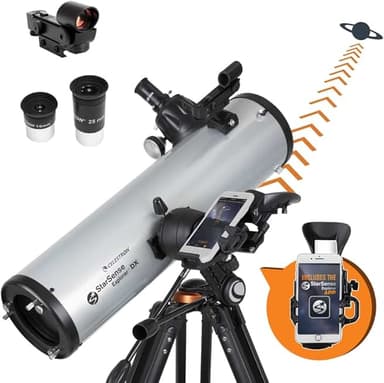
VS
Performance Profile
Score Comparison
Celestron StarSense ExplorerTelescope, 150EQ Newtonian
Overall
73
79
Value
64
75
Beginner
41
40
Astrophoto
53
71
Portability
57
49
Planetary
50
50
Deep Sky
54
57
Our Take
The 150EQ emerges as the winner for most amateur astronomers, delivering superior overall performance at a lower price point. Its larger 150mm aperture and faster f/4.3 focal ratio significantly outperform the StarSense Explorer DX 130AZ in astrophotography (71 vs 53) and deep sky observation (57 vs 54), with identical planetary viewing scores despite the optical advantage. The 80/100 overall score versus 73/100 reflects real-world capability differences that will matter during observing sessions.
The single most important differentiator is aperture and light-gathering power; the 150EQ's extra 20mm aperture means substantially brighter deep sky views and better detail on faint nebulae and galaxies. The StarSense Explorer's computerized GoTo tracking provides convenience that the equatorial-mounted 150EQ requires manual alignment to achieve, though both mount types track equally well once set up. The StarSense Explorer DX 130AZ suits observers prioritizing portability and convenience over raw performance; it weighs 5kg less and simplifies locating objects for urban observers.
The 150EQ belongs with serious deep sky observers and astrophotographers willing to trade portability for genuine optical superiority and cost savings. Buy the 150EQ unless you specifically need GoTo automation and maximum transportability.
Key Differences
Why choose Celestron StarSense Explorer
- 5.3kg lighter and more portable
- 1,550 Amazon reviews vs 219
Why choose Telescope, 150EQ Newtonian
- 150mm aperture gathers more light than 130mm
- $99 cheaper
- Higher Value score (75 vs 64)
- Higher Astrophoto score (71 vs 53)
- Higher Amazon rating (4.5 vs 4.1 stars)
Specifications
SpecCelestron StarSense ExplorerTelescope, 150EQ Newtonian
Optical Specs
Aperture130mm150mm
Focal Length650mm650mm
Focal Ratiof/5f/4.3
Optical DesignNewtonian-
Mount & Tracking
Mount TypeAlt-AzEquatorial
GoToNoNo
TrackingYesYes
Physical
Weight8.16kg13.47kg
Included Accessories
FinderStarPointerRed dot finder
Pricing & Reviews
Price$429$330
Amazon Rating4.1 stars4.5 stars
Reviews1,550219
Try these telescopes in our Eyepiece Calculator:
Related Comparisons
Celestron AstroMaster 114EQ vs Telescope, 150EQ Newtonian Reflector Telescope for Adults Astronomy BeginnersCelestron AstroMaster 130EQ vs Celestron StarSense Explorer DX 130AZCelestron StarSense Explorer DX 130AZ vs SVBONY SV503 102mm ED RefractorCelestron StarSense Explorer DX 130AZ vs SVBONY SV503 80mm ED RefractorCelestron AstroMaster 130EQ vs Telescope, 150EQ Newtonian Reflector Telescope for Adults Astronomy BeginnersHSL 150EQ Astronomical Reflector Telescope for Adults high Powered vs Telescope, 150EQ Newtonian Reflector Telescope for Adults Astronomy Beginners