Comparison
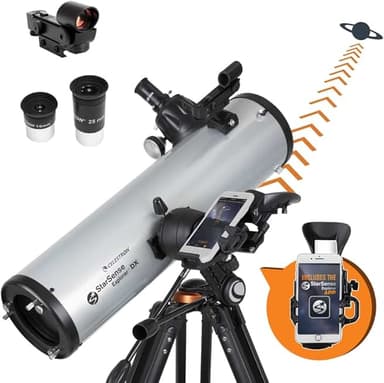
Celestron AstroMaster 130EQ vs Celestron StarSense Explorer DX 130AZ
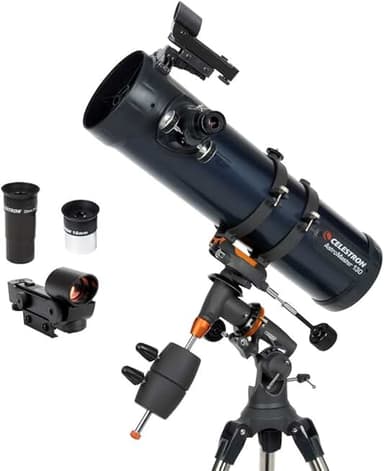
VS
Performance Profile
Score Comparison
Celestron AstroMaster 130EQCelestron StarSense Explorer
Overall
71
73
Value
63
64
Beginner
43
41
Astrophoto
54
53
Portability
57
57
Planetary
46
50
Deep Sky
47
54
Our Take
These nearly identical optical tubes diverge fundamentally in their approach to amateur astronomy. Despite matching overall scores, the Celestron StarSense Explorer DX 130AZ edges out the Celestron AstroMaster 130EQ due to its automated tracking and superior deep sky performance, scoring 54 versus 47 in that crucial category. The single most important differentiator is the StarSense Explorer's alt-azimuth mount with computerized tracking.
This eliminates manual adjustments during observation, a genuine convenience factor that justifies the $141 price premium for observers planning extended viewing sessions. The AstroMaster's equatorial mount offers superior long-exposure capabilities but requires more setup knowledge and patience. The AstroMaster 130EQ suits budget-conscious beginners who value simplicity and lowest cost, while the StarSense Explorer DX 130AZ better serves observers prioritizing ease of use and deep sky object tracking.
Choose the StarSense Explorer DX 130AZ. The tracking capability meaningfully enhances the observing experience for most amateur astronomers, and the improved deep sky score reflects this advantage. Unless budget constraints are absolute, the added investment pays dividends in frustration avoidance and time spent actually observing rather than repositioning the scope.
Key Differences
Why choose Celestron AstroMaster 130EQ
- $69 cheaper
- 3,402 Amazon reviews vs 1,550
Why choose Celestron StarSense Explorer
- Has tracking capability for astrophotography
Specifications
SpecCelestron AstroMaster 130EQCelestron StarSense Explorer
Optical Specs
Aperture130mm130mm
Focal Length650mm650mm
Focal Ratiof/5f/5
Optical DesignNewtonianNewtonian
Mount & Tracking
Mount TypeEquatorialAlt-Az
GoToNoNo
TrackingNoYes
Physical
Weight7.71kg8.16kg
Included Accessories
FinderStarPointerStarPointer
Pricing & Reviews
Price$360$429
Amazon Rating4.3 stars4.1 stars
Reviews3,4021,550
Try these telescopes in our Eyepiece Calculator:
Related Comparisons
Celestron StarSense Explorer DX 130AZ vs Telescope, 150EQ Newtonian Reflector Telescope for Adults Astronomy BeginnersCelestron AstroMaster 130EQ vs Telescope150EQ for Adults High PoweredCelestron StarSense Explorer DX 130AZ vs SVBONY SV503 102mm ED RefractorCelestron StarSense Explorer DX 130AZ vs SVBONY SV503 80mm ED RefractorCelestron AstroMaster 130EQ vs Telescope, 150EQ Newtonian Reflector Telescope for Adults Astronomy BeginnersCelestron StarSense Explorer DX 130AZ vs SVBONY SV550 80mm APO Triplet