Comparison
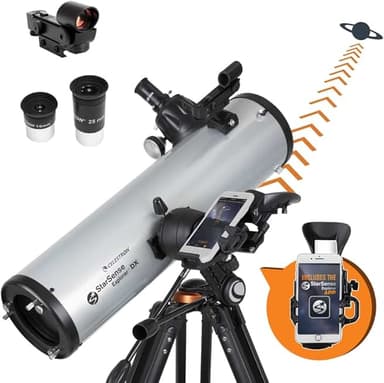
Celestron StarSense Explorer DX 102AZ vs Celestron StarSense Explorer DX 130AZ

VS
Performance Profile
Score Comparison
Celestron StarSense ExplorerCelestron StarSense Explorer
Overall
69
73
Value
60
64
Beginner
41
41
Astrophoto
49
53
Portability
59
57
Planetary
44
50
Deep Sky
49
54
Our Take
The Celestron StarSense Explorer DX 130AZ emerges as the winner, though this isn't a decisive victory. Both telescopes share identical beginner scores and comparable prices, making the choice fundamentally about aperture versus portability. The 130mm Newtonian collects approximately 63 percent more light than the 102mm refractor, translating to tangibly better performance across planetary, deep sky, and astrophotography work; the DX 130AZ's 4-point overall advantage reflects this optical superiority.
The single most important differentiator is aperture. Light-gathering power directly determines what you'll see in deep sky objects and planetary detail, and the Newtonian's larger mirror provides a genuine observational advantage that compounds over months of regular use. The Celestron StarSense Explorer DX 102AZ suits observers prioritizing portability and those with limited storage space; its compact refractor design makes transport easier and setup faster.
The Celestron StarSense Explorer DX 130AZ is the better choice for observers wanting maximum performance from a budget-friendly computerized mount, since the additional aperture justifies the modest weight increase. Unless your observing location involves significant travel, the DX 130AZ delivers superior value through better optical performance at nearly identical cost.
Key Differences
Why choose Celestron StarSense Explorer
- 1.7kg lighter and more portable
Why choose Celestron StarSense Explorer
- 130mm aperture gathers more light than 102mm
- Faster f/5 for wider field of view
Specifications
SpecCelestron StarSense ExplorerCelestron StarSense Explorer
Optical Specs
Aperture102mm130mm
Focal Length660mm650mm
Focal Ratiof/6.5f/5
Optical DesignAchromat RefractorNewtonian
Mount & Tracking
Mount TypeAlt-AzAlt-Az
GoToNoNo
TrackingYesYes
Physical
Weight6.44kg8.16kg
Included Accessories
FinderStarPointerStarPointer
Pricing & Reviews
Price$430$429
Amazon Rating4.1 stars4.1 stars
Reviews1,5501,550
Try these telescopes in our Eyepiece Calculator:
Related Comparisons
Celestron StarSense Explorer DX 102AZ vs SVBONY SV550 80mm APO TripletCelestron StarSense Explorer DX 130AZ vs Telescope, 150EQ Newtonian Reflector Telescope for Adults Astronomy BeginnersCelestron AstroMaster 130EQ vs Celestron StarSense Explorer DX 130AZCelestron StarSense Explorer DX 130AZ vs SVBONY SV503 102mm ED RefractorCelestron StarSense Explorer DX 130AZ vs SVBONY SV503 80mm ED RefractorCelestron StarSense Explorer DX 130AZ vs SVBONY SV550 80mm APO Triplet