Comparison
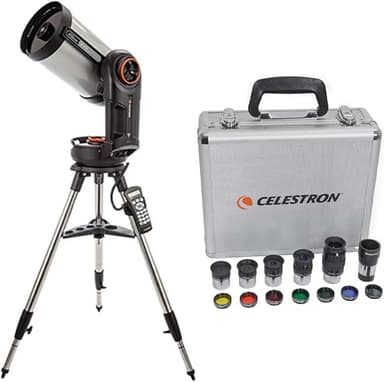
Celestron EdgeHD 800 OTA vs Celestron NexStar Evolution 8
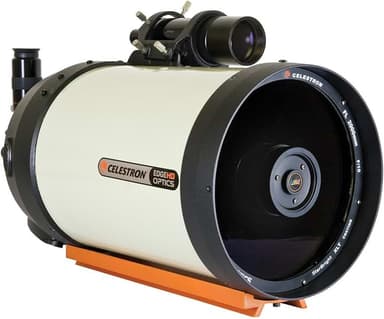
VS
Performance Profile
Score Comparison
Celestron EdgeHD 800Celestron NexStar Evolution
Overall
81
70
Value
41
39
Beginner
49
37
Astrophoto
66
59
Portability
64
17
Planetary
69
69
Deep Sky
59
59
Our Take
The Celestron EdgeHD 800 OTA is the clear winner for most amateur astronomers. Both scopes share identical optics and aperture, delivering the same planetary viewing quality, but they diverge significantly in practical usability and value. The single most important differentiator is portability paired with overall performance. The EdgeHD 800 OTA weighs just 1.2 kg as an optical tube assembly, making it genuinely transportable to dark sites.
The NexStar Evolution 8, at 31.3 kg with its integrated fork mount, demands a dedicated vehicle and setup area. This weight penalty directly explains why the Evolution 8 scores only 17/100 in portability compared to the EdgeHD's 64/100. The EdgeHD 800 OTA also outperforms across astrophotography, deep sky observation, and beginner-friendliness, while costing $300 less. The NexStar Evolution 8's main advantage is self-contained simplicity; everything is integrated and ready.
Buy the Celestron EdgeHD 800 OTA if you value performance, flexibility, and actually visiting different observing locations. Buy the Celestron NexStar Evolution 8 only if you have a dedicated permanent or semi-permanent setup location and prioritize convenience over versatility. Choose the EdgeHD 800 OTA for superior practical value.
Key Differences
Why choose Celestron EdgeHD 800
- $301 cheaper
- 30.1kg lighter and more portable
- Higher Overall score (81 vs 70)
- Higher Beginner score (49 vs 37)
- Higher Portability score (64 vs 17)
- Higher Amazon rating (4.8 vs 4.3 stars)
Why choose Celestron NexStar Evolution
No significant advantages identified.
Specifications
SpecCelestron EdgeHD 800Celestron NexStar Evolution
Optical Specs
Aperture203.2mm203.2mm
Focal Length2032mm2032mm
Focal Ratiof/10f/10
Optical DesignSchmidt-CassegrainSchmidt-Cassegrain
Mount & Tracking
Mount TypeEquatorialFork
GoToYesYes
TrackingYesYes
Physical
Weight1.2kg31.3kg
Included Accessories
FinderFinder scopeFinder scope
Pricing & Reviews
Price$1699$2000
Amazon Rating4.8 stars4.3 stars
Reviews1317
Try these telescopes in our Eyepiece Calculator:
Related Comparisons
Celestron NexStar Evolution 8 vs Unistellar Equinox 2Celestron NexStar Evolution 6 vs Celestron NexStar Evolution 8Celestron NexStar 8SE vs Celestron NexStar Evolution 8Celestron NexStar 6SE vs Celestron NexStar Evolution 8Celestron EdgeHD 800 OTA vs Explore Scientific ED127 FCD100Celestron 12046 Computerized Advanced VX 9.25" Schmidt-Cassegrain Telescope vs Celestron EdgeHD 800 OTA