Comparison
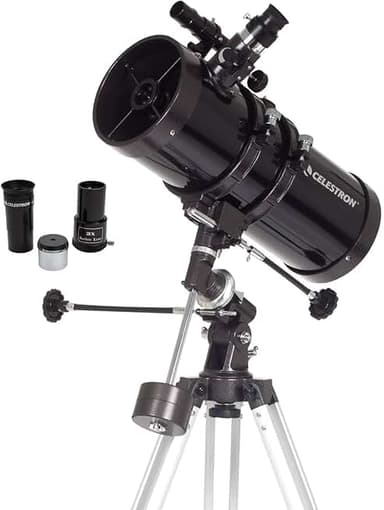
Celestron AstroMaster 130EQ vs Celestron PowerSeeker 127EQ
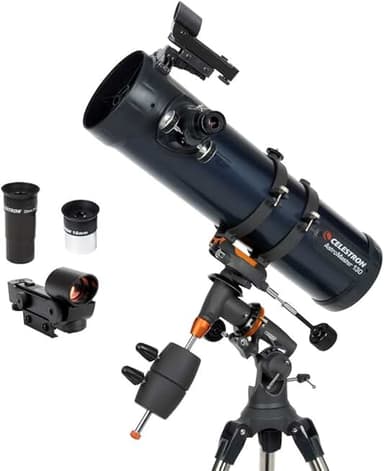
VS
Performance Profile
Score Comparison
Celestron AstroMaster 130EQCelestron PowerSeeker 127EQ
Overall
71
73
Value
63
85
Beginner
43
45
Astrophoto
54
48
Portability
57
60
Planetary
46
48
Deep Sky
47
41
Our Take
These two Celestron models tie on overall performance, but they serve different priorities. The Celestron AstroMaster 130EQ edges ahead for serious deep sky observation thanks to its larger 130mm aperture and faster f/5 focal ratio, delivering brighter images and superior light-gathering power. The Celestron PowerSeeker 127EQ counters with a longer focal length, making it slightly better for planetary detail, plus it's genuinely lighter and more portable.
The single most important differentiator is aperture size; the AstroMaster's extra 3mm means meaningfully more light collection and resolution, particularly for faint objects. The PowerSeeker's higher magnification potential is offset by its smaller mirror. The Celestron AstroMaster 130EQ suits observers who prioritize viewing galaxies, nebulae, and star clusters from a semi-permanent setup.
The Celestron PowerSeeker 127EQ is better for those who frequently transport their scope or want maximum planetary contrast at minimal weight and cost. Choose the AstroMaster 130EQ if you're willing to sacrifice portability for better deep sky performance and aperture advantage. The PowerSeeker 127EQ makes sense only if weight savings and price justify accepting reduced light-gathering capability.
Key Differences
Why choose Celestron AstroMaster 130EQ
- Faster f/5 for wider field of view
Why choose Celestron PowerSeeker 127EQ
- $176 cheaper
- 1.8kg lighter and more portable
- Higher Value score (85 vs 63)
- 10,316 Amazon reviews vs 3,402
Specifications
SpecCelestron AstroMaster 130EQCelestron PowerSeeker 127EQ
Optical Specs
Aperture130mm127mm
Focal Length650mm1000mm
Focal Ratiof/5f/7.9
Optical DesignNewtonianNewtonian
Mount & Tracking
Mount TypeEquatorialEquatorial
GoToNoNo
TrackingNoNo
Physical
Weight7.71kg5.9kg
Included Accessories
FinderStarPointerFinder scope
Pricing & Reviews
Price$360$184
Amazon Rating4.3 stars4.1 stars
Reviews3,40210,316
Try these telescopes in our Eyepiece Calculator:
Related Comparisons
Celestron PowerSeeker 127EQ vs Telescope for Adults High PoweredCelestron AstroMaster 102AZ vs Celestron PowerSeeker 127EQCelestron AstroMaster 130EQ vs Telescope150EQ for Adults High PoweredCelestron AstroMaster 130EQ vs Celestron StarSense Explorer DX 130AZCelestron PowerSeeker 127EQ vs Telescope, Telescope for Adults High Powered ProfessionalCelestron AstroMaster 130EQ vs Telescope, 150EQ Newtonian Reflector Telescope for Adults Astronomy Beginners