Comparison
Sky-Watcher EvoStar 100 APO Doublet Refractor vs Sky-Watcher Sky-Watcher EvoStar 80 APO Doublet Refractor
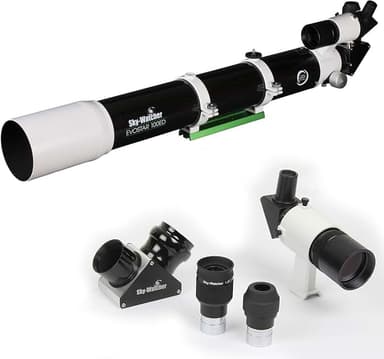
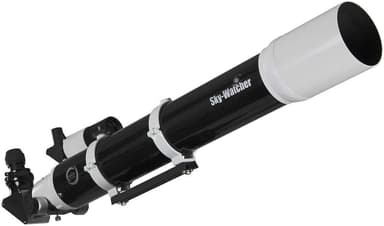
VS
Performance Profile
Score Comparison
Sky-Watcher EvoStar 100Sky-Watcher Sky-Watcher EvoStar
Overall
30
37
Value
31
33
Beginner
31
32
Astrophoto
12
12
Portability
40
63
Planetary
10
22
Deep Sky
7
7
Our Take
The Sky-Watcher EvoStar 80 APO emerges as the better choice for most amateur astronomers. While the 100mm offers slightly more light-gathering, the 80mm's superior overall score of 37 versus 30 reflects its better real-world balance and value proposition. The single most important differentiator is portability.
The EvoStar 80's 63-point portability score dramatically exceeds the 100mm's 40, and at 3.31kg, it remains genuinely transportable for regular observing sessions. The 100mm's bulk discourages frequent use, ultimately limiting your observing time. The EvoStar 100 should only appeal to observers planning permanent backyard setups who prioritize planetary performance, where its marginally better planetary score of 10 versus 22 offers limited advantage anyway.
The EvoStar 80 APO suits amateur astronomers seeking a versatile, portable refractor that delivers consistent performance across all observing categories without breaking the bank at nearly $300 less. Given that both telescopes score poorly for astrophotography and deep sky work, neither excels at specialized pursuits. However, the EvoStar 80's combination of better portability, lower price, superior planetary capabilities, and comparable overall performance makes it the smarter investment for active amateur astronomers.
Key Differences
Why choose Sky-Watcher EvoStar 100
No significant advantages identified.
Why choose Sky-Watcher Sky-Watcher EvoStar
- $155 cheaper
- Higher Portability score (63 vs 40)
- Higher Planetary score (22 vs 10)
Specifications
SpecSky-Watcher EvoStar 100Sky-Watcher Sky-Watcher EvoStar
Optical Specs
Optical Design-Apochromat Refractor
Mount & Tracking
GoToNoNo
TrackingNoNo
Physical
Weight-3.31kg
Included Accessories
Finder-Finder scope
Focuser-Dual-speed Crayford
Pricing & Reviews
Price$1255$1100
Amazon Rating4.5 stars4.5 stars
Reviews169169
Related Comparisons
Celestron NexStar 8 SE Schmidt-Cassegrain Computerized Telescope with 1.25" Eyep vs Sky-Watcher EvoStar 100 APO Doublet RefractorCelestron Advanced VX 6" Newtonian vs Sky-Watcher Sky-Watcher EvoStar 80 APO Doublet RefractorCelestron Advanced VX 8" Newtonian vs Sky-Watcher EvoStar 100 APO Doublet RefractorCelestron NexStar Evolution 9.25 vs Sky-Watcher Sky-Watcher EvoStar 80 APO Doublet RefractorCelestron NexStar Evolution 9.25 vs Sky-Watcher EvoStar 100 APO Doublet RefractorCelestron Advanced VX 6" SCT vs Sky-Watcher EvoStar 100 APO Doublet Refractor