Comparison
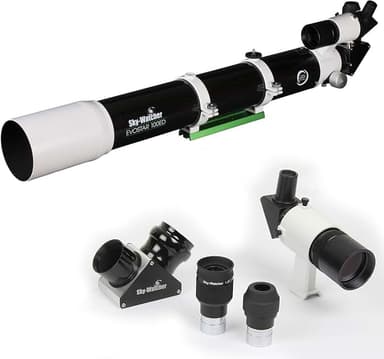
Celestron NexStar Evolution 9.25 vs Sky-Watcher EvoStar 100 APO Doublet Refractor
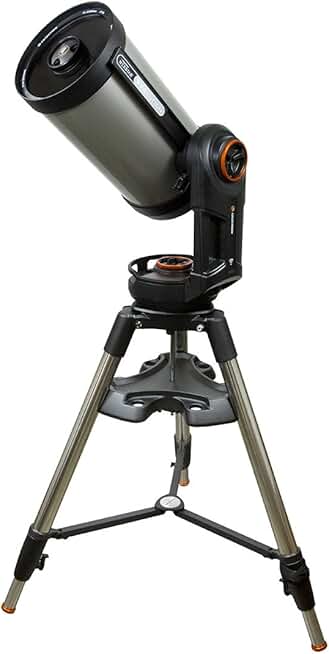
VS
Performance Profile
Score Comparison
Celestron NexStar EvolutionSky-Watcher EvoStar 100
Overall
74
30
Value
50
31
Beginner
38
31
Astrophoto
50
12
Portability
35
40
Planetary
74
10
Deep Sky
61
7
Our Take
The Celestron NexStar Evolution 9.25 is the clear winner for most amateur astronomers. The single most important differentiator is aperture and optical performance; the Celestron's 235mm aperture versus the Sky-Watcher's 100mm means dramatically superior light-gathering and resolution across all observing categories. The Celestron dominates planetary observation, deep-sky viewing, and astrophotography while maintaining competitive portability scores.
The Sky-Watcher's scores across every discipline are substantially lower, suggesting fundamental limitations in optical capability rather than design philosophy differences. The Celestron NexStar Evolution 9.25 suits observers prioritizing performance and those willing to manage a moderately heavy telescope for superior views of planets, nebulae, and galaxies. The Sky-Watcher EvoStar 100 APO Doublet Refractor is appropriate only for observers with extremely limited space who prioritize portability above all other considerations, though its performance scores suggest better alternatives exist at similar price points.
Choose the Celestron NexStar Evolution 9.25 unless portability is your absolute primary constraint. Its combination of GoTo convenience, optical quality, and versatility across observing types makes it the stronger investment at a lower price.
Key Differences
Why choose Celestron NexStar Evolution
- $246 cheaper
- Includes GoTo mount for automatic object finding
- Has tracking capability for astrophotography
- Higher Overall score (74 vs 30)
- Higher Value score (50 vs 31)
- Higher Astrophoto score (50 vs 12)
Why choose Sky-Watcher EvoStar 100
No significant advantages identified.
Specifications
SpecCelestron NexStar EvolutionSky-Watcher EvoStar 100
Optical Specs
Aperture235mm-
Focal Length2350mm-
Focal Ratiof/10-
Optical DesignSchmidt-Cassegrain-
CoatingMulti-Coated-
Mount & Tracking
Mount TypeAlt-Az-
GoToYesNo
TrackingYesNo
Physical
Weight21.77kg-
Pricing & Reviews
Price$1009$1255
Amazon Rating-4.5 stars
Reviews-169
Try these telescopes in our Eyepiece Calculator:
Related Comparisons
Celestron NexStar 8 SE Schmidt-Cassegrain Computerized Telescope with 1.25" Eyep vs Sky-Watcher EvoStar 100 APO Doublet RefractorCelestron NexStar 6SE vs Celestron NexStar Evolution 9.25Celestron NexStar Evolution 9.25 vs Sky-Watcher SkyMax 127Sky-Watcher EvoStar 100 APO Doublet Refractor vs Sky-Watcher Sky-Watcher EvoStar 80 APO Doublet RefractorCelestron Advanced VX 8" Newtonian vs Sky-Watcher EvoStar 100 APO Doublet RefractorCelestron NexStar Evolution 9.25 vs Sky-Watcher Quattro 150P Imaging Newtonian