Comparison
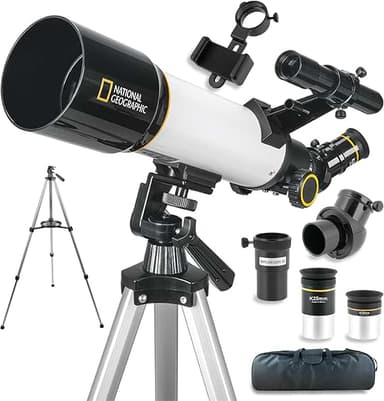
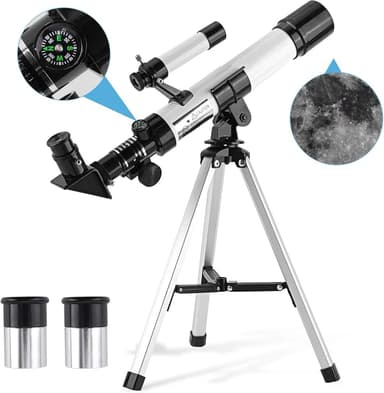
National Geographic Sky View 70mm Refractor Telescope with Panhandle Mount for A vs Telescope for Kids & Beginners 40mm Aperture 400mm AZ Mount Astronomical Refract
VS
Performance Profile
Score Comparison
National Geographic SkyTelescope for Kids
Overall
66
60
Value
95
95
Beginner
41
45
Astrophoto
34
22
Portability
64
65
Planetary
33
29
Deep Sky
37
25
Our Take
The National Geographic Sky View 70mm Refractor wins this matchup across nearly every meaningful category. The single most important differentiator is aperture; the 70mm objective lens gathers nearly 3 times more light than the 40mm competitor, translating directly to brighter views and better performance on deep sky objects, planets, and faint stars. The National Geographic scores significantly higher on planetary (32 vs 28), deep sky (36 vs 24), and astrophotography work (33 vs 21).
Its overall score of 66 versus 59 reflects a genuinely superior instrument. The Telescope for Kids and Beginners 40mm model edges ahead only in portability, weighing half as much, though both are reasonably portable for casual backyard use. At $20 less, the budget argument favors the smaller scope only if funds are severely constrained.
The National Geographic Sky View 70mm Refractor deserves consideration from anyone with even modest observing ambitions, as its larger aperture opens up views that the smaller scope simply cannot deliver. The Telescope for Kids and Beginners 40mm suits only those with extremely tight budgets who accept substantially limited capabilities. Buy the National Geographic Sky View 70mm for genuine observing experiences; buy the 40mm only if price is your absolute ceiling and you want something disposable.
Key Differences
Why choose National Geographic Sky
- 70mm aperture gathers more light than 40mm
- Faster f/5.7 for wider field of view
- Higher Astrophoto score (34 vs 22)
- Higher Deep Sky score (37 vs 25)
Why choose Telescope for Kids
- $23 cheaper
Specifications
SpecNational Geographic SkyTelescope for Kids
Optical Specs
Aperture70mm40mm
Focal Length400mm400mm
Focal Ratiof/5.7f/10
Mount & Tracking
Mount TypeAlt-AzAlt-Az
GoToNoNo
TrackingNoNo
Physical
Weight1.72kg0.9kg
Included Accessories
FinderFinder scope5x18 optical finder
Pricing & Reviews
Price$50$27
Amazon Rating3.4 stars3.6 stars
Reviews2420
Try these telescopes in our Eyepiece Calculator:
Related Comparisons
Lunar Telescope for Kids and Astronomy Beginners vs Telescope for Kids & Beginners 40mm Aperture 400mm AZ Mount Astronomical RefractNational Geographic Sky View 70mm Refractor Telescope with Panhandle Mount for A vs Telescope for Adults & Kids, 70mm Aperture 300mm Refractor TelescopeEducational Insights GeoSafari Starview Telescope vs National Geographic Sky View 70mm Refractor Telescope with Panhandle Mount for ATelescope for Kids & Beginners 40mm Aperture 400mm AZ Mount Astronomical Refract vs ToyerBee Telescope for Adults & KidsNational Geographic Sky View 70mm Refractor Telescope with Panhandle Mount for A vs ToyerBee Telescope for Adults & KidsNational Geographic Sky View 70mm Refractor Telescope with Panhandle Mount for A vs Telescope 70mm Aperture 500mm - for Kids & Adults Astronomical refracting Portab