Comparison
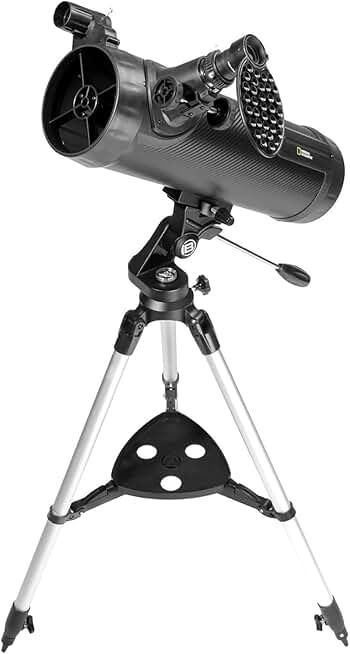
Celestron Travel Scope 70DX vs National Geographic Explorer 114mm
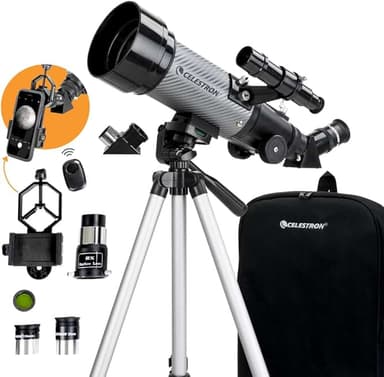
VS
Performance Profile
Score Comparison
Celestron Travel ScopeNational Geographic Explorer
Overall
69
73
Value
92
94
Beginner
48
48
Astrophoto
36
39
Portability
64
63
Planetary
34
42
Deep Sky
39
45
Our Take
The National Geographic Explorer 114mm is the clear winner for most amateur astronomers. Its larger 114mm aperture gathers significantly more light than the Travel Scope's 70mm, translating to brighter views of planets and deep-sky objects. While both score identically for beginners at 48/100, the Explorer pulls ahead across every observational category: planetary viewing (42 vs 34), deep sky (45 vs 39), and astrophotography (39 vs 36). The Explorer's f/4.4 focal ratio also favors faster imaging.
The single most important differentiator is aperture; the extra 44mm of light-gathering power fundamentally improves what you'll see through the eyepiece. The Travel Scope 70DX is best suited for travelers prioritizing compact size and minimal weight over observational performance. The National Geographic Explorer 114mm belongs in the hands of backyard astronomers willing to accept modest portability constraints for substantially better views. For nearly identical pricing, the Explorer's superior optical performance and across-the-board higher scores make it the smarter investment.
The marginal portability advantage of the Travel Scope does not compensate for its optical limitations. Choose the Explorer unless your observing sessions genuinely require ultralight equipment you can hike with.
Key Differences
Why choose Celestron Travel Scope
- 3,586 Amazon reviews vs 128
Why choose National Geographic Explorer
- 114mm aperture gathers more light than 70mm
- Faster f/4.4 for wider field of view
Specifications
SpecCelestron Travel ScopeNational Geographic Explorer
Optical Specs
Aperture70mm114mm
Focal Length400mm500mm
Focal Ratiof/5.7f/4.4
Optical DesignAchromat RefractorNewtonian
CoatingCoated-
Mount & Tracking
Mount TypeAlt-AzAlt-Az
GoToNoNo
TrackingNoNo
Physical
Weight1.5kg2.27kg
Included Accessories
FinderFinder scopeRed dot finder
Pricing & Reviews
Price$104$100
Amazon Rating4.2 stars4.1 stars
Reviews3,586128
Try these telescopes in our Eyepiece Calculator:
Related Comparisons
Celestron Travel Scope 70DX vs ToyerBee Telescope for Adults & KidsExplore Scientific FirstLight AR90mm White Tube Refractor Telescope with Alt/AZ vs National Geographic Explorer 114mmNational Geographic Explorer 114mm vs Telescope, Telescope for Adults High Powered ProfessionalCelestron 1.25 Inch X-Cel LX 3X Barlow Lens, Black vs National Geographic Explorer 114mmCelestron 1.25 Inch X-Cel LX 3X Barlow Lens, Black vs Celestron Travel Scope 70DXNational Geographic Explorer 114mm vs Telescope for Adults High Powered