Comparison
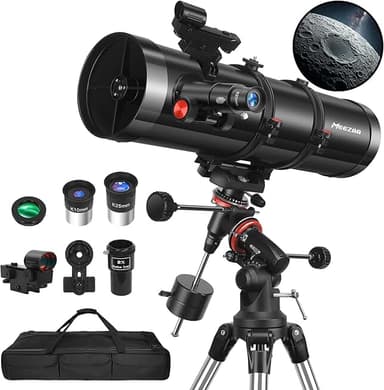
Celestron StarSense Explorer LT 114AZ vs Telescope, 150EQ Newtonian Reflector Telescope for Adults Astronomy Beginners
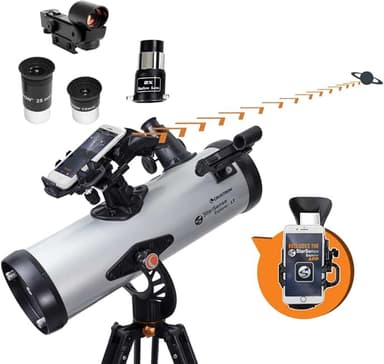
VS
Performance Profile
Score Comparison
Celestron StarSense ExplorerTelescope, 150EQ Newtonian
Overall
75
79
Value
85
75
Beginner
47
40
Astrophoto
45
71
Portability
61
49
Planetary
51
50
Deep Sky
46
57
Our Take
The 150EQ wins overall, but the answer genuinely depends on your priorities and lifestyle. The single most important differentiator is aperture versus portability; the 150EQ's 150mm mirror gathers significantly more light than the StarSense Explorer's 114mm, while the StarSense Explorer's 4.72kg weight makes it genuinely grab-and-go friendly compared to the 150EQ's 13.47kg heft. The StarSense Explorer LT 114AZ suits observers who prioritize convenience and backyard observing from fixed locations; its computerized tracking and lighter weight make casual sessions effortless.
The 150EQ Newtonian Reflector suits committed deep-sky observers and astrophotographers willing to manage a heavier telescope; its superior aperture and exceptional 71/100 astrophotography score justify the extra effort. Neither excels as a beginner scope despite marketing claims; both scored poorly in beginner categories. However, if you're choosing between them, the 150EQ delivers better bang for money through raw optical performance.
The StarSense Explorer justifies its lower price only if you genuinely value the convenience of computerized tracking and don't plan serious deep-sky work. For most amateur astronomers, the 150EQ's larger mirror and astrophotography capability make it the stronger investment despite its portability penalty.
Key Differences
Why choose Celestron StarSense Explorer
- $100 cheaper
- 8.8kg lighter and more portable
- Higher Portability score (61 vs 49)
- 1,460 Amazon reviews vs 219
Why choose Telescope, 150EQ Newtonian
- 150mm aperture gathers more light than 114mm
- Faster f/4.3 for wider field of view
- Higher Astrophoto score (71 vs 45)
- Higher Deep Sky score (57 vs 46)
- Higher Amazon rating (4.5 vs 4.1 stars)
Specifications
SpecCelestron StarSense ExplorerTelescope, 150EQ Newtonian
Optical Specs
Aperture114mm150mm
Focal Length1000mm650mm
Focal Ratiof/8.8f/4.3
Optical DesignNewtonian-
Mount & Tracking
Mount TypeAlt-AzEquatorial
GoToNoNo
TrackingYesYes
Physical
Weight4.72kg13.47kg
Included Accessories
FinderRed dot finderRed dot finder
Pricing & Reviews
Price$230$330
Amazon Rating4.1 stars4.5 stars
Reviews1,460219
Try these telescopes in our Eyepiece Calculator:
Related Comparisons
Celestron AstroMaster 114EQ vs Telescope, 150EQ Newtonian Reflector Telescope for Adults Astronomy BeginnersCelestron StarSense Explorer DX 130AZ vs Telescope, 150EQ Newtonian Reflector Telescope for Adults Astronomy BeginnersCelestron StarSense Explorer LT 114AZ vs National Geographic NT114CFCelestron AstroMaster 130EQ vs Telescope, 150EQ Newtonian Reflector Telescope for Adults Astronomy BeginnersHSL 150EQ Astronomical Reflector Telescope for Adults high Powered vs Telescope, 150EQ Newtonian Reflector Telescope for Adults Astronomy BeginnersSky-Watcher Sky-Watcher EvoGuide 50DX – 50mm Guide Scope APO Doublet Refractor – vs Telescope, 150EQ Newtonian Reflector Telescope for Adults Astronomy Beginners