Comparison
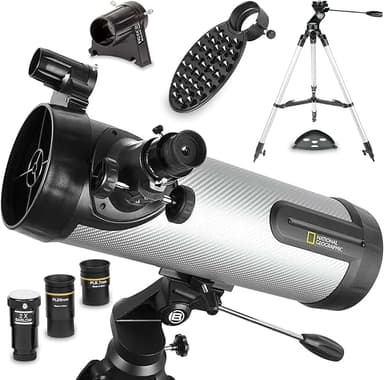
Celestron StarSense Explorer LT 114AZ vs National Geographic NT114CF
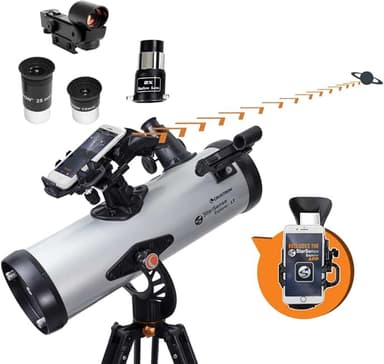
VS
Performance Profile
Score Comparison
Celestron StarSense ExplorerNational Geographic NT114CF
Overall
75
70
Value
85
87
Beginner
47
41
Astrophoto
45
39
Portability
61
61
Planetary
51
40
Deep Sky
46
45
Our Take
The Celestron StarSense Explorer LT 114AZ is the clear winner for most amateur astronomers. Both telescopes share identical 114mm apertures and similar weights, but the Celestron's longer focal length of 1000mm versus the National Geographic's 500mm fundamentally changes their capabilities. The Celestron's f/8.8 ratio delivers superior planetary detail and performs meaningfully better across every observing category, with particularly notable advantages in planetary observation, astrophotography potential, and deep sky work.
Its built-in StarSense tracking system adds genuine convenience for locating objects, justifying the $38.60 premium. The single most important differentiator is focal length; the Celestron provides twice the magnification power, translating to clearer views of lunar craters, planetary bands, and nebular detail. The National Geographic NT114CF's shorter focal length and fast f/4.4 ratio favor wide-field viewing and rapid light gathering, but this doesn't overcome its weakness in optical performance across standard observing scenarios.
Buy the Celestron StarSense Explorer LT 114AZ if you want reliable planetary views and deeper sky exploration with modern conveniences. Buy the National Geographic NT114CF only if your primary interest is wide-field star clusters and you're on a tight budget. The Celestron earns your money.
Key Differences
Why choose Celestron StarSense Explorer
- Has tracking capability for astrophotography
- Higher Planetary score (51 vs 40)
- 1,460 Amazon reviews vs 39
Why choose National Geographic NT114CF
- $82 cheaper
- Faster f/4.4 for wider field of view
Specifications
SpecCelestron StarSense ExplorerNational Geographic NT114CF
Optical Specs
Aperture114mm114mm
Focal Length1000mm500mm
Focal Ratiof/8.8f/4.4
Optical DesignNewtonian-
Mount & Tracking
Mount TypeAlt-AzAlt-Az
GoToNoNo
TrackingYesNo
Physical
Weight4.72kg4.87kg
Included Accessories
FinderRed dot finderRed dot finder
Pricing & Reviews
Price$230$148
Amazon Rating4.1 stars4.0 stars
Reviews1,46039
Try these telescopes in our Eyepiece Calculator:
Related Comparisons
Explore Scientific 62 Degree 26mm Waterproof Telescope Eyepiece vs National Geographic NT114CFCelestron StarSense Explorer LT 114AZ vs Telescope, 150EQ Newtonian Reflector Telescope for Adults Astronomy BeginnersCelestron StarSense Explorer LT 114AZ vs Telescope for Adults High PoweredNational Geographic NT114CF vs Telescope for Adults High PoweredCelestron StarSense Explorer LT 114AZ vs Telescope 130EQ Newtonian Reflector Telescopes for AdultsNational Geographic NT114CF vs Telescope 130EQ Newtonian Reflector Telescopes for Adults