Comparison
Celestron StarSense Explorer DX 130AZ vs Explore Scientific ED80 Essential Series Air-Spaced Apochromatic 80mm Triplet Re
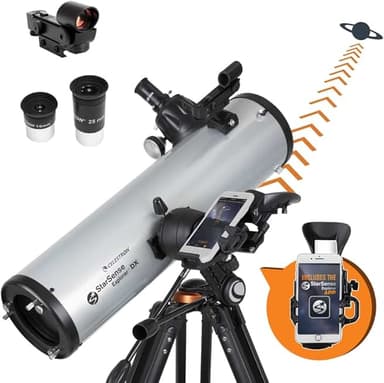
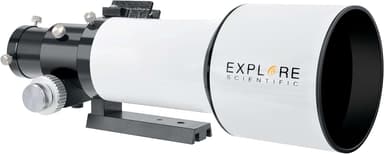
VS
Performance Profile
Score Comparison
Celestron StarSense ExplorerExplore Scientific ED80
Overall
73
63
Value
64
46
Beginner
41
32
Astrophoto
53
48
Portability
57
63
Planetary
50
48
Deep Sky
54
38
Our Take
The Celestron StarSense Explorer DX 130AZ emerges as the winner for most amateur astronomers. Its significantly larger 130mm aperture delivers superior light-gathering power, yielding brighter views of deep-sky objects and better detail on planets. The StarSense's higher overall score of 73 reflects this advantage across virtually every observing category, particularly deep-sky observation where its 54-point score substantially outperforms the ED80's 38.
The single most important differentiator is aperture versus portability. The Celestron trades away some convenience for observing power; the Explore Scientific ED80 Essential Series weighs just 2.70kg against the StarSense's 8.16kg, making it genuinely portable for travel and field work. Additionally, the ED80's apochromatic refractor design provides superior color correction for planetary viewing, though this advantage matters less than raw aperture for most targets.
The Celestron StarSense Explorer DX 130AZ suits observers prioritizing views of nebulae, galaxies, and clusters from a semi-permanent location. The Explore Scientific ED80 Essential Series belongs with observers who hike to dark skies or demand a grab-and-go telescope that fits in a car easily. Choose the Celestron StarSense Explorer DX 130AZ unless portability is non-negotiable for your observing habits.
Key Differences
Why choose Celestron StarSense Explorer
- 130mm aperture gathers more light than 80mm
- $171 cheaper
- Has tracking capability for astrophotography
- Faster f/5 for wider field of view
- Higher Value score (64 vs 46)
- Higher Deep Sky score (54 vs 38)
Why choose Explore Scientific ED80
- 5.5kg lighter and more portable
Specifications
SpecCelestron StarSense ExplorerExplore Scientific ED80
Optical Specs
Aperture130mm80mm
Focal Length650mm480mm
Focal Ratiof/5f/6
Optical DesignNewtonianApochromat Refractor
Mount & Tracking
Mount TypeAlt-AzEquatorial
GoToNoNo
TrackingYesNo
Physical
Weight8.16kg2.7kg
Included Accessories
FinderStarPointerFinder scope
Pricing & Reviews
Price$429$600
Amazon Rating4.1 stars4.2 stars
Reviews1,55014
Try these telescopes in our Eyepiece Calculator:
Related Comparisons
Celestron StarSense Explorer DX 130AZ vs Telescope, 150EQ Newtonian Reflector Telescope for Adults Astronomy BeginnersCelestron AstroMaster 130EQ vs Celestron StarSense Explorer DX 130AZCelestron StarSense Explorer DX 130AZ vs SVBONY SV503 102mm ED RefractorExplore Scientific ED80 Essential Series Air-Spaced Apochromatic 80mm Triplet Re vs SVBONY SV555 54mm Petzval APOAskar SQA55 Telescope 55mm Aperture F4.8 Quintuplet Air-Spaced SD Glass Petzval vs Explore Scientific ED80 Essential Series Air-Spaced Apochromatic 80mm Triplet ReCelestron StarSense Explorer DX 130AZ vs SVBONY SV503 80mm ED Refractor