Comparison
Celestron StarSense Explorer DX 130AZ vs Explore Scientific AR 80/900
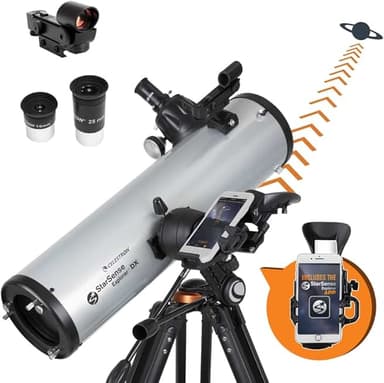
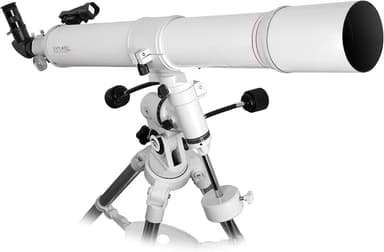
VS
Performance Profile
Score Comparison
Celestron StarSense ExplorerExplore Scientific AR
Overall
73
55
Value
64
53
Beginner
41
35
Astrophoto
53
35
Portability
57
54
Planetary
50
37
Deep Sky
54
27
Our Take
The Celestron StarSense Explorer DX 130AZ is the clear winner for most amateur astronomers. Its 130mm aperture decisively outperforms the Explore Scientific AR 80/900's 80mm across nearly every observational category, delivering significantly brighter, more detailed views of deep sky objects, planetary features, and celestial details. The single most important differentiator is aperture size; the StarSense's larger mirror gathers 65 percent more light, a fundamental advantage no other feature can overcome.
The Celestron StarSense Explorer DX 130AZ suits observers prioritizing visual performance and versatility across all targets, from planets to nebulae, plus its motorized Alt-Az mount simplifies object tracking. The Explore Scientific AR 80/900 appeals only to those with a strong preference for refractor optics and equatorial mounts, or budget constraints under $330, though it underperforms in nearly every performance metric. The StarSense's superior scores across beginner, planetary, and deep sky categories, combined with its more affordable price point, make it the stronger recommendation for virtually any amateur astronomer.
Unless you have specific reasons to prefer the AR design or equatorial tracking, the Celestron delivers substantially better value and observational experience.
Key Differences
Why choose Celestron StarSense Explorer
- 130mm aperture gathers more light than 80mm
- 2.2kg lighter and more portable
- Has tracking capability for astrophotography
- Faster f/5 for wider field of view
- Higher Overall score (73 vs 55)
- Higher Value score (64 vs 53)
Why choose Explore Scientific AR
- $99 cheaper
- Higher Amazon rating (5.0 vs 4.1 stars)
Specifications
SpecCelestron StarSense ExplorerExplore Scientific AR
Optical Specs
Aperture130mm80mm
Focal Length650mm900mm
Focal Ratiof/5f/11.25
Optical DesignNewtonian-
Mount & Tracking
Mount TypeAlt-AzEquatorial
GoToNoNo
TrackingYesNo
Physical
Weight8.16kg10.32kg
Included Accessories
FinderStarPointerRed dot finder
Pricing & Reviews
Price$429$330
Amazon Rating4.1 stars5.0 stars
Reviews1,5501
Try these telescopes in our Eyepiece Calculator:
Related Comparisons
Explore Scientific AR 80/900 vs Telescope 130EQ Newtonian Reflector Telescopes for AdultsExplore Scientific AR 80/900 vs SVBONY SV503 102mm ED RefractorExplore Scientific AR 80/900 vs Explore Scientific FirstLight 114mmCelestron StarSense Explorer DX 130AZ vs Telescope, 150EQ Newtonian Reflector Telescope for Adults Astronomy BeginnersCelestron AstroMaster 130EQ vs Celestron StarSense Explorer DX 130AZCelestron StarSense Explorer DX 130AZ vs SVBONY SV503 102mm ED Refractor