Comparison
Celestron NexStar 8SE vs Explore Scientific ED102 Essential Series Air-Spaced Apochromatic 102mm Triplet
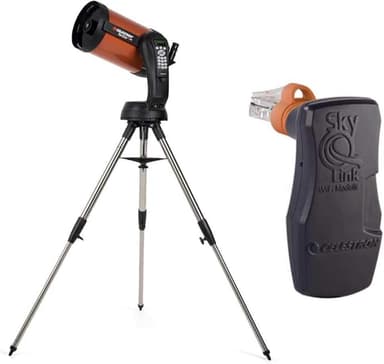
VS
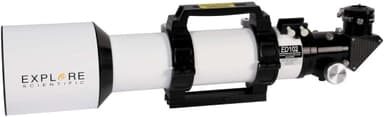
Performance Profile
Score Comparison
Celestron NexStar 8SEExplore Scientific ED102
Overall
73
60
Value
41
39
Beginner
39
30
Astrophoto
59
47
Portability
35
60
Planetary
69
44
Deep Sky
59
39
Our Take
The Celestron NexStar 8SE emerges as the clear winner for most amateur astronomers, though the choice ultimately depends on your priorities and lifestyle. The single most important differentiator is aperture versus portability. The NexStar 8SE's 203mm mirror delivers nearly four times the light-gathering power of the Explore Scientific ED102, translating to superior performance in planetary observation, deep sky exploration, and faint object detection.
However, this advantage comes at the cost of significant weight and complexity; the NexStar 8SE tips the scales at 21.91kg versus the ED102's featherweight 5.44kg. The Celestron NexStar 8SE suits observers who prioritize optical performance and have stable observing locations, particularly those interested in planetary detail and deep sky objects. The Explore Scientific ED102 Essential Series belongs with backyard astronomers and travelers who value portability and straightforward operation over raw aperture.
For most amateur astronomers with moderate commitment levels, the NexStar 8SE justifies its higher price through substantially better optical performance across nearly every observing category. Only choose the ED102 if you'll observe infrequently enough that its lightweight design becomes the deciding factor in your actual usage.
Key Differences
Why choose Celestron NexStar 8SE
- 203.2mm aperture gathers more light than 102mm
- Includes GoTo mount for automatic object finding
- Has tracking capability for astrophotography
- Higher Overall score (73 vs 60)
- Higher Astrophoto score (59 vs 47)
- Higher Planetary score (69 vs 44)
Why choose Explore Scientific ED102
- $600 cheaper
- 16.5kg lighter and more portable
- Faster f/7 for wider field of view
- Higher Portability score (60 vs 35)
Specifications
SpecCelestron NexStar 8SEExplore Scientific ED102
Optical Specs
Aperture203.2mm102mm
Focal Length2032mm-
Focal Ratiof/10f/7
Optical DesignSchmidt-CassegrainApochromat Refractor
Mount & Tracking
Mount TypeForkEquatorial
GoToYesNo
TrackingYesNo
Physical
Weight21.91kg5.44kg
Included Accessories
FinderFinder scopeFinder scope
Focuser-Rack and pinion
Pricing & Reviews
Price$1700$1100
Amazon Rating4.7 stars5.0 stars
Reviews1312
Try these telescopes in our Eyepiece Calculator:
Related Comparisons
Celestron NexStar 8 SE Schmidt-Cassegrain Computerized Telescope with 1.25" Eyep vs Celestron NexStar 8SECelestron NexStar 8SE vs Celestron NexStar Evolution 8Celestron NexStar 8SE vs Vaonis Vespera II Exploration StationCelestron NexStar 8SE vs Celestron NexStar Evolution 9.25Celestron NexStar Evolution 9.25 vs Explore Scientific ED102 Essential Series Air-Spaced Apochromatic 102mm TripletCelestron Advanced VX 8” EdgeHD Computerized Telescope vs Celestron NexStar 8SE