Comparison
Celestron NexStar Evolution 9.25 vs Explore Scientific ED102 Essential Series Air-Spaced Apochromatic 102mm Triplet
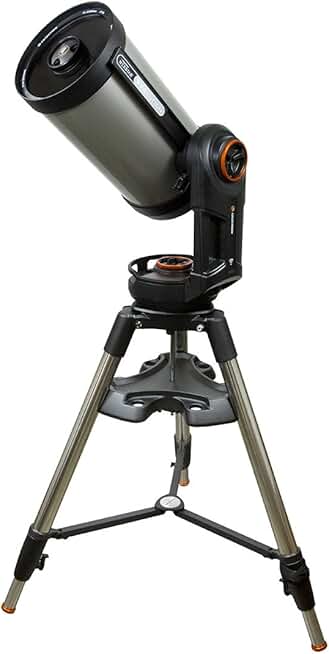
VS

Performance Profile
Score Comparison
Celestron NexStar EvolutionExplore Scientific ED102
Overall
74
60
Value
50
39
Beginner
38
30
Astrophoto
50
47
Portability
35
60
Planetary
74
44
Deep Sky
61
39
Our Take
The Celestron NexStar Evolution 9.25 emerges as the stronger choice for most amateur astronomers, though this depends heavily on your observing priorities and lifestyle. The single most important differentiator is aperture advantage. The Celestron's 235mm objective versus the Explore Scientific's 102mm delivers roughly five times more light-gathering power, translating to significantly better performance on planetary detail and deep-sky objects.
The Celestron's motorized GoTo system adds convenience, though it requires power and introduces complexity. The Explore Scientific trades raw performance for portability; at 5.44kg, it's genuinely grab-and-go, while the Celestron at 21.77kg demands real commitment to transport. The Celestron NexStar Evolution 9.25 suits observers seeking maximum light grasp and planetary viewing who don't mind a stationary setup.
The Explore Scientific ED102 Essential Series is ideal for those who prioritize portability and want quality wide-field viewing without GoTo learning curves. The Celestron's superior optical power and ease-of-use features justify its marginal price difference for serious amateur astronomers. However, if you'll only observe from accessible locations and value simplicity, the Explore Scientific's portability and optical quality make it the smarter purchase.
Key Differences
Why choose Celestron NexStar Evolution
- 235mm aperture gathers more light than 102mm
- Includes GoTo mount for automatic object finding
- Has tracking capability for astrophotography
- Higher Overall score (74 vs 60)
- Higher Value score (50 vs 39)
- Higher Planetary score (74 vs 44)
Why choose Explore Scientific ED102
- 16.3kg lighter and more portable
- Faster f/7 for wider field of view
- Higher Portability score (60 vs 35)
Specifications
SpecCelestron NexStar EvolutionExplore Scientific ED102
Optical Specs
Aperture235mm102mm
Focal Length2350mm-
Focal Ratiof/10f/7
Optical DesignSchmidt-CassegrainApochromat Refractor
CoatingMulti-Coated-
Mount & Tracking
Mount TypeAlt-AzEquatorial
GoToYesNo
TrackingYesNo
Physical
Weight21.77kg5.44kg
Included Accessories
Finder-Finder scope
Focuser-Rack and pinion
Pricing & Reviews
Price$1009$1100
Amazon Rating-5.0 stars
Reviews-12
Try these telescopes in our Eyepiece Calculator:
Related Comparisons
Celestron NexStar 6SE vs Celestron NexStar Evolution 9.25Celestron NexStar Evolution 9.25 vs Sky-Watcher SkyMax 127Celestron NexStar Evolution 9.25 vs Sky-Watcher Quattro 150P Imaging NewtonianCelestron NexStar 8 SE Schmidt-Cassegrain Computerized Telescope with 1.25" Eyep vs Celestron NexStar Evolution 9.25Celestron NexStar 5SE vs Celestron NexStar Evolution 9.25Celestron NexStar Evolution 6 vs Celestron NexStar Evolution 9.25