Comparison
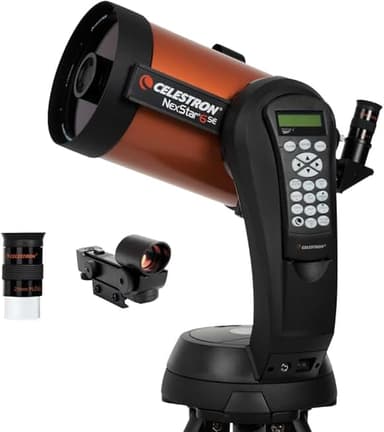
Celestron EdgeHD 800 OTA vs Celestron NexStar 6SE
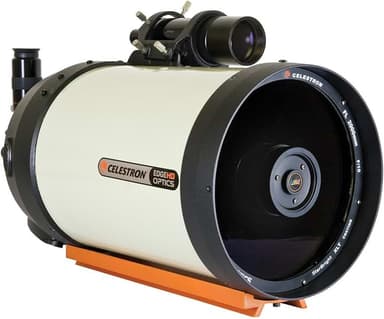
VS
Performance Profile
Score Comparison
Celestron EdgeHD 800Celestron NexStar 6SE
Overall
81
78
Value
41
46
Beginner
49
53
Astrophoto
66
60
Portability
64
55
Planetary
69
66
Deep Sky
59
57
Our Take
The Celestron EdgeHD 800 OTA emerges as the superior choice for most amateur astronomers, though the decision ultimately depends on your priorities and setup constraints. The single most important differentiator is aperture. The EdgeHD 800's 203mm mirror versus the NexStar 6SE's 152mm represents a 33 percent increase in light-gathering power, directly translating to superior performance across planetary observation, deep-sky exploration, and astrophotography.
This advantage justifies the 500 dollar price premium and accounts for its higher scores across virtually every category. The Celestron NexStar 6SE suits observers prioritizing portability and ease of transport; its compact fork mount and lighter weight make it genuinely movable between observing sites, while its beginner-friendly interface offers excellent GoTo performance for a modest investment. The Celestron EdgeHD 800 OTA belongs with serious observers willing to accept a heavier optical tube in exchange for substantially better light grasp and image quality; its equatorial mount suits long-term astrophotography sessions and precise tracking.
For most amateur astronomers with a permanent or semi-permanent observing location, the EdgeHD 800 delivers measurably better views and justifies its cost through years of enhanced observing satisfaction.
Key Differences
Why choose Celestron EdgeHD 800
- 203.2mm aperture gathers more light than 152.4mm
- 8.3kg lighter and more portable
- Higher Amazon rating (4.8 vs 4.4 stars)
Why choose Celestron NexStar 6SE
- $500 cheaper
- 2,493 Amazon reviews vs 13
Specifications
SpecCelestron EdgeHD 800Celestron NexStar 6SE
Optical Specs
Aperture203.2mm152.4mm
Focal Length2032mm1500mm
Focal Ratiof/10f/10
Optical DesignSchmidt-CassegrainSchmidt-Cassegrain
Mount & Tracking
Mount TypeEquatorialFork
GoToYesYes
TrackingYesYes
Physical
Weight1.2kg9.53kg
Included Accessories
FinderFinder scopeStarPointer
Pricing & Reviews
Price$1699$1199
Amazon Rating4.8 stars4.4 stars
Reviews132,493
Try these telescopes in our Eyepiece Calculator:
Related Comparisons
Celestron NexStar 6SE vs Celestron NexStar Evolution 9.25Askar SQA55 Telescope 55mm Aperture F4.8 Quintuplet Air-Spaced SD Glass Petzval vs Celestron NexStar 6SECelestron EdgeHD 800 OTA vs Explore Scientific ED127 FCD100Celestron 12046 Computerized Advanced VX 9.25" Schmidt-Cassegrain Telescope vs Celestron EdgeHD 800 OTACelestron Advanced VX 7" Mak vs Celestron EdgeHD 800 OTACelestron EdgeHD 800 OTA vs Celestron NexStar 8 SE Schmidt-Cassegrain Computerized Telescope with 1.25" Eyep