Comparison
Celestron AstroMaster 130EQ-MD vs Celestron StarSense Explorer DX 102AZ
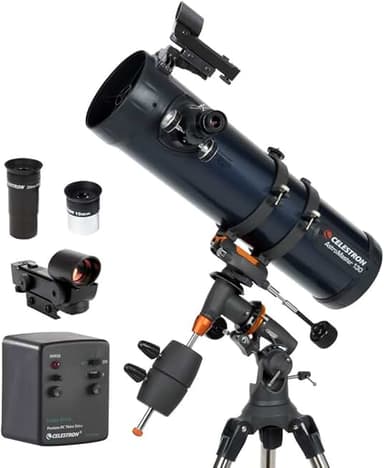
VS

Performance Profile
Score Comparison
Celestron AstroMaster 130EQ-MDCelestron StarSense Explorer
Overall
78
69
Value
68
60
Beginner
41
41
Astrophoto
68
49
Portability
57
59
Planetary
50
44
Deep Sky
54
49
Our Take
The Celestron AstroMaster 130EQ-MD emerges as the clear winner for most amateur astronomers. Its larger 130mm aperture delivers significantly more light and detail, translating to better views of faint deep-sky objects and superior planetary definition. The AstroMaster's motorized equatorial mount excels at celestial tracking and astrophotography, making long exposures practical. While it weighs slightly more at 7.71kg, the performance gap justifies this minor trade-off.
The single most important differentiator is aperture size; the 28mm advantage of the AstroMaster fundamentally changes what you can observe and photograph. The StarSense Explorer's smaller 102mm refractor cannot match this light-gathering power, despite its smart pointing system and slightly better portability. Purchase the Celestron AstroMaster 130EQ-MD if you prioritize viewing quality and plan occasional astrophotography. Choose the Celestron StarSense Explorer DX 102AZ only if you value convenient computerized object location and maximum portability over optical performance.
For serious amateur observation, the AstroMaster's superior optics and tracking capabilities offer better long-term value at a lower price. Invest in the larger aperture.
Key Differences
Why choose Celestron AstroMaster 130EQ-MD
- 130mm aperture gathers more light than 102mm
- Faster f/5 for wider field of view
- Higher Astrophoto score (68 vs 49)
Why choose Celestron StarSense Explorer
- 1.3kg lighter and more portable
Specifications
SpecCelestron AstroMaster 130EQ-MDCelestron StarSense Explorer
Optical Specs
Aperture130mm102mm
Focal Length650mm660mm
Focal Ratiof/5f/6.5
Optical DesignNewtonianAchromat Refractor
Mount & Tracking
Mount TypeEquatorialAlt-Az
GoToNoNo
TrackingYesYes
Physical
Weight7.71kg6.44kg
Included Accessories
FinderStarPointerStarPointer
Pricing & Reviews
Price$390$430
Amazon Rating4.0 stars4.1 stars
Reviews1,9001,550
Try these telescopes in our Eyepiece Calculator:
Related Comparisons
Celestron StarSense Explorer DX 102AZ vs SVBONY SV550 80mm APO TripletCelestron AstroMaster 130EQ-MD vs SkyWatcher S20204 Quattro Coma Corrector (Black)Celestron AstroMaster 130EQ-MD vs Explore Scientific FL-AR102600TN Firstlight Tube Refractor Telescope with TWI NaCelestron StarSense Explorer DX 102AZ vs Explore Scientific AR 80/900Celestron AstroMaster 130EQ-MD vs Explore Scientific AR 80/900Celestron AstroMaster 130EQ-MD vs Telescope 130EQ Newtonian Reflector Telescopes for Adults