Comparison
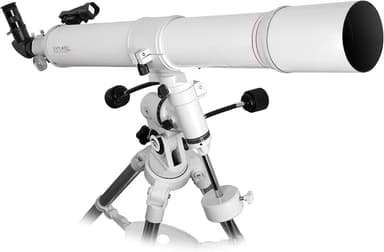
Celestron StarSense Explorer DX 102AZ vs Explore Scientific AR 80/900

VS
Performance Profile
Score Comparison
Celestron StarSense ExplorerExplore Scientific AR
Overall
69
55
Value
60
53
Beginner
41
35
Astrophoto
49
35
Portability
59
54
Planetary
44
37
Deep Sky
49
27
Our Take
The Celestron StarSense Explorer DX 102AZ is the clear winner for most amateur astronomers, scoring 69 to 55 overall while excelling across nearly every category. The single most important differentiator is aperture; the Celestron's 102mm objective versus the Explore Scientific AR 80/900's 80mm means significantly more light gathering, yielding brighter, sharper images of nebulae, galaxies, and deep sky objects. The Celestron also includes motorized alt-az tracking with smartphone integration, making celestial navigation intuitive for observers of any experience level.
The Explore Scientific AR 80/900 carries substantial disadvantages beyond its smaller aperture, including a heavier equatorial mount that's more cumbersome for beginners and minimal advantages in any observing category. The only scenario favoring the Explore Scientific is if you prioritize an equatorial mount for long-exposure astrophotography and can tolerate reduced image quality and aperture; however, the Celestron's lower price makes that argument weak. Buy the Celestron StarSense Explorer DX 102AZ if you want balanced performance across all observing types with modern conveniences.
Buy the Explore Scientific AR 80/900 only if you have specific experience with equatorial mounts and deep expertise in mount operation. The Celestron represents superior value and capability for virtually all amateur astronomers.
Key Differences
Why choose Celestron StarSense Explorer
- 102mm aperture gathers more light than 80mm
- 3.9kg lighter and more portable
- Has tracking capability for astrophotography
- Faster f/6.5 for wider field of view
- Higher Overall score (69 vs 55)
- Higher Astrophoto score (49 vs 35)
Why choose Explore Scientific AR
- $100 cheaper
- Higher Amazon rating (5.0 vs 4.1 stars)
Specifications
SpecCelestron StarSense ExplorerExplore Scientific AR
Optical Specs
Aperture102mm80mm
Focal Length660mm900mm
Focal Ratiof/6.5f/11.25
Optical DesignAchromat Refractor-
Mount & Tracking
Mount TypeAlt-AzEquatorial
GoToNoNo
TrackingYesNo
Physical
Weight6.44kg10.32kg
Included Accessories
FinderStarPointerRed dot finder
Pricing & Reviews
Price$430$330
Amazon Rating4.1 stars5.0 stars
Reviews1,5501
Try these telescopes in our Eyepiece Calculator:
Related Comparisons
Celestron StarSense Explorer DX 102AZ vs SVBONY SV550 80mm APO TripletExplore Scientific AR 80/900 vs Telescope 130EQ Newtonian Reflector Telescopes for AdultsExplore Scientific AR 80/900 vs SVBONY SV503 102mm ED RefractorExplore Scientific AR 80/900 vs Explore Scientific FirstLight 114mmExplore Scientific AR 80/900 vs SVBONY SV550 80mm APO TripletExplore Scientific AR 80/900 vs Sky-Watcher SkyMax 102