Comparison
Celestron Travel Scope 70 Portable Refractor Telescope – 70mm Aperture vs National Geographic Explorer 114mm
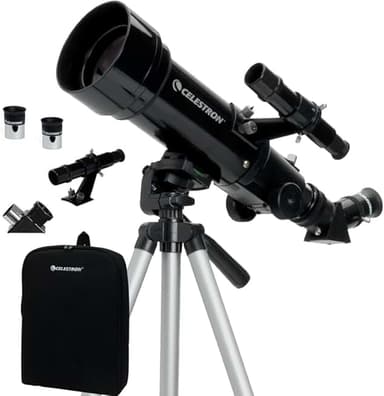
VS
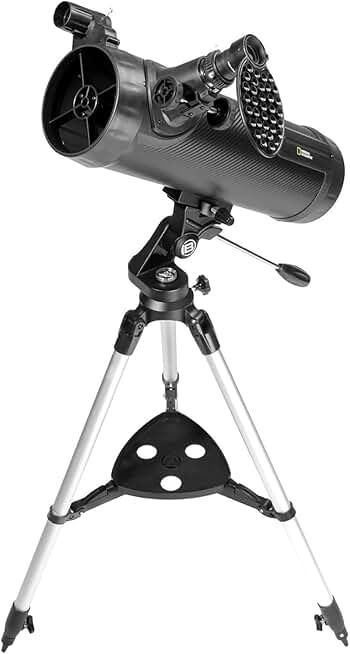
Performance Profile
Score Comparison
Celestron Travel ScopeNational Geographic Explorer
Overall
69
73
Value
94
94
Beginner
49
48
Astrophoto
36
39
Portability
64
63
Planetary
34
42
Deep Sky
39
45
Our Take
The National Geographic Explorer 114mm is the clear winner for most amateur astronomers seeking genuine observing capability. The single most important differentiator is aperture; the Explorer's 114mm opening gathers 65 percent more light than the Travel Scope's 70mm, delivering noticeably brighter and more detailed views of planets, nebulae, and galaxies. This light-gathering advantage translates directly into the Explorer's superior scores across planetary, deep sky, and astrophotography categories, while both perform comparably for beginners.
The Celestron Travel Scope 70 Portable Refractor Telescope should appeal only to travelers prioritizing extreme portability and simplicity over observing performance, as its lightweight design and compact refractor tube fit easily into backpacks. The National Geographic Explorer 114mm suits anyone with a permanent or semi-permanent observing location who wants to progress beyond casual stargazing and actually observe fine planetary detail and faint deep-sky objects without compromise. Buy the Explorer 114mm unless you genuinely need a telescope that fits in a car cup holder.
Its modest 0.36kg weight penalty proves negligible for the substantial optical gains, and the $15 price difference is inconsequential given the performance leap.
Key Differences
Why choose Celestron Travel Scope
- $15 cheaper
- 14,727 Amazon reviews vs 128
Why choose National Geographic Explorer
- 114mm aperture gathers more light than 70mm
- Faster f/4.4 for wider field of view
Specifications
SpecCelestron Travel ScopeNational Geographic Explorer
Optical Specs
Aperture70mm114mm
Focal Length400mm500mm
Focal Ratiof/5.7f/4.4
Optical DesignAchromat RefractorNewtonian
CoatingCoated-
Mount & Tracking
Mount TypeAlt-AzAlt-Az
GoToNoNo
TrackingNoNo
Physical
Weight1.91kg2.27kg
Included Accessories
FinderFinder scopeRed dot finder
Pricing & Reviews
Price$85$100
Amazon Rating4.2 stars4.1 stars
Reviews14,727128
Try these telescopes in our Eyepiece Calculator:
Related Comparisons
Celestron Travel Scope 70 Portable Refractor Telescope – 70mm Aperture vs Telescope 80mm Aperture 600mm - Astronomical Portable Refracting Telescope FullyCelestron Travel Scope 70 Portable Refractor Telescope – 70mm Aperture vs Telescope for Kids & Adults, 70mm Aperture 360mm Refractor (15X-150X) TelescopeCelestron Travel Scope 70 Portable Refractor Telescope – 70mm Aperture vs Telescopes, Telescope for Kids and Adults BeginnersExplore Scientific FirstLight AR90mm White Tube Refractor Telescope with Alt/AZ vs National Geographic Explorer 114mmNational Geographic Explorer 114mm vs Telescope, Telescope for Adults High Powered ProfessionalCelestron 1.25 Inch X-Cel LX 3X Barlow Lens, Black vs Celestron Travel Scope 70 Portable Refractor Telescope – 70mm Aperture