Comparison
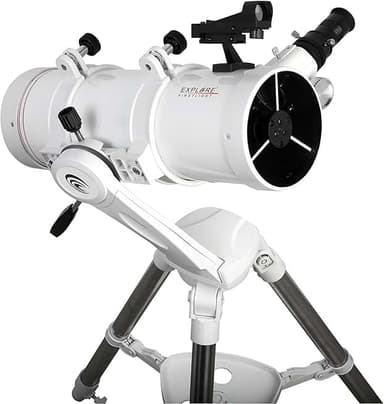
Celestron StarSense Explorer LT 114AZ vs Explore Scientific FirstLight 114mm
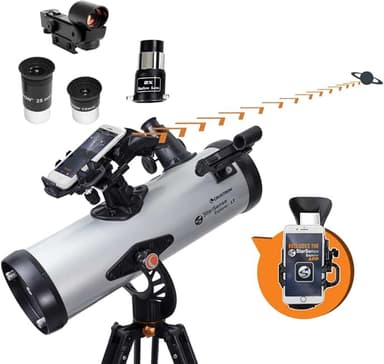
VS
Performance Profile
Score Comparison
Celestron StarSense ExplorerExplore Scientific FirstLight
Overall
75
63
Value
85
62
Beginner
47
37
Astrophoto
45
38
Portability
61
57
Planetary
51
39
Deep Sky
46
44
Our Take
The Celestron StarSense Explorer LT 114AZ is the clear winner for most amateur astronomers. Both telescopes share the same 114mm aperture, but the StarSense Explorer's longer 1000mm focal length gives it superior optical performance across planetary, deep-sky, and astrophotography pursuits, reflected in its significantly higher scores across all observing categories. The StarSense Explorer's built-in motorized tracking and smartphone integration represent genuine technological advantages that enhance the observing experience, particularly for beginners struggling with manual tracking. The most important differentiator is optical design.
The StarSense Explorer's f/8.8 design prioritizes magnification and contrast, while the Explore Scientific FirstLight's fast f/4.3 design sacrifices optical performance for a wider field of view. For serious observation of planetary details and deep-sky objects, the StarSense Explorer's longer focal length is decisively superior. The FirstLight's only advantage is its wider field of view, which appeals to observers primarily interested in large nebulae and star clusters. The Celestron StarSense Explorer LT 114AZ suits observers wanting reliable performance, motorized convenience, and strong overall capability at an excellent price.
The Explore Scientific FirstLight 114mm suits budget-conscious observers prioritizing wide-field viewing of large celestial objects. Purchase the Celestron StarSense Explorer LT 114AZ unless your observing interests are exclusively wide-field deep-sky viewing.
Key Differences
Why choose Celestron StarSense Explorer
- $70 cheaper
- 3.0kg lighter and more portable
- Has tracking capability for astrophotography
- Higher Overall score (75 vs 63)
- Higher Value score (85 vs 62)
- Higher Planetary score (51 vs 39)
Why choose Explore Scientific FirstLight
- Faster f/4.3 for wider field of view
Specifications
SpecCelestron StarSense ExplorerExplore Scientific FirstLight
Optical Specs
Aperture114mm114mm
Focal Length1000mm500mm
Focal Ratiof/8.8f/4.3
Optical DesignNewtonian-
Mount & Tracking
Mount TypeAlt-AzAlt-Az
GoToNoNo
TrackingYesNo
Physical
Weight4.72kg7.71kg
Included Accessories
FinderRed dot finderRed dot finder
Pricing & Reviews
Price$230$300
Amazon Rating4.1 stars3.9 stars
Reviews1,4604
Try these telescopes in our Eyepiece Calculator:
Related Comparisons
Explore Scientific AR 80/900 vs Explore Scientific FirstLight 114mmExplore Scientific FirstLight 114mm vs HSL 150EQ Astronomical Reflector Telescope for Adults high PoweredCelestron AstroMaster 114EQ vs Explore Scientific FirstLight 114mmCelestron StarSense Explorer LT 114AZ vs National Geographic NT114CFCelestron 114LCM vs Explore Scientific FirstLight 114mmExplore Scientific FirstLight 114mm vs Telescope, 150EQ Newtonian Reflector Telescope for Adults Astronomy Beginners