Comparison
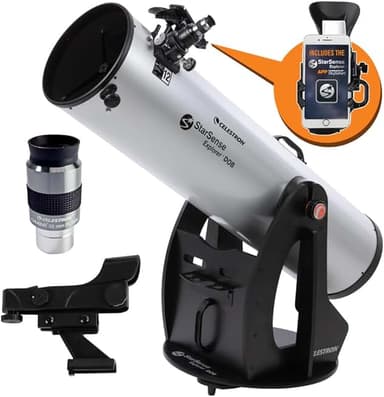
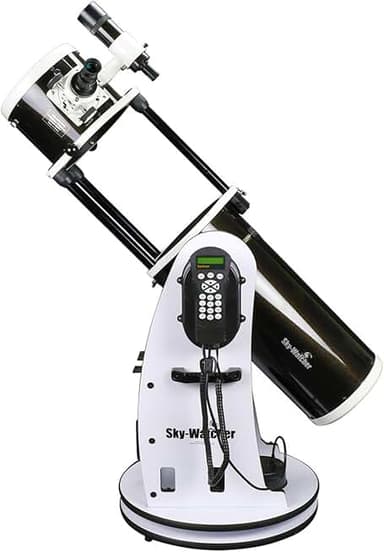
Celestron StarSense Explorer 12" Dob vs Sky-Watcher FlexTube 200P GoTo
VS
Performance Profile
Score Comparison
Celestron StarSense ExplorerSky-Watcher FlexTube 200P
Overall
69
67
Value
40
45
Beginner
25
44
Astrophoto
55
44
Portability
15
29
Planetary
68
59
Deep Sky
67
54
Our Take
The Celestron StarSense Explorer 12" Dob wins for serious deep sky observing, while the Sky-Watcher FlexTube 200P GoTo better serves those prioritizing ease of use and portability. The single most important differentiator is aperture; the Celestron's 305mm mirror versus the Sky-Watcher's 203mm delivers substantially brighter images and finer detail on galaxies and nebulae. However, this advantage comes with significant trade-offs. The Celestron weighs nearly 38 kilograms and requires genuine commitment to transport and set up.
Its StarSense computerized finder helps locate objects despite its mass, but you'll still manage a genuinely heavy instrument. The Sky-Watcher, meanwhile, weighs 25 kilograms and includes full GoTo automation, making it dramatically more user-friendly for beginners and casual observers. Its smaller aperture limits performance on faint objects, but it remains capable for lunar, planetary, and brighter deep sky targets. Buy the Celestron StarSense Explorer 12" Dob if you're dedicated to maximizing light-gathering for nebulae and galaxies.
Buy the Sky-Watcher FlexTube 200P GoTo if you value convenience and plan regular observing sessions without extensive setup. For most amateur astronomers, the Sky-Watcher's practicality wins out; for those willing to make the effort, the Celestron rewards you with superior views.
Key Differences
Why choose Celestron StarSense Explorer
- 305mm aperture gathers more light than 203.2mm
- Higher Astrophoto score (55 vs 44)
- Higher Deep Sky score (67 vs 54)
- Higher Amazon rating (4.4 vs 3.8 stars)
- 165 Amazon reviews vs 65
Why choose Sky-Watcher FlexTube 200P
- $336 cheaper
- 13.0kg lighter and more portable
- Includes GoTo mount for automatic object finding
- Higher Beginner score (44 vs 25)
- Higher Portability score (29 vs 15)
Specifications
SpecCelestron StarSense ExplorerSky-Watcher FlexTube 200P
Optical Specs
Aperture305mm203.2mm
Focal Length1500mm-
Focal Ratiof/4.9-
Optical DesignDobsonianDobsonian
Coating-Fully Multi-Coated
Mount & Tracking
Mount TypeDobsonianDobsonian
GoToNoYes
TrackingYesYes
Physical
Weight37.92kg24.95kg
Included Accessories
FinderStarPointerFinder scope
FocuserCrayfordCrayford
Pricing & Reviews
Price$1635$1299
Amazon Rating4.4 stars3.8 stars
Reviews16565
Try these telescopes in our Eyepiece Calculator:
Related Comparisons
Sky-Watcher FlexTube 200P GoTo vs Sky-Watcher FlexTube 300 SynScanCelestron StarSense Explorer 12" Dob vs Sky-Watcher Quattro 250PSky-Watcher FlexTube 200P GoTo vs Sky-Watcher FlexTube 300PCelestron StarSense Explorer 12" Dob vs Sky-Watcher FlexTube 300PSky-Watcher FlexTube 200P GoTo vs Sky Watcher Sky-Watcher Classic 250 Dobsonian 10-inch Telescope – Solid-Tube – SSky-Watcher FlexTube 200P GoTo vs Sky-Watcher FlexTube 250 SynScan