Comparison
Celestron NexStar Evolution 8 EdgeHD vs Unistellar Odyssey
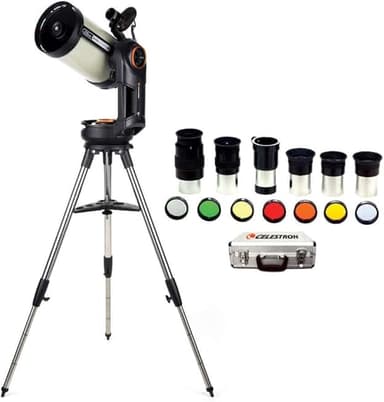
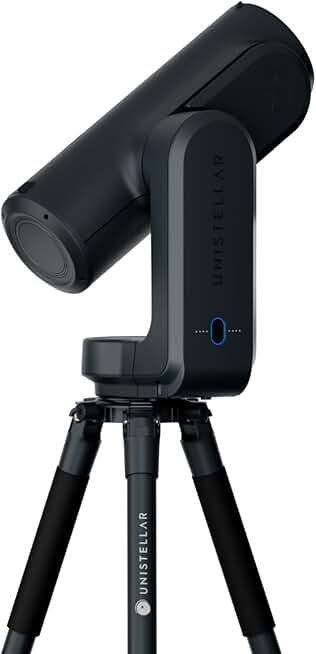
VS
Performance Profile
Score Comparison
Celestron NexStar EvolutionUnistellar Odyssey
Overall
71
85
Value
36
39
Beginner
39
63
Astrophoto
51
76
Portability
38
69
Planetary
69
50
Deep Sky
59
73
Our Take
The verdict depends entirely on your priorities. The Unistellar Odyssey delivers superior overall performance and edges the Celestron NexStar Evolution 8 EdgeHD with a score of 85 versus 71, but the Celestron excels where it matters most for traditional planetary observing. The single most important differentiator is aperture versus technology.
The Celestron's 203mm mirror gathers nearly four times more light than the Odyssey's 114mm, making it fundamentally superior for viewing Jupiter's cloud bands and Saturn's rings. However, the Unistellar's computational imaging and AI-enhanced viewing system compensates remarkably well for its smaller aperture, delivering cleaner deep-sky observations and superior astrophotography despite lower theoretical capability. The Odyssey suits observers prioritizing versatility, portability, and deep-sky work who value modern smart features; its 6.5kg weight and 76 astrophoto score make it genuinely transportable.
The Celestron appeals to planetary enthusiasts willing to sacrifice portability for raw optical power and the traditional satisfying experience of seeing Saturn in fine detail. For most amateur astronomers, the Unistellar Odyssey is the smarter purchase. It excels across more disciplines, welcomes beginners more readily, and its innovative approach represents the hobby's future; reserve the Celestron for dedicated planetary observers with backyard access who prioritize classical aperture advantages.
Key Differences
Why choose Celestron NexStar Evolution
- 203.2mm aperture gathers more light than 114mm
- Higher Planetary score (69 vs 50)
Why choose Unistellar Odyssey
- $490 cheaper
- 13.7kg lighter and more portable
- Smart telescope with app control and live stacking
- Faster f/3.9 for wider field of view
- Higher Overall score (85 vs 71)
- Higher Beginner score (63 vs 39)
Specifications
SpecCelestron NexStar EvolutionUnistellar Odyssey
Optical Specs
Aperture203.2mm114mm
Focal Length2032mm320mm
Focal Ratiof/10f/3.9
Optical DesignSchmidt-Cassegrain-
CoatingCoated-
Mount & Tracking
Mount TypeAlt-AzAlt-Az
GoToYesYes
TrackingYesYes
Physical
Weight20.23kg6.5kg
Included Accessories
FinderFinder scopeFinder scope
Pricing & Reviews
Price$2699$2209
Amazon Rating4.3 stars4.4 stars
Reviews648
Try these telescopes in our Eyepiece Calculator:
Related Comparisons
Celestron Advanced VX 8” EdgeHD Computerized Telescope vs Unistellar OdysseyUnistellar Equinox 2 vs Unistellar OdysseyCelestron Advanced VX 8" SCT vs Unistellar OdysseyCelestron NexStar Evolution 8 EdgeHD vs Explore Scientific ED102 FCD100Celestron EdgeHD 925 OTA vs Celestron NexStar Evolution 8 EdgeHDCelestron Advanced VX 8” EdgeHD Computerized Telescope vs Celestron NexStar Evolution 8 EdgeHD