Comparison
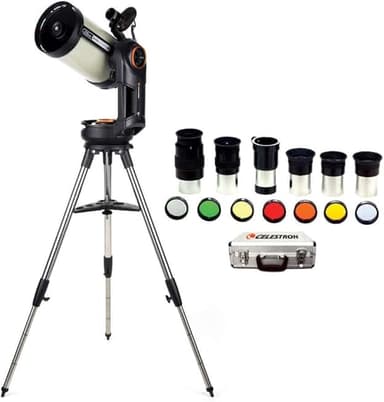
Celestron Advanced VX 8” EdgeHD Computerized Telescope vs Celestron NexStar Evolution 8 EdgeHD
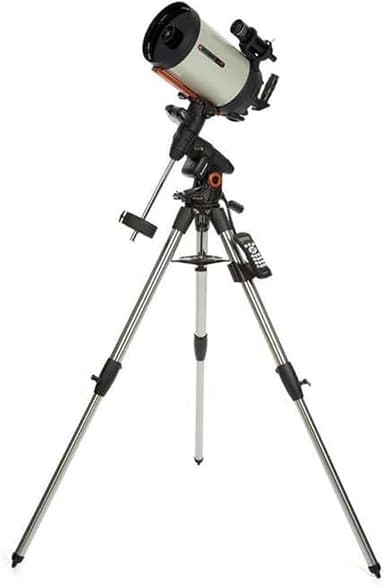
VS
Performance Profile
Score Comparison
Celestron Advanced VXCelestron NexStar Evolution
Overall
68
71
Value
36
36
Beginner
36
39
Astrophoto
66
51
Portability
15
38
Planetary
57
69
Deep Sky
59
59
Our Take
The Celestron NexStar Evolution 8 EdgeHD edges out the Advanced VX, though the decision hinges on your observing priorities. Both telescopes share identical optical tubes with 8-inch apertures and f/10 focal ratios, but their mounts tell different stories. The single most important differentiator is the mount type; the NexStar Evolution's alt-azimuth design weighs half as much as the Advanced VX's equatorial mount, making it dramatically more portable while sacrificing long-exposure astrophotography capability.
Choose the Celestron NexStar Evolution 8 EdgeHD if you value planetary observation, visual deep-sky work, and transportability, as its superior portability score of 38 versus 15 makes a practical difference. Choose the Celestron Advanced VX 8" EdgeHD Computerized Telescope if you're committed to astrophotography and willing to accept its stationary observatory setup, since equatorial tracking delivers superior long-exposure performance. For most amateur astronomers, the NexStar Evolution wins.
Its lighter weight enables regular observing sessions, its planetary score of 69 demonstrates optical excellence, and it costs $100 less. The Advanced VX only makes sense if you've already committed to a permanent installation and serious imaging.
Key Differences
Why choose Celestron Advanced VX
- Higher Astrophoto score (66 vs 51)
Why choose Celestron NexStar Evolution
- 18.3kg lighter and more portable
- Higher Portability score (38 vs 15)
- Higher Planetary score (69 vs 57)
- 175 Amazon reviews vs 19
Specifications
SpecCelestron Advanced VXCelestron NexStar Evolution
Optical Specs
Aperture203.2mm203.2mm
Focal Length-2032mm
Focal Ratiof/10f/10
Optical DesignSchmidt-CassegrainSchmidt-Cassegrain
Coating-Coated
Mount & Tracking
Mount TypeEquatorialAlt-Az
GoToYesYes
TrackingYesYes
Physical
Weight38.51kg20.23kg
Included Accessories
FinderFinder scopeFinder scope
Pricing & Reviews
Price$2800$2699
Amazon Rating3.8 stars3.8 stars
Reviews19175
Try these telescopes in our Eyepiece Calculator:
Related Comparisons
Celestron Advanced VX 8” EdgeHD Computerized Telescope vs Unistellar OdysseyCelestron Advanced VX 8” EdgeHD Computerized Telescope vs Celestron NexStar Evolution 8 EdgeHDCelestron Advanced VX 8” EdgeHD Computerized Telescope vs Celestron EdgeHD 925 OTACelestron NexStar Evolution 8 EdgeHD vs Explore Scientific ED102 FCD100Celestron EdgeHD 925 OTA vs Celestron NexStar Evolution 8 EdgeHDCelestron Advanced VX 8” EdgeHD Computerized Telescope vs Unistellar Equinox 2