Comparison
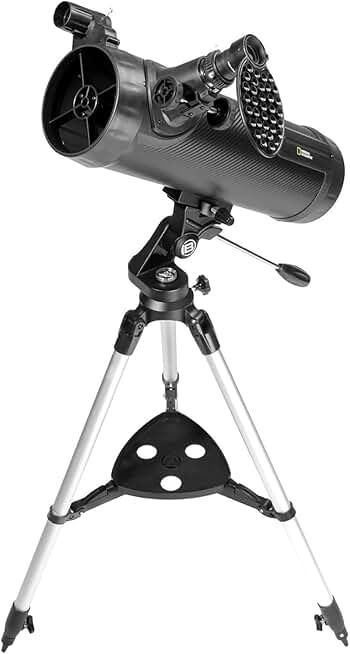
Celestron AstroMaster 70AZ vs National Geographic Explorer 114mm
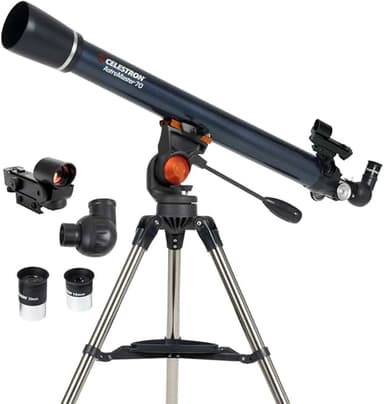
VS
Performance Profile
Score Comparison
Celestron AstroMaster 70AZNational Geographic Explorer
Overall
68
73
Value
91
94
Beginner
48
48
Astrophoto
34
39
Portability
61
63
Planetary
42
42
Deep Sky
34
45
Our Take
The National Geographic Explorer 114mm is the winner for most amateur astronomers. While both scopes match on beginner accessibility and planetary observation, the Explorer's larger 114mm aperture delivers significantly better deep sky performance, capturing 33% more light than the AstroMaster's 70mm optics. This aperture advantage is the single most important differentiator; it translates directly to brighter views of nebulae, galaxies, and star clusters that justify the scope's superiority across nearly every category except price.
The AstroMaster 70AZ suits observers prioritizing portability and planetary observation in a compact package, offering decent optics within serious space constraints. The National Geographic Explorer 114mm belongs with anyone serious about viewing faint deep sky objects without breaking their budget; the larger aperture fundamentally transforms what you can observe while remaining lighter and cheaper than the competition. For beginners, the Explorer pulls ahead because larger aperture helps overcome the learning curve of telescope use; more photons reaching your eye means easier focusing and brighter targets.
Choose the Explorer unless your observing site has severe space limitations or your interests lie exclusively in lunar and planetary work.
Key Differences
Why choose Celestron AstroMaster 70AZ
- Has tracking capability for astrophotography
- Higher Amazon rating (4.4 vs 4.1 stars)
- 3,771 Amazon reviews vs 128
Why choose National Geographic Explorer
- 114mm aperture gathers more light than 70mm
- $49 cheaper
- 2.6kg lighter and more portable
- Faster f/4.4 for wider field of view
- Higher Deep Sky score (45 vs 34)
Specifications
SpecCelestron AstroMaster 70AZNational Geographic Explorer
Optical Specs
Aperture70mm114mm
Focal Length900mm500mm
Focal Ratiof/12.9f/4.4
Optical DesignAchromat RefractorNewtonian
Mount & Tracking
Mount TypeAlt-AzAlt-Az
GoToNoNo
TrackingYesNo
Physical
Weight4.9kg2.27kg
Included Accessories
FinderStarPointerRed dot finder
Pricing & Reviews
Price$149$100
Amazon Rating4.4 stars4.1 stars
Reviews3,771128
Try these telescopes in our Eyepiece Calculator:
Related Comparisons
Celestron AstroMaster 70AZ vs Telescope for Adults & Kids, 80mm Aperture 500mm (20X-150X) Professional RefractCelestron AstroMaster 70AZ vs Explore Scientific 62 Degree 26mm Waterproof Telescope EyepieceCelestron AstroMaster 70AZ vs Telescope for Adults High PoweredExplore Scientific FirstLight AR90mm White Tube Refractor Telescope with Alt/AZ vs National Geographic Explorer 114mmNational Geographic Explorer 114mm vs Telescope, Telescope for Adults High Powered ProfessionalCelestron 1.25 Inch X-Cel LX 3X Barlow Lens, Black vs Celestron AstroMaster 70AZ