Comparison
Celestron Advanced VX 6" SCT vs Celestron NexStar 6SE
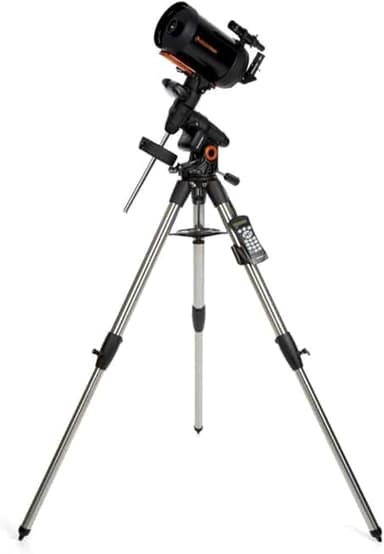
VS
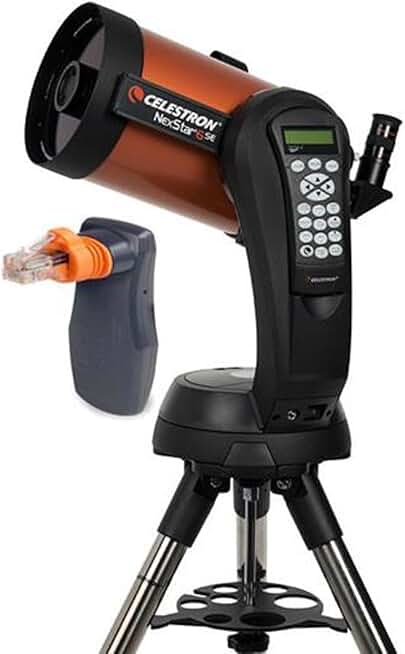
Performance Profile
Score Comparison
Celestron Advanced VXCelestron NexStar 6SE
Overall
40
73
Value
32
45
Beginner
21
43
Astrophoto
41
58
Portability
15
40
Planetary
30
63
Deep Sky
14
55
Our Take
The Celestron NexStar 6SE is the clear winner for most amateur astronomers. Both telescopes share identical 150mm apertures and 1500mm focal lengths, but the NexStar 6SE's fork mount with computerized GoTo tracking delivers superior versatility, ease of use, and value. It scores significantly higher across nearly every category, particularly in planetary observation (63 vs 30) and deep sky viewing (55 vs 14), while weighing 15kg less and costing $500 less.
The Advanced VX's equatorial mount and manual tracking offer no practical advantage here; modern GoTo systems have made equatorial mounts largely obsolete for hobby use. The NexStar 6SE's portability score of 40 versus the Advanced VX's 15 reflects a telescope you'll actually transport and use regularly rather than one that stays in storage. The only scenario favoring the Advanced VX would be for observers planning serious astrophotography with heavy camera rigs, though even then the NexStar 6SE performs admirably at 58 versus 41.
The NexStar 6SE suits virtually all amateur astronomers from beginners to experienced observers; the Advanced VX appeals only to niche users with specific equatorial mount requirements and deep pockets.
Key Differences
Why choose Celestron Advanced VX
- Higher Amazon rating (4.4 vs 4.1 stars)
Why choose Celestron NexStar 6SE
- $499 cheaper
- 15.2kg lighter and more portable
- Includes GoTo mount for automatic object finding
- Higher Overall score (73 vs 40)
- Higher Value score (45 vs 32)
- Higher Beginner score (43 vs 21)
Specifications
SpecCelestron Advanced VXCelestron NexStar 6SE
Optical Specs
Aperture-150mm
Focal Length1500mm1500mm
Focal Ratio-f/10
Optical DesignSchmidt-CassegrainSchmidt-Cassegrain
Mount & Tracking
Mount TypeEquatorialFork
GoToNoYes
TrackingYesYes
Physical
Weight34.2kg19.05kg
Included Accessories
Finder6x30 optical finderStarPointer
Pricing & Reviews
Price$1699$1200
Amazon Rating4.4 stars4.1 stars
Reviews423
Try these telescopes in our Eyepiece Calculator:
Related Comparisons
Celestron Advanced VX 6" SCT vs Celestron NexStar 8 SE Schmidt-Cassegrain Computerized Telescope with 1.25" EyepCelestron Advanced VX 6" SCT vs Vaonis Vespera II Exploration StationCelestron NexStar 6SE vs Unistellar eVscope EquinoxCelestron NexStar 6SE vs Celestron NexStar Evolution 8Celestron NexStar 6SE vs Sky-Watcher SkyMax 127Celestron NexStar 6SE vs Celestron NexStar 8 SE Schmidt-Cassegrain Computerized Telescope with 1.25" Eyep