Comparison
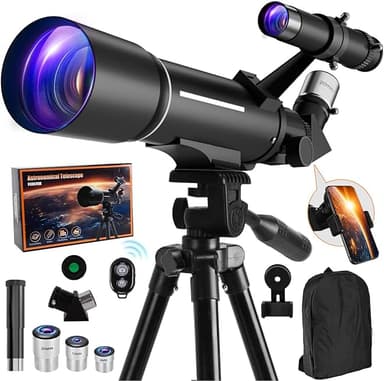
Telescope for Kids & Adults, 70mm Aperture 360mm Refractor (15X-150X) Telescope vs Telescope, Telescope for Kids & Adults
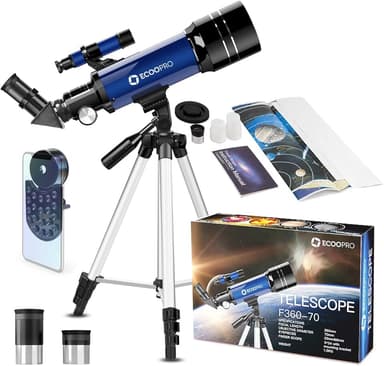
71Very Good
Amazon's Choice
VS
Performance Profile
Score Comparison
Telescope for KidsTelescope, Telescope for
Overall
71
67
Value
95
95
Beginner
48
45
Astrophoto
37
30
Portability
64
64
Planetary
40
39
Deep Sky
40
35
Our Take
The 70mm Aperture 360mm Refractor emerges as the clearer choice for most amateur astronomers, despite both telescopes sharing identical aperture sizes and mount types. The single most important differentiator is optical design philosophy. The 360mm refractor's shorter focal length and faster f/5.14 ratio deliver wider fields of view, making it superior for locating objects and enjoying the night sky casually.
The longer 500mm design sacrifices this accessibility, resulting in narrower views and a heavier instrument that offers marginal improvements in planetary detail that don't justify the trade-off for beginners. The 70mm Aperture 360mm Refractor should appeal to anyone prioritizing ease of use, portability, and genuine enjoyment of stargazing; the longer 500mm model suits only those willing to accept reduced accessibility for negligible gains in magnification and stability. The 360mm refractor's superior overall score of 71 versus 67, combined with better beginner-friendliness and only marginally lower performance across all observation categories, makes it the more practical investment.
Its lighter weight and brighter wide-field views outweigh the modest planetary performance advantages of its longer sibling. For the price difference of five dollars, the 360mm refractor delivers better value.
Key Differences
Why choose Telescope for Kids
- Faster f/5.14 for wider field of view
- 2,122 Amazon reviews vs 39
Why choose Telescope, Telescope for
No significant advantages identified.
Specifications
SpecTelescope for KidsTelescope, Telescope for
Optical Specs
Aperture70mm70mm
Focal Length360mm500mm
Focal Ratiof/5.14f/7.1
CoatingFully Multi-CoatedFully Multi-Coated
Mount & Tracking
Mount TypeAlt-AzAlt-Az
GoToNoNo
TrackingNoNo
Physical
Weight1.4kg2.25kg
Included Accessories
Finder5x24 optical finder5x24 optical finder
Pricing & Reviews
Price$58$60
Amazon Rating4.2 stars4.1 stars
Reviews2,12239
Try these telescopes in our Eyepiece Calculator:
Related Comparisons
Celestron Travel Scope 70 Portable Refractor Telescope – 70mm Aperture vs Telescope for Kids & Adults, 70mm Aperture 360mm Refractor (15X-150X) TelescopeTelescope 70mm Aperture 500mm - for Kids & Adults Astronomical refracting Portab vs Telescope, Telescope for Kids & AdultsHawkko Telescope for Adults & Kids Beginners vs Telescope, Telescope for Kids & AdultsTelescope for Kids & Adults, 70mm Aperture 360mm Refractor (15X-150X) Telescope vs Telescopes, Telescope for Kids and Adults BeginnersCelestron 1.25 Inch X-Cel LX 3X Barlow Lens, Black vs Telescope, Telescope for Kids & AdultsCelestron 1.25 Inch X-Cel LX 3X Barlow Lens, Black vs Telescope for Kids & Adults, 70mm Aperture 360mm Refractor (15X-150X) Telescope