Comparison
Gskyer 70AZ vs Telescope 80mm Aperture 600mm - Astronomical Portable Refracting Telescope Fully

VS
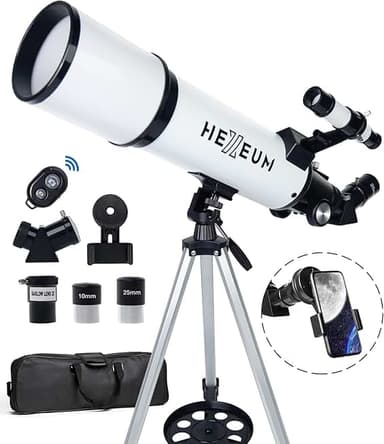
Performance Profile
Score Comparison
Gskyer 70AZTelescope 80mm Aperture
Overall
69
67
Value
94
94
Beginner
48
47
Astrophoto
36
33
Portability
63
63
Planetary
35
32
Deep Sky
39
38
Our Take
The Gskyer 70AZ edges out its competition with a 2-point overall advantage and superior performance across nearly every metric. Both telescopes are virtually identical for beginners at 48/100, but the Gskyer 70AZ demonstrates better capabilities for planetary viewing (35 vs 32), deep sky observation (39 vs 38), and astrophotography (36 vs 33). The single most important differentiator is aperture efficiency; despite being only 10mm larger, the 80mm telescope's longer focal length of 600mm creates a slower f/6.70 ratio compared to the Gskyer's f/5.70, meaning less light gathering advantage relative to its size.
Both weigh nearly identical amounts and score equally on portability, so weight is not a meaningful factor in your decision. The Gskyer 70AZ is the better choice for amateur astronomers seeking improved planetary detail and deep sky performance without sacrificing portability or budget. The 80mm model makes sense only if you specifically prioritize slightly lower cost or happen to prefer longer focal length characteristics for specific observing targets.
We recommend the Gskyer 70AZ for most amateur observers seeking reliable performance across all observing categories at an exceptional price point.
Key Differences
Why choose Gskyer 70AZ
- $11 cheaper
- Faster f/5.7 for wider field of view
- 21,839 Amazon reviews vs 4,948
Why choose Telescope 80mm Aperture
- 80mm aperture gathers more light than 70mm
Specifications
SpecGskyer 70AZTelescope 80mm Aperture
Optical Specs
Aperture70mm80mm
Focal Length400mm-
Focal Ratiof/5.7f/6.7
CoatingCoated-
Mount & Tracking
Mount TypeAlt-AzAlt-Az
GoToNoNo
TrackingNoNo
Physical
Weight2.59kg2.72kg
Included Accessories
Finder5x24 optical finder5x24 optical finder
Pricing & Reviews
Price$84$95
Amazon Rating4.3 stars4.3 stars
Reviews21,8394,948
Try these telescopes in our Eyepiece Calculator:
Related Comparisons
Gskyer 70AZ vs Telescope 70mm Aperture 500mm - for Kids & Adults Astronomical refracting PortabCelestron Travel Scope 70 Portable Refractor Telescope – 70mm Aperture vs Telescope 80mm Aperture 600mm - Astronomical Portable Refracting Telescope FullyTelescope 80mm Aperture 600mm - Astronomical Portable Refracting Telescope Fully vs Telescopes for Adults AstronomyTelescope 80mm Aperture 600mm - Astronomical Portable Refracting Telescope Fully vs Telescope for Adults & Kids, 70mm Aperture Refractor (15X-150X) Portable TravelGskyer 70AZ vs Telescope for Adults AstronomyCelestron 1.25 Inch X-Cel LX 3X Barlow Lens, Black vs Telescope 80mm Aperture 600mm - Astronomical Portable Refracting Telescope Fully