Comparison
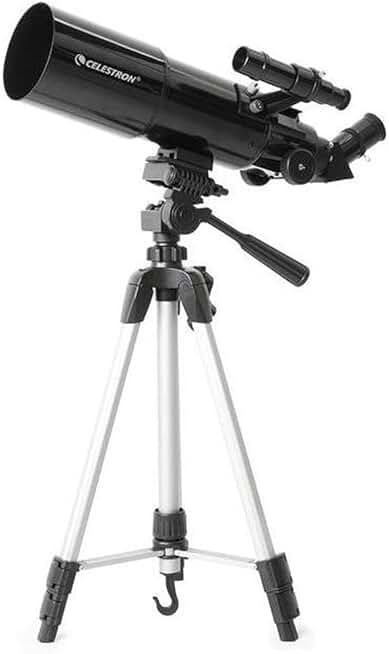
Celestron Travel Scope 80 vs Gskyer 70AZ

Performance Profile
Score Comparison
Celestron Travel ScopeGskyer 70AZ
Overall
69
69
Value
88
94
Beginner
46
48
Astrophoto
37
36
Portability
64
63
Planetary
36
35
Deep Sky
42
39
Our Take
The Celestron Travel Scope 80 edges out the Gskyer 70AZ despite their nearly identical overall scores. The critical differentiator is aperture; the Celestron's 80mm objective versus the Gskyer's 70mm translates to roughly 30 percent more light-gathering power, a meaningful advantage for viewing faint objects and achieving sharper planetary detail. The Celestron also maintains a superior focal ratio and slightly better portability despite weighing marginally less, giving it genuine practical advantages.
While both telescopes score modestly across all categories, the Celestron's aperture advantage compounds across every observing discipline. The price difference of roughly $24 is negligible relative to the optical gains. Both are entry-level instruments suitable for casual lunar and bright planetary observation, but neither excels at deep-sky work or astrophotography.
The Celestron Travel Scope 80 is the smarter choice for someone prioritizing optical performance and versatility across observing types. The Gskyer 70AZ makes sense only for someone whose primary concern is saving a few dollars, though they will notice the optical compromise. Buy the Celestron Travel Scope 80 for better views; buy the Gskyer only if budget is your absolute constraint.
Key Differences
Why choose Celestron Travel Scope
- 80mm aperture gathers more light than 70mm
Why choose Gskyer 70AZ
- $46 cheaper
- 21,839 Amazon reviews vs 1,749
Specifications
SpecCelestron Travel ScopeGskyer 70AZ
Optical Specs
Aperture80mm70mm
Focal Length400mm400mm
Focal Ratiof/5f/5.7
Optical DesignAchromat Refractor-
CoatingCoatedCoated
Mount & Tracking
Mount TypeAlt-AzAlt-Az
GoToNoNo
TrackingNoNo
Physical
Weight2.04kg2.59kg
Included Accessories
FinderFinder scope5x24 optical finder
Pricing & Reviews
Price$130$84
Amazon Rating4.2 stars4.3 stars
Reviews1,74921,839
Try these telescopes in our Eyepiece Calculator:
Related Comparisons
Celestron Travel Scope 80 vs Explore Scientific FirstLight 80mm Refractor Telescope with Twilight Nano MountGskyer 70AZ vs Telescope 70mm Aperture 500mm - for Kids & Adults Astronomical refracting PortabCelestron Travel Scope 80 vs Explore Scientific FirstLight AR90mm White Tube Refractor Telescope with Alt/AZCelestron Travel Scope 80 vs Telescopes for Adults AstronomyGskyer 70AZ vs Telescope for Adults AstronomyCelestron Travel Scope 80 vs Telescope for Adults & Kids, 70mm Aperture Refractor (15X-150X) Portable Travel